
If All These Rabbis Say…
If All These Rabbis Say…
 by Kerrie French
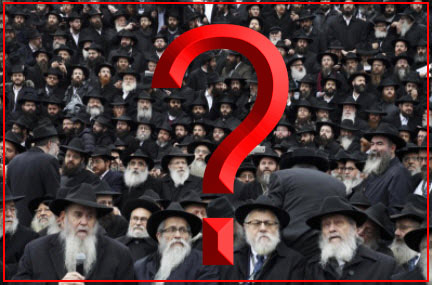
If every rabbi agreed and declared that the day begins at night, would that, by itself, make it true?
Truth Established by Majority Rule
Rabbi Moses Maimonides (Rambam), one of the most influential voices in rabbinic Judaism (11th century A.D.), is frequently cited to support confidence in majority authority. In his widely respected Introduction to the Mishnah, Rambam articulates this principle in a way that has profoundly shaped Jewish legal tradition, stating:
“If there are 1000 prophets and all of them of the stature of Elijah and Elisha, giving a certain interpretation, and 1001 rabbis giving the opposite interpretation, you shall ‘incline after the majority and the law is according to 1001 rabbis, not according to 1000 venerable prophets. God did not permit us to learn from the prophets, but only from the Rabbis who are men of logic and reason.” Moses Maimonides (Rambam), Introduction to the Commentary on the Mishnah
Does Scripture Agree with Majority Rule?
At first glance, that may sound definitive. Case closed. The majority rules. End of discussion.
But Scripture urges us to slow down.
Before accepting any conclusion, especially one that reshapes how we understand time itself, we must ask a more foundational question: Did Yahuah ever grant authority to override His revealed word by numerical consensus or later interpretation? Did He ever instruct His people to exchange the testimony of Torah and the prophets for the comfort of majority opinion, no matter how learned or well-intentioned?
The Tanakh (Old Testament) repeatedly answers this question, and it does so with remarkable consistency. This is then supported full throttle by the Messiah in the New Testament. From the Torah through the Prophets and the Writings, we are warned not to follow the crowd when it departs from truth, not to confuse authority with numbers, and not to substitute human reasoning for divine instruction.
So before we examine when the day begins, we must first examine how truth is established.
What follows are seven clear principles drawn directly from the Tanakh that speak to this very issue, principles that challenge the idea that majority rule determines truth, and instead call us back to the unchanging standard of Yahuah’s Word.
1. A Direct Legal Prohibition Against Following the Majority
“You shall not follow a multitude to do evil; neither shall you speak in a cause to turn aside after a multitude to pervert justice.” Exodus 23:2
This verse is decisive.
The Torah itself explicitly forbids following the majority when the majority departs from righteousness. The instruction is not conditional. It does not say, “unless they are scholars” or “unless they are judges.” It establishes a higher standard: justice and truth over consensus.
This alone prevents any absolute doctrine that majority interpretation determines truth.
2. The Prophetic Standard as the Measure of Truth
“To the Torah and to the testimony: if they speak not according to this word, it is because there is no light in them.” Isaiah 8:20
Truth is measured by alignment with Torah, not by institutional authority, status, or numbers. Isaiah does not appeal to majority teachers, but to the revealed word already given.
This verse implicitly rejects the claim that Yahuah Alahim (God) forbade learning from prophets or that reasoned consensus supersedes revelation.
3. Elijah: One Prophet Against a Nation
“How long will you limp between two opinions? If Yahuah is God (Alahim), follow Him; but if Baal, follow him.”
“Then Elijah said to the people, ‘I, even I only, remain a prophet of Yahuah, but Baal’s prophets are four hundred and fifty men.’” 1 Kings 18:21–22
Here the majority was not merely wrong. They were sincerely religious, organized, credentialed, and unified. Yet they were false.
Elijah’s authority did not come from numbers, institutions, or votes, but from fidelity to Yahuah’s word. Scripture presents Elijah not as an exception to the rule, but as the pattern.
4. The Condemnation of Popular Religious Leadership
“Do not listen to the words of the prophets who prophesy to you; they make you vain. They speak a vision of their own heart, and not out of the mouth of Yahuah.” Jeremiah 23:16
“The prophets prophesy falsely, and the priests rule by their own authority; and My people love it so.” Jeremiah 5:31
Here, the majority leadership structure itself is indicted. The people prefer consensus comfort over divine truth, and Yahuah Alahim rebukes both leaders and followers for it.
5. The Watchman Principle: Individual Accountability
“So you, son of man, I have made a watchman… when you hear the word from My mouth, warn them from Me.” Ezekiel 33:7–9
The watch explains that accountability is not dissolved by communal agreement. Each person remains responsible to hear and obey Yahuah, even when surrounded by opposing voices.
6. The Rejection of Institutional Wisdom Without Obedience
“Its heads judge for a bribe, its priests teach for pay, and its prophets divine for money; yet they lean on Yahuah and say, ‘Is not Yahuah among us?’” Micah 3:11
Institutional confidence does not equal divine approval. Scripture repeatedly warns that organized religious authority can coexist with profound deception.
7. Deuteronomy’s Safeguard Against Signs, Numbers, and Persuasion
“If a prophet or a dreamer of dreams arises among you… saying, ‘Let us go after other gods (Alahims),’ you shall not listen… for Yahuah your God [Alahim] is testing you.” Deuteronomy 13:1–3
Even miraculous signs and prophetic stature do not override Torah. This again contradicts the idea that Yahuah Alahim/Elohim removed prophetic authority in favor of later interpretive institutions.
8. New Testament Weighs In
“Wide is the gate and broad is the way that leads to destruction, and many are those who enter by it. Narrow is the gate and constricted is the way that leads to life, and few are those who find it.” Matthew 7:13–14
This saying of the Messiah quietly reinforces everything we have been examining. Truth, in Scripture, is not validated by popularity, tradition, or majority agreement. The wide gate is wide precisely because it is easy, familiar, inherited, and socially affirmed. Many walk it without resistance, often convinced they are safe simply because they are not alone.
The narrow path, by contrast, requires attentiveness, humility, and the willingness to let Scripture correct what we have long assumed. It is narrow not because Yahuah wishes to exclude, but because truth is precise. It does not bend to custom, nor does it expand to accommodate error. It must be sought, tested, and walked deliberately.
In matters as foundational as sacred time, the Messiah’s words call us to pause and ask an honest question:
Are we following what is widely taught, or what is carefully written?The invitation is not to be contrary for its own sake, but to be faithful. And faithfulness, as Scripture consistently shows, often begins where the crowd thins and the light becomes clearer.
The Biblical Pattern
The consistent testimony of both Old and NewTestaments is this:
Truth is not determined by majority.
Authority does not reside in numbers, institutions, or lineage.
Prophets are not sidelined by reasoned consensus.
Torah is the fixed standard.
Faithfulness often appears as minority obedience.
Yahuah Alahim (God) repeatedly preserves truth through a remnant.
- Yahusha the Messiah supports the Torah in every way.
This does not negate the value of wisdom, counsel, or discernment. But it decisively rejects any doctrine that elevates human majority over divine revelation.
Does the Day Really Begin at Night?
Returning now to the original question, does the biblical day truly begin at night, or is that assumption itself the product of later tradition rather than revealed instruction?
If authority is determined by majority opinion alone, then the matter would already be settled. Yet Scripture invites us to test every claim, especially those that define how we measure the very rhythms Yahuah established at Creation. And it is here, at the foundation of time itself, that the words of the Messiah become especially illuminating.
In direct response to the idea that tradition outweighs testimony, consider what Yahusha said, a statement so simple it is often overlooked, yet so precise it cannot be ignored:
“Are there not twelve hours in the day? If anyone walks in the day, he does not stumble, because he sees the light of this world.” John 11:9
Pause there for a moment.
If the day truly begins at night, how can the Messiah define the day as a measurable period of light? How does one arrive at twelve hours of “day” unless day is distinguished from night by illumination itself?
This was not a casual remark. Yahusha was appealing to a definition of day already established in Scripture, one given at Creation and reinforced throughout the Torah.
From the very first chapter of Genesis, the distinction could not be clearer:
“And Yahuah called the light ‘day,’ and the darkness He called ‘night.’” Genesis 1:5
Day is the name for daylight as ruled by the sun. Night is named for darkness when the sun is no longer present, and the stars rule the night sky. They are not blended nor do they overlap. They are separated and distinguished by divine decree.
That separation is reinforced again when the heavenly lights are appointed, not to confuse day and night, but to distinguish them:
“Let lights come to be in the expanse of the heavens to separate the day from the night… And Elohim made two great lights: the greater light to rule the day, and the lesser light to rule the night.” Genesis 1:14–16
Throughout the Torah, the emphasis remains consistent. Day is governed by light. Night is governed by darkness. The rhythm of obedience follows that pattern, as seen vividly in the manna test of Exodus 16, where “tomorrow,” “morning,” “today,” and “the Sabbath day” are all anchored to daylight transitions rather than the onset of darkness.
These are not isolated texts. They form a unified testimony.
When later sources acknowledge that the practice of beginning the day at sunset developed over time, and that earlier biblical usage pointed to a morning commencement, we are faced with an unavoidable question: Which voice ultimately defines sacred time?
Is it an inherited tradition, shaped by historical captivity and cultural influence?
Or is it the unbroken witness of Torah, the prophets, and the Messiah Himself?
With that question before us, let us examine the evidence carefully, allowing Scripture to speak for itself, and letting light define the day, just as Yahuah declared from the beginning.
Closing Summary and Conclusion
When the testimony of Scripture is allowed to speak plainly, a consistent pattern emerges. From Creation forward, day and night are defined, named, and governed separately. Light is called day. Darkness is called night. They are not merged, overlapped, or interchanged. The heavenly lights were appointed to separate the two, not to blur their boundaries.
The Messiah Himself affirmed this original framework when He spoke of twelve hours in the day, grounding His statement in light, visibility, and ordered time. The Torah reinforces the same understanding through lived instruction, most notably in the manna test, where “tomorrow,” “morning,” “today,” and the Sabbath are all anchored to daylight transitions rather than the onset of darkness. Even the resurrection narrative points to a new day arriving as it began to grow light.
Historical and scholarly sources further acknowledge what the biblical text already demonstrates: the practice of beginning the day at sunset was not universal from the beginning, but developed later and became normative through tradition, particularly under Babylonian influence. That shift required special instructions when Scripture needed an evening-to-evening observance, as seen with Yom Kippur, instructions that would have been unnecessary if every Sabbath naturally began at night.
Invitation to Return
This brings us to a simple yet important distinction. There is a meaningful difference between what Scripture plainly teaches and what later Jewish rabbinical traditions came to establish. When any church or religious organization teaches that the day begins at night, it is not drawing that conclusion from the clear testimony of the biblical text itself, but from post-biblical interpretations preserved in the Mishna and later rabbinic rulings.
This observation is not offered as an indictment of people, but as an honest acknowledgment of sources. Traditions, even long-held and sincerely believed ones, must always be weighed against the written Word. Scripture consistently places the definition of sacred time in the hands of the Creator, not in the authority of later interpreters. Where the two diverge, faithfulness requires that Scripture be allowed to stand above tradition, no matter how familiar or widely accepted that tradition may be.
The invitation, then, is not to reject heritage or learning, but to return first to the biblical record itself and allow it to define the terms by which we order our worship, our Sabbaths, and our understanding of the day.
Scriptural Evidence for When the Day Begins
Clarifying Our Purpose
This article and the materials presented on this website are not directed against Jews, Romans, Seventh-day Adventists, or any other people or faith communities. Our purpose is not to single out individuals, question motives, or assign blame. People are not the issue.
What is examined here are doctrinal systems and inherited teachings, measured carefully against the testimony of Scripture. Where those teachings diverge from the biblical record, we believe it is both appropriate and necessary to name the discrepancy with clarity and respect.
Disagreement with doctrine is not an attack on persons. To question tradition is not to reject people. On the contrary, this work is offered in the spirit of informed choice, inviting readers to consider the sources of what they have been taught and to weigh those teachings thoughtfully against the Word of the Creator.
Each individual remains free to agree or disagree. Our role is not to persuade by pressure, but to inform with evidence, allowing conscience, prayer, and personal study to guide the outcome.
Truth can be examined without hostility, and conviction can be expressed without contempt. That is the standard we seek to uphold here.