Three Months in a Row – Forty Years Later – Part 4
Three Months-in-a-Row
Part Four
Forty Years Later
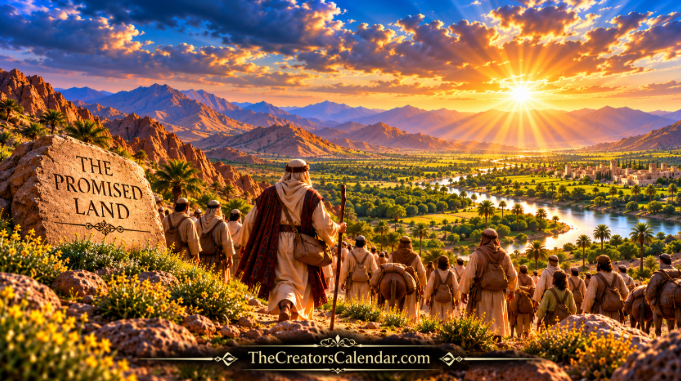
Introduction: Forty Years Later – Part 4
Forty years had passed since Yahuah first began raining manna from the shamayim to sustain Yasharal in the wilderness. Throughout those years, the miracle followed an unwavering rhythm: manna for six working days, a double portion on the sixth, and none upon the seventh-day Sabbath. Week after week, month after month, and year after year, the manna became a living lesson in sacred TIME.
But when Yasharal finally crossed the Jordan and entered the Promised Land, something extraordinary happened. After observing Passover on the 14th of Abib and eating the produce of the land on the 15th, morning came on the 16th, the very day upon which manna would ordinarily have returned to begin another weekly cycle.
It did not return.
The manna had ceased.
This final event carries remarkable significance. Scripture does not leave the ending of the manna miracle at an unspecified point in Israel’s wilderness journey. Instead, it records a precise sequence of dates that, within the calendrical framework developed throughout this study, provides one final witness to the continuity of Yahuah’s appointed TIME.
The First Month established the foundation. The Second Month demonstrated the manna cycle. The Third Month brought Yasharal to Mount Sinai. Now, forty years later, the testimony brings us full circle, returning to Abib and the same relationship between Passover, the Sabbath, and the beginning of the following working week.
What began as a lesson in sacred TIME in the wilderness would end as a testimony to its continuity at the entrance to the Promised Land.
“So the children of Israel camped in Gilgal and kept the Passover on the fourteenth day of the month at twilight on the plains of Jericho. And they ate of the produce of the land on the day after the Passover, unleavened bread and parched grain, on the very same day. Then the manna ceased on the day after they had eaten the produce of the land; and the children of Israel no longer had manna, but they ate the food of the land of Canaan that year.” Joshua (Yahusha) 5:10-12 NKJV
Purpose of the Manna
The manna was far more than Yahuah’s miraculous provision of food for Yasharal in the wilderness. It became a forty-year teaching instrument through which He repeatedly demonstrated His appointed order of sacred TIME.
Having emerged from generations of Egyptian bondage, Yasharal needed to relearn the rhythm of the Creator’s calendar. Through the manna, Yahuah established a divine REHAB program, teaching His people when to gather, when to prepare, and when to rest. Every working day and every seventh-day Sabbath reinforced their dependence upon His provision and their obedience to His instructions.
Within the calendrical framework presented throughout this study, the full New Moon established the beginning of each lunar month, while the recurring pattern of six working days followed by the seventh-day Sabbath identified the Sabbaths upon the 8th, 15th, 22nd, and 29th.
This restoration of sacred TIME also prepared Yasharal for the Sanctuary’s appointed services, where daily, weekly, monthly, and annual observances would unite TIME with EVENT in a prophetic teaching system revealing Yahuah’s Plan of Salvation.
For forty years, the manna reminded Yasharal that Yahuah, not Egypt, Babylon, Rome, or human tradition, was the One who determined the appointed rhythm by which His people were to walk.
But the manna’s final morning would provide one more extraordinary witness. If this divinely regulated pattern had continued throughout the wilderness years, would its ending reveal the same weekly order with which it began?
Joshua 5 provides the answer.
The Pattern That Must Still Be There
If the calendar Yahuah restored at the beginning of Israel’s wilderness journey remained unchanged throughout those forty years, then the final days of the manna testimony should reveal the same relationship between the lunar month, the working days, and the seventh-day Sabbath.
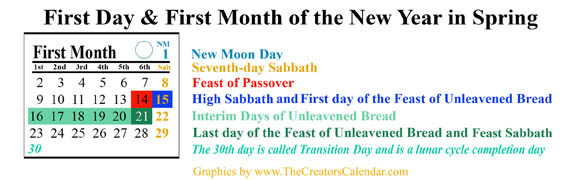
Within the calendrical framework established throughout this study, three consecutive dates provide the test:
-
Abib 14: Sixth working day and preparation day.
-
Abib 15: Seventh-day Sabbath.
-
Abib 16: First working day of the following week.
These dates establish the chronological framework through which we will examine the final appearance of manna and determine whether the weekly pattern remained consistent from the beginning of Israel’s wilderness journey to its conclusion.
The account of Yasharal’s entrance into the Promised Land provides the setting for this final comparison.
Entering the Promised Land
Forty years after the Exodus, Yasharal stood at the threshold of the Promised Land. Moses had died, and the people were now under the leadership of Yahusha (H#3091, יהושע, Joshua), whose name and mission foreshadowed Yahusha haMashiach, the One who would ultimately lead His faithful into the Eternal Promised Land.
The parallel with the Exodus is remarkable. At the beginning of their wilderness journey, Yahuah opened the Red Sea, delivering His people from Egyptian bondage. Now, at the conclusion of that journey, He opened the Jordan River, bringing them into the land He had promised.
Between those two miraculous crossings stretched forty years of divine instruction, provision, and preparation. The wilderness had become a school in which Yahuah taught His people to trust His guidance, obey His instructions, and recognize His appointed TIME.
After crossing the Jordan, Yasharal encamped at Gilgal, where they observed Passover on the 14th day of Abib and ate the produce of the Promised Land on the following day. Then came the morning of the 16th, when the manna that had sustained them throughout the wilderness would no longer appear.
The wilderness journey had ended, but its lessons had not. The final cessation of manna would now provide one last chronological witness to the sacred order Yahuah had established forty years earlier.
Manna Commencement and Termination
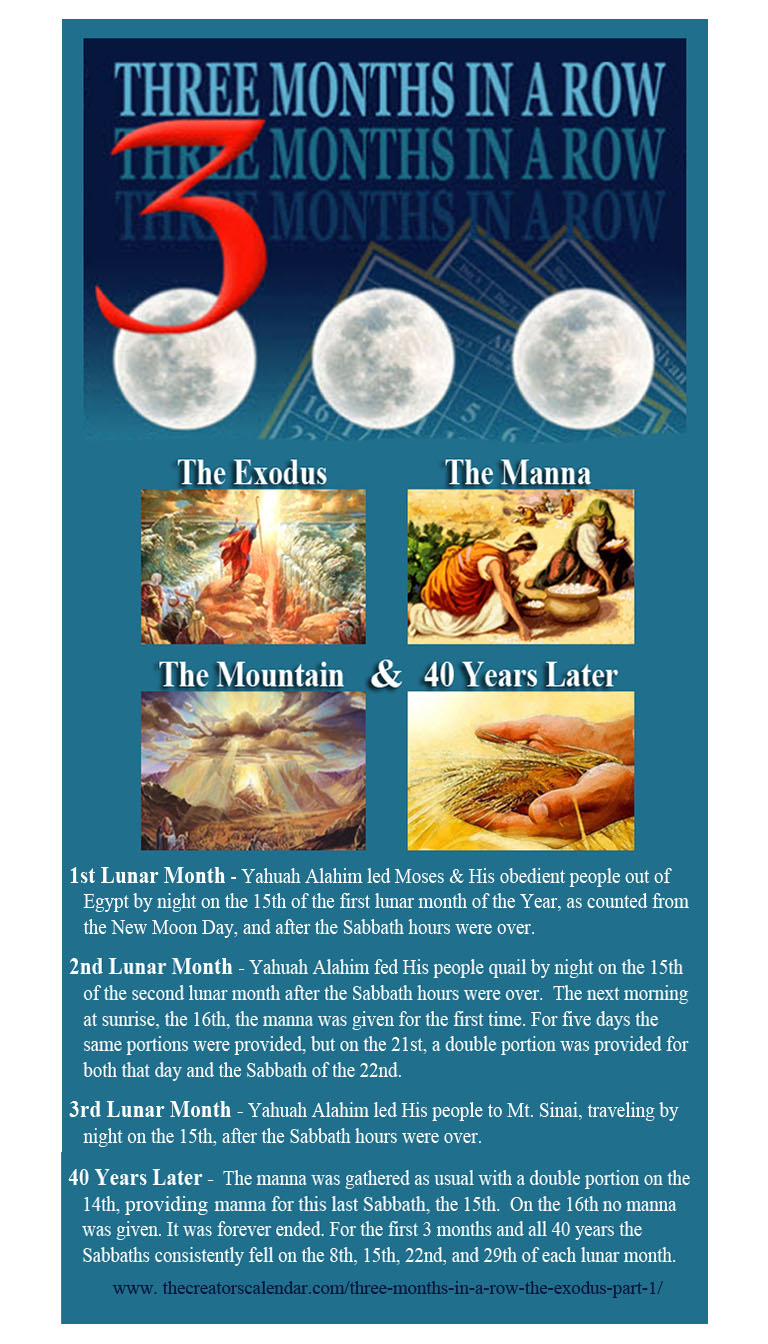
When Yahuah first provided manna to Yasharal in the wilderness, its appearance was connected with the carefully recorded chronology of the Second Lunar Month. As established in Part 2, the manna began on the morning of the 16th, the first working day following the seventh-day Sabbath of the 15th.
For forty years, this miraculous provision followed the same recurring pattern. Six working days of manna were followed by the seventh-day Sabbath, when none fell. The double portion gathered on the sixth day supplied Israel through the Sabbath, after which the manna returned with the beginning of another working week.
Then came the First Month of Abib, forty years later.
Having crossed the Jordan and entered the Promised Land, Yasharal observed Passover on the 14th and ate the produce of Canaan on the following day. Joshua 5:10-12 records that the manna ceased on the day after they had eaten the produce of the land, identifying the 16th as the date of its cessation within the chronology presented here.
The significance of this timing becomes apparent when we consider the weekly pattern Yahuah had established.
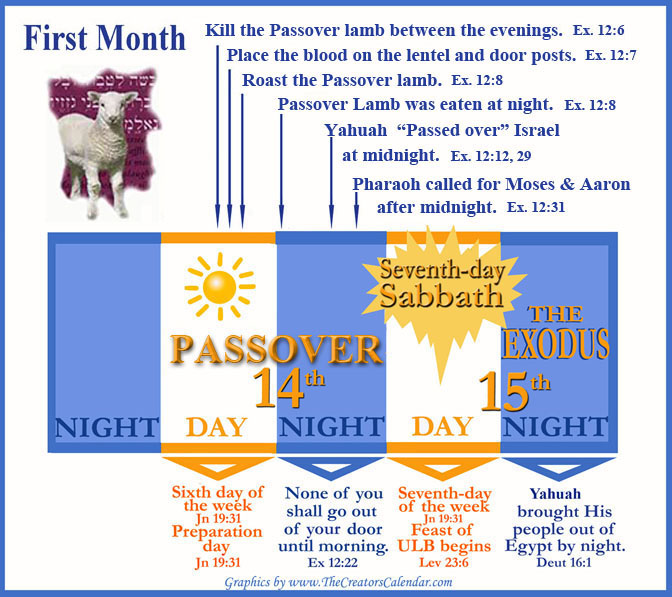
- Abib 14: The sixth working day and preparation day.
- Abib 15: The seventh-day Sabbath, when no manna was expected to fall.
- Abib 16: The first working day of the following week, when manna would ordinarily have returned.
The absence of manna on the 15th could not, by itself, have announced the end of the miracle, because manna was never supplied upon the Sabbath. The decisive morning was therefore the 16th, when another weekly cycle of provision would normally have begun.
But this time, the manna did not return.
The chronological relationship between its commencement and termination is remarkable:
Second Month, 16th: The manna begins.
Forty years later, First Month, 16th: The manna ceases.
Within the calendrical framework developed throughout this study, these two dates form chronological bookends to the forty-year wilderness experience. The manna had completed its purpose, yet the weekly relationship between the 15th and 16th remained in the same position it occupied when Yahuah first began teaching His people through this miraculous provision.
The manna ceased, but the sacred order of TIME it had demonstrated remained.
Forty Years Later – Ten Points of Evidence

The Manna Ceased, but the Sanctuary Witness Continued
Yahuah’s calendar provided the appointed framework within which His prophetic EVENTS would unfold. The restoration of sacred TIME was therefore never merely about identifying the correct dates upon a calendar. It was preparation for understanding the greater Plan of Salvation.
This purpose became especially visible through the Sanctuary. Its sacrifices, priesthood, seventh-day Sabbath offerings, New Moon observances, and annual Feast Days united TIME with EVENT, creating a prophetic teaching system that pointed forward to Yahusha haMashiach.
At the heart of this prophetic system stood Passover.
The lamb sacrificed in Egypt foreshadowed the greater sacrifice of Yahusha, the promised Lamb who would deliver His people from the bondage of sin. What began as a memorial of deliverance became a prophetic witness to redemption.
“But when the fullness of the time was come, Alahim sent forth his Son, made of a woman, made under the TORAH LAW, to redeem them that were under the TORAH LAW, that we might receive the adoption of sons.” Galatians 4:4-5
The Sanctuary revealed Yahusha haMashiach as LAMB, PRIEST, and KING. As the Lamb, He offered Himself for our redemption. As our High Priest, He ministers on behalf of His people. And as King, He will return to gather His faithful and establish His everlasting Kingdom.
Within the prophetic framework presented throughout this study, the Sanctuary and its appointed Feasts were therefore more than memorial ceremonies. They formed a divinely ordered pattern through which the identity, ministry, and redemptive work of the promised Messiah could be recognized.
The revealed sacred calendar identified the TIME.
The Sanctuary illustrated both the TIME and EVENT.
Yahusha haMashiach brought the prophetic pattern to fulfillment according to both TIME & EVENT.
This is why sacred TIME is inseparably connected with the Bridal Covenant and the Plan of Salvation. The same Yahuah who appointed the heavenly lights for signs and mo’edim also established the sacred appointments through which His covenant purposes would be revealed.
The restoration of the Creator’s Calendar is therefore not an end in itself. Its greater purpose is to bring the worshiper into harmony with Yahuah’s appointed TIME and into a deeper understanding of the One whom those sacred appointments reveal.
TIME is a significant ingredient of the sacred Bridal Covenant because Yahuah has appointed the times of meeting with His people. The ultimate purpose is not merely to know when, but to recognize Whom the appointed times reveal and prepare to meet Him.
Conclusion: Called Out of Bondage and into Eternity
The journey of ancient Yasharal was far more than a geographical departure from Egypt. It was a divine process of deliverance, restoration, instruction, covenant, and preparation for the Promised Land.
Before entering that land, Yasharal had to learn to walk according to Yahuah’s instructions. The wilderness became a school of dependence and obedience, where His people were taught to leave behind the ways of bondage and embrace His appointed WAY.
The same principle speaks to the final generation.
Within the prophetic understanding presented throughout this study, Egypt, Babylon, and Rome represent systems of bondage, confusion, and human authority that have obscured Yahuah’s appointed order. His call is therefore not merely to come out of these systems, but to return to Himself, His covenant, His worship, and His sacred TIME.
At the Exodus, Yahuah declared:
“And it shall be for a sign unto thee upon thine hand, and for a memorial between thine eyes, that Yahuah’s law may be in thy mouth…” Exodus 13:9
His instructions were to be remembered in the mind, expressed through the actions of the hand, and proclaimed through the mouth. True restoration therefore involves more than intellectual agreement. It calls for a life brought into harmony with His revealed will.
The seventh-day Sabbath remains an enduring sign of the covenant relationship between Yahuah and His people, as declared in Exodus 31:13-14. It identifies Him as the One who sanctifies His faithful and calls them to walk according to His appointed TIME.
And Yahusha declared:
“My sheep hear My voice, and I know them, and they follow Me.” John 10:27
The final restoration is therefore a response to the voice of the Shepherd. As Yahuah reveals His truth, His faithful are called to follow, leaving behind whatever conflicts with His instructions.
Ancient Yasharal journeyed toward an earthly Promised Land. Today, the Bride is being prepared for the Eternal Promised Land, where the covenant relationship will reach its glorious fulfillment.
The manna itself carries a beautiful prophetic promise. In Revelation 2:17, Yahusha promises the hidden manna to those who overcome. What sustained Yasharal in the wilderness now points forward to the eternal promises awaiting His faithful through Yahusha haMashiach.
The prophetic vision of Isaiah 66:23 reveals that the New Moon and Sabbath remain connected with worship in the restored creation. The testimony of sacred TIME therefore reaches beyond Egypt, beyond Sinai, beyond the Sanctuary, and beyond the earthly Promised Land.
The testimony of sacred TIME therefore reaches beyond Egypt, beyond Sinai, beyond the Sanctuary, and beyond the earthly Promised Land.
At the close of Scripture, Revelation 22:17 extends the invitation of the Ruach and the Bride to all who thirst for the water of life.
The Bride is preparing for the Bridegroom.
The First Month revealed the restoration of Yahuah’s calendar. The Second Month demonstrated His weekly order through the manna. The Third Month brought Yasharal to the Mountain and the covenant. Forty years later, the manna ceased, but within the chronology presented throughout this study, the sacred pattern remained.
The wilderness was not merely a place through which Yasharal traveled. It became a divine classroom where Yahuah taught His people to recognize His WAY, His covenant, His worship, and His TIMEPIECE.
And now the same invitation reaches forward to the final generation: to come out of confusion, return to the Creator’s appointed order, and prepare for the return of Yahusha haMashiach.
Three months revealed the pattern. Forty years confirmed its continuity. And the Plan of Salvation carries the testimony forward into eternity.
May Yahuah guide every sincere seeker to walk in the light He provides, recognize His appointed TIME, and prepare for the glorious day when the Bridegroom gathers His faithful into the Eternal Promised Land.
“He who has an ear, let him hear what the Ruach (power, presence, and promise of YAHUAH) says to the
churchesecclesia (called out ones). To him who overcomes I will give some of the hidden manna to eat.” Revelation 2:17“And the Ruach and the bride say, “Come!” And let him who hears say, “Come!” And let him who thirsts come. Whoever desires, let him take the water of life freely.” Revelation 22:17
“‘From one New Moon to another, and from one Sabbath to another, all flesh shall come to worship before Me,’ says Yahuah.” Isaiah 66:23
“Surely My Sabbaths you shall keep, for it is a sign between Me and you throughout your generations, that you may know that I am Yahuah who sanctifies you.” Exodus 31:13-14
May Yahuah guide you as you seek the FATHER OF LIGHTS (James 1:17).