Amos Prophesied a Solar Eclipse – Amos 8:9-11
Amos Prophesied a Solar Eclipse
Would Occur at the Messiah’s Death
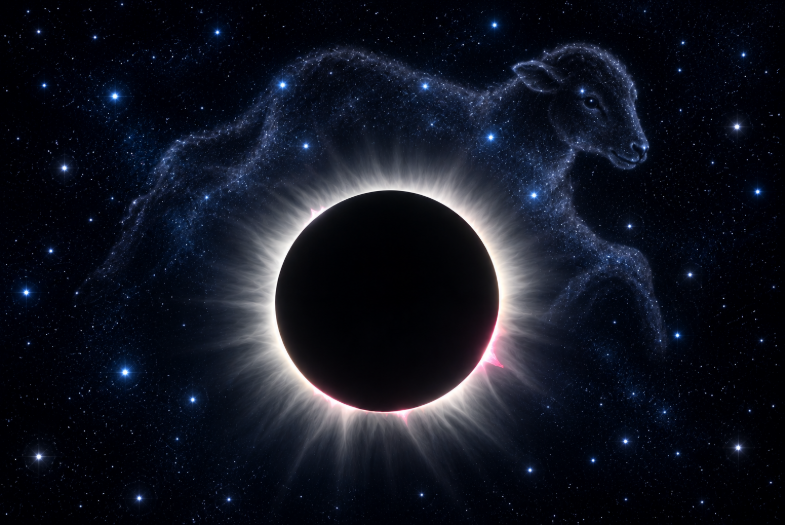 Amos 8:9-11
Introduction
Written approximately eight hundred years before the crucifixion of the Messiah, the prophecy of Amos contains a remarkable declaration: the sun would be “stricken” at noon, and the earth would be darkened in the midst of the day. This interlinear Scripture study examines that prophecy and its connection to the precise day of the ONLY BEGOTTEN SON’S SACRIFICIAL DEATH.
Was the dramatic darkening of the sun fulfilled by a SOLAR ECLIPSE, providing a celestial SIGN identifying the true Messiah? And if so, what might that heavenly witness reveal about His identity, His Kingdom government, and the worship rhythm established by the Creator?
The implications reach far beyond the crucifixion itself. Does the timing align with the modern Roman calendar Friday? What does it reveal about the lunar phase occurring in the middle of the month? Could this celestial event help identify the authentic New Moon and the true beginning of the lunar month? And what day consistently follows the 14th day?
These are not insignificant questions. If Scripture, lunar phases, and the celestial signs established by the Creator converge upon the same moment in TIME, the evidence deserves our careful attention. What might these Scriptural truths mean for us today, and for all who are preparing for an eternal home?
This entire article is built upon the following Scripture Word Study of Amos 8:9-11. Before proceeding, I encourage you to open it, examine each word for yourself as it is revealed in Hebrew, and allow the Scripture to establish the foundation for everything that follows.

The Celestial Sign of the True Messiah
In the Tanakh (Old Testament), the prophet Amos reveals profound truths that point forward to the promised Messiah. His prophecy essentially declares: This shall be a sign by which the true Messiah may be recognized. He will die at the appointed time of Passover, and that day will be marked by a “stricken sun at noon.”
Yet in the years leading up to that momentous day, much of Yashrael (Israel) remained blinded by traditional expectations concerning the Messiah. They anticipated a conquering King who would deliver them from Roman oppression, while overlooking the multitude of witnesses throughout the Tanakh that revealed the purpose and order of His coming. Although He would indeed return as KING OF KINGS, He must first come as the sacrificial LAMB, giving His life to atone for the sins of the world. Following His resurrection and ascension, He would then take up His heavenly ministry as our HIGH PRIEST, mediating before His Father on our behalf. Only after these appointed phases of His ministry were fulfilled would He return as KING.
Centuries later, following His sacrificial death and resurrection, Yahusha met two disciples on the road to Emmaus. Beginning with Moses and continuing through the prophets, He unfolded the Scriptures concerning Himself, explaining why Messiah first had to suffer before entering into His glory. While Luke does not identify each prophetic passage Yahusha presented that day, Amos stands among the prophetic witnesses of the Tanakh that point forward to the Messiah. Its remarkable declaration of the sun being darkened at noon takes on profound significance when considered alongside the events surrounding His sacrificial death.
This raises an important question: Could the darkness foretold by Amos and witnessed at Yahusha’s sacrificial death have been a solar eclipse? To answer that question, we must first examine the relationship between Passover, the lunar phases, and the celestial conditions required for such an event.
The Stricken Sun and Occulted Moon at Passover
Every 29 to 30 days, or approximately 12 to 13 times each year, the Moon completes another cycle of lunar phases. During each cycle, it reaches conjunction, the occulted dark lunar phase in which the Moon passes between the Earth and the Sun. Most conjunctions do not produce a solar eclipse because the three celestial bodies are not aligned precisely enough for the Moon’s shadow to fall upon the Earth.
A solar eclipse occurs only when the necessary alignment is present, and the Moon passes directly between the Sun and a portion of the Earth, temporarily obscuring the Sun from view. Although conjunction occurs every lunar month, a solar eclipse occurs somewhere on Earth only about two to three times per year on average.
This establishes an important astronomical point: a solar eclipse can occur only at the dark conjunction phase. No other lunar phase can position the Moon between the Earth and the Sun in the manner necessary to produce a solar eclipse.
Each lunar phase reveals the Moon’s position in its orbit around the Earth and its relationship to the Sun. Of particular importance to this study are the two opposing lunar phases: the full moon and the dark conjunction. They stand approximately half a lunar cycle apart. Therefore, if the full moon marks the beginning of the lunar month, as the Scriptural evidence presented in this study demonstrates, the dark conjunction naturally occurs near the middle of the lunar month, precisely where the 14th day and Passover are found.
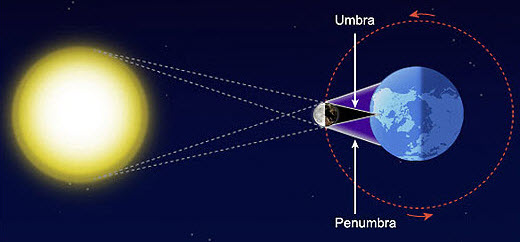
From this astronomical evidence, we can establish an important requirement: if the “stricken sun” foretold by Amos was fulfilled by a solar eclipse at Passover, the Moon had to be at the dark conjunction phase, positioned between the Earth and the Sun. Within the lunar chronology presented in this study, that places the dark conjunction near the middle of the month, precisely where Passover occurs on the 14th day of Abib. By extension, approximately 15 days earlier, the full moon ruled the night sky at the beginning of the lunar month.
Shocking as this may be to those accustomed to a different New Moon tradition, the full moon, as the original New Moon, ruled with the stars throughout the night, traveling from east to west and announcing that the new lunar month would begin with the following sunrise.
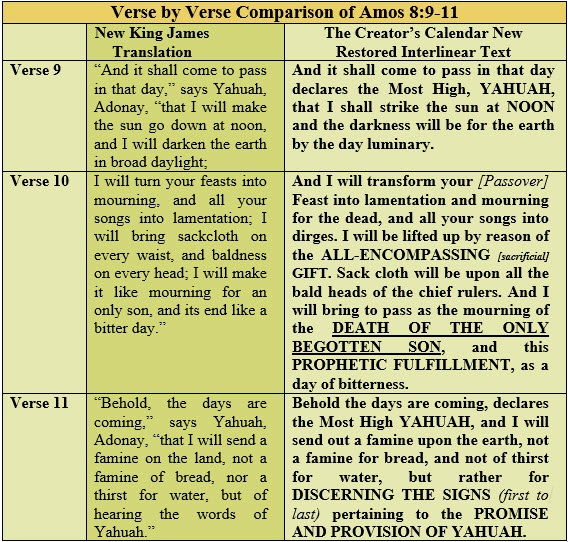
Between verses 9 and 10 in the Scripture Word Study above, Amos employs vivid and precise language so that the nature and timing of this celestial event cannot easily be mistaken. Within the wording examined in this study, three distinct witnesses identify the sun as the luminary being darkened: 1) the “stricken sun,” 2) the event occurring at noon (midday), and 3) its identification with the day luminary. These details distinguish the event from a lunar eclipse and point instead to the dark conjunction lunar phase passing between the Earth and the Sun.
Amos then carries this celestial SIGN directly into the sorrow of verse 10. The Feast upon which the “stricken sun” was to occur would be transformed into lamentation and mourning, described with the anguish associated with THE DEATH OF AN ONLY BEGOTTEN SON. Thus, the prophecy brings together TIME, celestial SIGN, Feast Day, and sacrificial DEATH, forming a prophetic witness that points forward to the death of the ONLY BEGOTTEN SON.
The Most Pivotal Event in Human History
So it is that the Messiah’s sacrificial DEATH upon the cross, the most pivotal event in human history, was to be marked by the mid-month SOLAR ECLIPSE, fulfilling the prophetic criteria presented in Amos 8:9-11. But this raises another important question: What significant day does Scripture identify as immediately following Passover, the 14th?
The answer is consistently preserved in both the Tanakh (Old Testament) and the Brit Hadasha (New Testament). Read the following four passages carefully and notice the special character of the day that follows Passover: Leviticus 23:7; Mark 15:42; Luke 23:54; John 19:31. Within the calendar pattern presented throughout this study, this was not merely significant once each year during the first lunar month. The 15th was a seventh-day Sabbath date that recurred every lunar month.
The festivities normally associated with the yearly Passover season were instead overtaken by lamentation and mourning as Yahusha suffered and died. No pen can adequately portray the horror of that day, nor can any dramatic portrayal fully capture its magnitude. The promised Messiah, the sacrificial Lamb toward whom the Sanctuary services had pointed, had laid down His life.
Yet Scripture reveals something even deeper. Yahusha’s death was not merely the result of human actions against Him. He willingly laid down His own life according to the redemptive purpose of His Father. At the same time, this does not erase the accountability of those who participated in His condemnation and execution: the religious authorities who sought His death, the Roman government that authorized and carried out the crucifixion, and those among the crowd who demanded that He be crucified.
Thus, the prophecy of Amos brings us face to face with far more than an astronomical phenomenon. The sun was darkened, the Feast was turned to mourning, and the ONLY
BEGOTTEN SON laid down His life. And when that Passover day ended, another appointed day immediately followed: the 15th day of the lunar month.
Three Dark Conjunction Feast Day Events
According to Leviticus 23, two annual Levitical Feast Day events are recorded as commencing near the halfway point of the lunar month. However, the calendrical restoration presented on this website identifies three Feast Day events as occurring at the dark conjunction lunar phase. This distinction is important to the evidence presented here.
Although recorded differently in the received Scriptural text, the calendrical restoration presented on this website proposes that these Feast dates reflect alterations made to our Creator’s original TIMES and LAWS. Daniel 7:25 foretells an attempt to change His TIMES and LAWS, while Amos 8:11 speaks of a coming famine for hearing the WORDS of Yahuah. For the broader calendrical evidence, refer to the article, The Menorah, the Gold Standard of Our Creator’s Eternal Timepiece, which presents all seven Feast Day events according to the pattern of the Menorah: three occurring at the full moon, three at the dark conjunction lunar phase, and one at the last-quarter moon.
The first of these three mid-month Feast events is the spring Feast of Passover and Unleavened Bread. The second, according to the restored calendar presented in this study, is the Day of Atonement, occurring on the 15th day of the Sixth Lunar Month rather than the 10th day of the Seventh Lunar Month. The third is the fall Feast of Tabernacles, beginning on the 15th day of the Seventh Lunar Month. Within this calendrical model, these are the three annual Feast events positioned at the dark conjunction lunar phase and, therefore, the three upon which a solar eclipse could potentially occur.
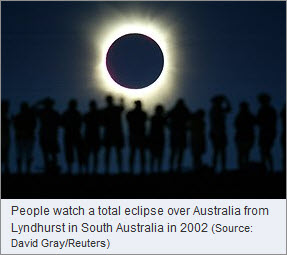
This makes the wording of Amos 8:9-10 especially significant. In verse 10, the Hebrew word translated “Feast” (H#2282, chag) appears in the immediate context of the darkening of the sun described in verse 9. The celestial SIGN associated with this Feast is therefore not the darkening of the moon in a lunar eclipse, but the darkening of the SUN at midday, the astronomical circumstances associated with a solar eclipse.
This distinction is critical. If Amos’s “stricken sun” identifies a solar eclipse occurring at the Feast of Passover, the prophecy places the dark conjunction phase at approximately the middle of the lunar month, at Passover on the 14th of Abib.
At the time of Amos, a darkened sun caused by the occulted moon was the celestial event we recognize today as a solar eclipse. Consequently, the prophetic description of a “stricken sun” need not have presented an unfamiliar or surprising celestial phenomenon to those who had witnessed or understood such events. They knew what it meant for the sun to be darkened in the middle of the day. As demonstrated more fully in the following article, this understanding provides an important foundation for recognizing the celestial SIGN foretold by Amos.
Might this evidence demonstrate that the “stricken sun” foretold by Amos was produced by the dark conjunction lunar phase on the 14th of Abib and ultimately fulfilled at the crucifixion of Messiah? If so, the implications extend directly to the identity of the New Moon itself.
If the dark conjunction occurred at mid-month on the 14th of Abib, which lunar phase marked the beginning of that same month?
Approximately half a lunar cycle earlier stands the FULL MOON. Thus, within the Scriptural and calendrical evidence presented in this study, Amos’s prophecy becomes another witness that the full moon marked the New Moon among the Creator’s faithful followers, while the occulted dark conjunction lunar phase marked the mid-month period associated with Passover and Tabernacles.
Four Recorded Eyewitnesses
Matthew and Mark record that darkness came over the land from the sixth hour until the ninth hour, while Luke provides an additional and significant detail: the sun itself was obscured. Thus, Luke states explicitly what the timing recorded by Matthew and Mark also connects to the daylight hours.
But how does the reference to the sixth and ninth hours help identify the sun as the luminary involved?
In the Scriptural method of reckoning daylight, the period from sunrise to sunset was divided into twelve hours. Yahusha Himself referred to this division when He asked, “Are there not twelve hours in the day?” (John 11:9). The sixth hour therefore marked approximately midday (noon), while the ninth hour occurred approximately three-quarters of the way through the daylight period, around 3:00 p.m
According to the Gospel accounts, daylight proceeded normally until the sixth hour, approximately noon. Then darkness descended and remained until the ninth hour (3:00 pm), after which daylight continued toward sunset. Luke makes the connection unmistakable by specifically associating this darkness with the obscuring of the sun.
This point is important because the words “stricken sun” do not even have to be repeated by the Gospel writers for the connection with Amos to become apparent. Their use of numbered daylight hours, together with Luke’s explicit reference to the sun, places the event squarely within the sun-governed portion of the day. The very timing of the darkness becomes another witness to the luminary involved.
An additional testimony has historically been associated with Dionysius the Areopagite, the Athenian mentioned in Acts 17:34. In letters written under his name, the author claims to have witnessed an extraordinary darkening of the sun while at Heliopolis and associates the phenomenon with the time of the crucifixion:
In letters written under the name Dionysius the Areopagite, the author claims to have observed a solar eclipse from Heliopolis at the time of the crucifixion. Parker, John (1897). “Letter VII. Section II. To Polycarp–Hierarch. & Letter XI. Dionysius to Apollophanes, Philosopher.” The Works of Dionysius the Areopagite. London: James Parker and Co. pp. 148-149, 182-183.
According to the traditional account preserved by the Orthodox Church in America, Dionysius had studied astronomy at Heliopolis and was there with his friend Apollophonos when he witnessed the darkening of the sun associated in that tradition with the crucifixion. The account attributes to him the remarkable declaration:
“Either the Creator of all the world now suffers, or this visible world is coming to an end.”
Whether considered through the three Gospel accounts or the additional historical tradition attributed to Dionysius, the central testimony remains striking: the SUN was darkened at midday on the very day Yahusha was crucified. Matthew establishes the TIME. Mark confirms the TIME. Luke identifies the SUN. And the account attributed to Dionysius preserves an additional ancient testimony concerning the extraordinary celestial event.
Together, these witnesses direct us back to the words of Amos: “I will cause the sun to go down at noon, and I will darken the earth in the clear day.” What Amos had foretold centuries beforehand was now being connected with the sacrificial DEATH of the Messiah.
What If the Moon Had Been Full?
Consider what the evidence would require if Amos’s prophecy, as traditionally interpreted by many, referred instead to an extraordinary supernatural event in which Yahuah darkened the sun during the full moon, when the Moon would ordinarily be approximately 180 degrees opposite the Sun, rather than at the dark conjunction lunar phase.
Certainly, Yahuah can accomplish whatever He chooses within the parameters of His own laws. Yet such an event would have required something radically different from the normal celestial order. If the Moon were at full phase, it could not naturally pass between the Earth and the Sun. For it to obscure the Sun at that time, its ordinary position would have had to be dramatically altered. Such an extraordinary departure from the established celestial pattern would surely have demanded explanation, particularly since Yahuah is not the author of confusion.
We also have the testimony of multiple witnesses concerning the events of that day. Matthew, Mark, and Luke carefully recorded the darkness that descended over the land. Luke specifically connected it with the obscuring of the sun, while all three identified its remarkable duration from the sixth hour until the ninth hour. The ancient account attributed to Dionysius likewise describes the event as an extraordinary darkening of the sun.
Yet none of these accounts describes the Moon being supernaturally displaced from the full-moon position, moving approximately 180 degrees across the heavens, or producing the darkness through some previously unknown celestial process. If the sun had been darkened while the Moon remained at full phase, such an unprecedented phenomenon would surely have been worthy of notice and record.
Instead, what stands out in these accounts is the darkened sun itself and the extraordinary duration of the darkness. The configuration required for a solar eclipse was already a recognizable celestial phenomenon: the dark conjunction of the Moon positioned between the Earth and the Sun. What made this particular event so astonishing was not the basic celestial relationship of Sun, Moon, and Earth, but the extraordinary circumstances surrounding it and its connection with the sacrificial DEATH of Messiah.
Therefore, the question remains unavoidable: If the dark conjunction Moon was positioned between the Earth and the Sun at Passover on the 14th of Abib, how could the full moon also have marked that same mid-month Feast? The two phases stand opposite one another in the lunar cycle. They cannot occupy the same position at the same time.
This is precisely why the prophecy of Amos carries such significance for identifying the Creator’s authentic New Moon. If conjunction marked the middle of the month at Passover, then half a lunar cycle earlier, the FULL MOON stood at the head of the month, announcing the arrival of New Moon Day.
The Sun, Moon, and Stars Testify in Unison
The real miracle surrounding this event was not necessarily the occurrence of a solar eclipse itself, but the extraordinary duration of the darkness and its remarkable intensity. An ancient account attributed to Phlegon describes an exceptional solar eclipse during the fourth year of the 202nd Olympiad. According to the record, the darkness was so profound that the stars became visible in the shamayim (heavens), and a great earthquake accompanied the event.
The church historian Eusebius of Caesarea (A.D. 264-340), in his Chronicle, preserves a quotation attributed to Phlegon [second century A.D.] concerning the fourth year of the 202nd Olympiad:
“A great eclipse of the sun occurred at the sixth hour [noon] that excelled every other before it, turning the day into such darkness of night that the stars could be seen in heaven, and the earth moved in Bithynia, toppling many buildings in the city of Nicaea.” Chronicle, Olympiad 202, trans. Carrier (1999)
This ancient testimony should not be overlooked, particularly its description of stars becoming visible at noon. The Greeks were accomplished observers of the heavens who relied extensively upon the movements of the sun, moon, and stars for astronomy and timekeeping. Consequently, the description of daylight becoming so dark that the stars appeared in the shamayim represents an extraordinary celestial observation.
The accompanying earthquake is equally significant. Scripture itself records an earthquake in connection with the death of Yahusha. Whether the celestial alignment contributed in some physical way to the seismic activity cannot presently be established with certainty. Nevertheless, the concurrence of the darkened sun, extraordinary darkness, visible stars, and earthquake presents a remarkable collection of signs surrounding the appointed TIME of Messiah’s sacrificial DEATH.
It appears possible that divine intervention acted upon a celestial configuration already appropriate for a solar eclipse. The occulted conjunction Moon was already positioned between the Earth and the Sun at mid-month. Rather than requiring the Moon to be miraculously transported approximately 180 degrees from a full-moon position, Yahuah may simply have intervened within the existing conjunction alignment to accomplish His prophetic purpose.
Whatever physical mechanism Yahuah employed, the extraordinary feature described by the witnesses was the prolonged darkness. The Gospel writers record darkness from approximately the sixth hour until the ninth hour, a period of about three hours. This should not necessarily be understood to mean that ordinary astronomical totality continued uninterrupted for three hours. Rather, the recorded darkness associated with the event extended across that extraordinary period.
Thus, the significance reaches far beyond the question of whether a full moon would have needed to be moved across the heavens. Yahuah Alahim was marking a preordained TIME & EVENT that would forever identify both WHEN the appointed sacrifice occurred and WHO fulfilled it: His ONLY BEGOTTEN SON, Yahusha, the anointed Messiah, the LAMB slain from the foundation of the world.
That appointed moment had to remain in perfect harmony with the sacred pattern of TIME restored to Moses and Aaron in Exodus 12:1-2, from which the Passover date was established. The most anticipated EVENT in the Plan of Salvation would not occur at an arbitrary moment, nor would the identity of the promised Messiah be left without prophetic witnesses. TIME, EVENT, and IDENTITY would converge at the appointed moment, according to the sacred calendar established beforehand and witnessed in the shamayim. The SUN, MOON, and STARS would bear their appointed testimony that Yahusha was indeed the promised Messiah, fulfilling the prophetic role of the sacrificial LAMB.
The significance is difficult to miss: the sun was darkened at noon, the stars appeared in the shamayim, the earth shook, and the ONLY BEGOTTEN SON gave His life. Heaven and Earth together bore witness to the appointed TIME.
The Sorrowing Eternal Father’s Announcement to the World and His Three-Part Celestial Sign
With TIME, EVENT, and IDENTITY converging at that appointed moment, what message were these three celestial witnesses proclaiming to the inhabitants of Earth as Yahuah’s ONLY BEGOTTEN SON willingly laid down His life as the sacrificial Lamb?
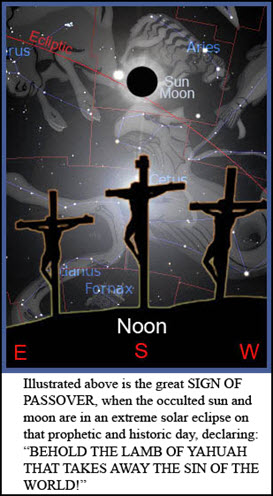 With the added element of Divine intervention, the astronomical configuration portrayed in the following Stellarium image illustrates what could have occurred. The precise celestial event proposed here cannot be established merely by projecting ordinary astronomical cycles backward, because the three-hour darkness described by the Gospel writers itself points to circumstances beyond an ordinary solar eclipse. Yet within the prophetic and calendrical pattern developed in this study, the appointed moment points to both the occulted Sun and occulted Moon appearing together at the feet of the “he lamb,” Aries, at precisely midday, the sixth hour.
Imagine the significance of such a celestial proclamation. Might our sorrowing Eternal Father have utilized this perfectly timed astronomical event to announce to the whole earth:
“Behold, the LAMB, My ONLY BEGOTTEN SON, who takes away the sin of the world!”
Here the prophetic story appears written across the shamayim. The SUN was darkened. The MOON stood occulted before it. And the STARS supplied the prophetic backdrop of the Lamb. Sun, moon, and stars together became a three-part celestial witness to the sacrificial DEATH taking place upon the earth below.
Within the calendrical and astronomical model presented in this study, this remarkable alignment becomes possible when the FULL MOON is restored as New Moon Day and the New Year is established in its proper relationship to Bethula (Virgo). By the 14th day of the lunar month, the Moon has traveled to its opposing dark conjunction phase. At precisely this mid-month position, Aries can occupy the daytime shamayim, providing the celestial setting for the Sun, Moon, and constellation of the Lamb to converge in one extraordinary prophetic picture.
The Abrahamic Covenant Bears Witness
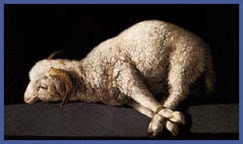
Long before the crucifixion, Yahuah established another remarkable witness within the Abrahamic Covenant. That foundational Covenant not only pointed forward to the long-promised Messiah and His preordained sacrificial DEATH, but also preserved important evidence concerning the appointed TIME and lunar phase associated with that prophetic EVENT.
Within the chronology developed in this study, Passover on the 14th day of the lunar month, nearly two thousand years after Abraham, was again positioned at the dark conjunction lunar phase in the middle of the month by day.
The implication is profound. If the dark conjunction lunar phase occupied the middle of the month at Passover, then approximately half a lunar cycle earlier stood its celestial opposite, the FULL MOON, identifying the beginning of the lunar month. Thus, the Abrahamic Covenant provides yet another Scriptural witness supporting the full moon as the original New Moon.
For the complete evidence establishing this connection in Genesis 15, refer to the article, The Night Was Dark.
As discovered earlier in this Word Study, the simplified comparison below places the NKJV alongside the Creator’s Calendar New Restored Interlinear Text, allowing the wording of the original Hebrew to reveal these prophetic details more clearly.
Was There Motivation for Calendar Alterations?
The following illustration portrays the three days and three nights that Messiah lay in the tomb, highlighting the lunar phases as they would have occurred during those appointed days.
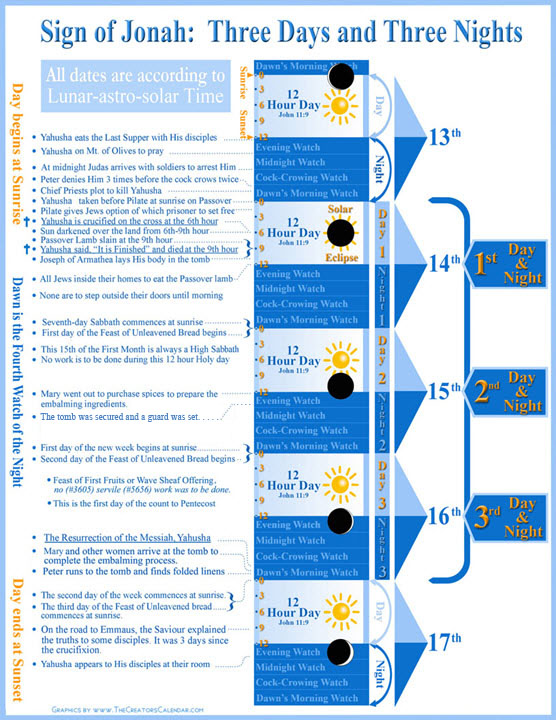
Take a moment to thoughtfully consider the lunar phases portrayed in the graphic above and how they correspond with the Scriptural chronology presented throughout this study. Notice especially the dark conjunction Moon positioned on the 14th of Abib and the FULL MOON at the beginning of the lunar month.
At first, this conclusion may be difficult to accept because it stands approximately 180 degrees opposite the lunar phase associated with the beginning of the month in the later Jewish calendar. This naturally raises an important question: Was Scripture mistaken in its timekeeping, or was the calendar altered sometime after the events recorded in Scripture?
The following one-minute VIDEO addresses this very question.
When the Scriptural, astronomical, and historical evidence is examined together, the question becomes even more significant. If Passover on the 14th of Abib occurred at the dark conjunction lunar phase, then moving the beginning of the month to that same dark conjunction phase would effectively shift the entire lunar framework by approximately half a month. The celestial configuration associated with Passover and the crucifixion would consequently become much more difficult for later generations to recognize.
Could there also have been a motivation for such an alteration?
The crucifixion of Yahusha occurred during Passover, and the Gospel accounts preserve the extraordinary darkness from the sixth to the ninth hour. Amos had foretold centuries earlier that the SUN would be darkened at noon, and that the accompanying Feast would be turned into mourning associated with the death of an only son. Within the evidence presented in this study, these celestial and prophetic witnesses converge upon Yahusha as the promised Messiah.
If the New Moon were subsequently identified with the dark conjunction rather than the FULL MOON, the astronomical relationship between the beginning of the month and the mid-month Passover would be reversed. The dark conjunction would instead be assigned to the beginning of the month, shifting Passover on the 14th approximately half a lunar cycle away from the conjunction phase and obscuring one of the most striking celestial witnesses presented in this study.
Whether concealing this testimony was an intentional motivation for later calendar alterations requires historical evidence beyond the astronomical pattern itself. Nevertheless, the consequence is unmistakable within the calendar model presented here: changing the identity of the New Moon also changes how the celestial SIGN surrounding Passover and the crucifixion is understood.
And this brings us back to the testimony of the shamayim. The SUN was darkened. The MOON was occulted. The prophetic Lamb gave His life. Together with the Sanctuary services and the testimony of Scripture, the celestial signs proclaimed the message:
For more on the lunar phase at the crucifixion, refer to The Sun was Darkened from the Sixth to the Ninth Hour.
Blind Leading the Blind
Why has the remarkable testimony of Amos 8:9-11 received so little attention within Judaism and Christianity? Within the evidence presented in this study, the prophecy points to the long-promised Messiah’s sacrificial DEATH in the middle of the lunar month, accompanied by an extraordinary darkening of the sun. Might one reason be that recognizing this celestial SIGN would also require reconsidering whether modern religious calendars remain synchronized with the Creator’s original beacons of astro-luni-solar TIME?
The calendar systems inherited by both Judaism and Christianity underwent significant development over the centuries. Rome’s calendar was radically reformed under Julius Caesar beginning in 46 B.C., producing the Julian calendar. Ancient Rome also employed an eight-day nundinal market cycle, while the seven-day week increasingly spread throughout the Roman Empire during the early centuries A.D. By the time of Constantine, the seven-day week was already established, and in A.D. 321 Constantine enacted legislation giving Sunday a special civil status as a day of rest. The Council of Nicaea followed in A.D. 325 and became particularly significant in the history of Christian Easter reckoning. Refer to the article Constantine’s Creed.
The Jewish calendar likewise underwent important developments after the destruction of Jerusalem in A.D. 70. Jewish communities lived under changing Roman political conditions, and later traditions associate Hillel II in the fourth century with the transition toward a calculated calendar. Historical evidence indicates that the fixed Jewish calendar actually developed gradually, with additional rules taking shape over subsequent centuries, particularly in Babylonia. Thus, the calendar practiced today reflects a long historical development rather than simply preserving, unchanged, every calendrical practice of the Second Temple period.
Yet correct lunar TIME is not the only issue raised by these developments. Far more important is the identity of the authentic Messiah.
Today, Judaism does not recognize Yahusha as the promised Messiah, while Christianity overwhelmingly identifies Him within a Roman-derived calendrical framework. Within the calendar model presented in this study, however, beginning the lunar month with the dark conjunction or first visible crescent cannot reproduce the mid-month astronomical configuration identified here with Passover on the 14th. If the dark conjunction Moon occupied the middle of the lunar month at the sacrificial DEATH of Yahusha, then the FULL MOON, its celestial opposite, must have occupied the beginning of that lunar cycle.
Christian tradition presents another calendrical difficulty. Because the Roman seven-day planetary week cycles continuously without reference to the lunar phases, the traditional Good Friday-Easter Sunday chronology is interpreted entirely within that continuous weekly framework. But the Scriptural criteria examined throughout this study ask us to look instead at the Creator’s own TIME markers: SUN, MOON, STARS, lunar dates, Feast Days, and the Sanctuary pattern.
This raises a profound question. Should the identity of Messiah and the timing of His sacrificial DEATH be established by later religious traditions, or by the prophetic criteria recorded beforehand in Scripture?
Within the evidence presented here, Yahusha’s identity is inseparably connected with those prophetic TIME markers. Amos foretold the darkening of the sun at noon. Passover established the appointed 14th day. The lunar phase identifies the astronomical position of the Moon. The Sanctuary identifies the sacrificial Lamb. And the Gospel accounts record the darkness accompanying His DEATH.
When these witnesses are brought together, TIME itself becomes part of the testimony identifying the authentic Messiah.
The tragedy, therefore, is not merely that religious calendars have changed through history. It is that inherited traditions can become so deeply established that they prevent sincere worshipers from reconsidering the Scriptural evidence for themselves. When one generation receives a tradition from another without returning to the original witnesses of Scripture, the warning becomes painfully relevant: the blind can indeed lead the blind.
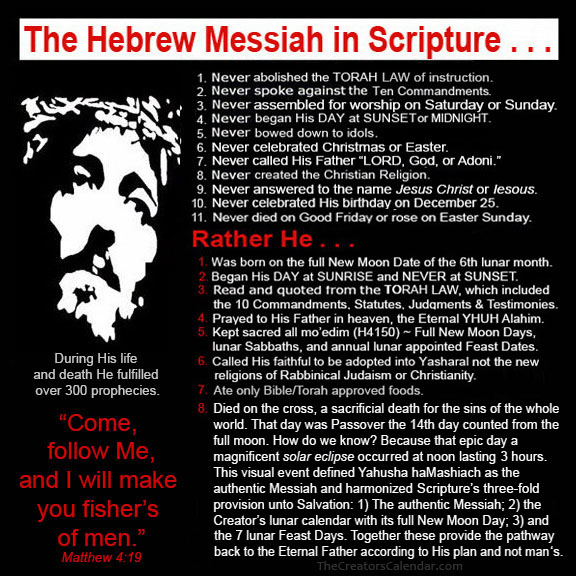 Famine for Discerning the Signs of the Promise
As a final warning, Amos 8:11 declares that a time was coming when there would be a famine in the land. It would not be a famine of bread or a thirst for water, but, as developed in the interlinear Word Study upon which this article is based, a famine for “discerning the signs [in the heavens] that pertain to the promise of Yahuah.” Consider also Daniel 7:25, which foretells an assault upon Yahuah’s appointed TIMES and LAWS.
Could there be a more fitting description of what has occurred?
The prophetic SIGNS remain in the shamayim. The sun still rules the day. The moon continues through its appointed phases. The stars remain in their courses. Yet the ability to discern what these celestial witnesses declare concerning Yahuah’s appointed TIMES and His promised Messiah has been largely lost. The famine, therefore, is not caused by an absence of evidence, but by an inability or unwillingness to recognize the evidence that remains before our eyes.
Nowhere is this famine more profoundly demonstrated than in the identity of the Creator’s authentic New Moon. Within the Scriptural evidence presented throughout this study, the FULL MOON announces the beginning of the lunar year and each lunar month. Approximately half a lunar cycle later, the dark conjunction occurs at mid-month, providing the necessary celestial configuration for the “stricken sun” foretold by Amos at Passover on the 14th of Abib.
Yet this original relationship between the lunar phases and the Creator’s appointed TIME was eventually lost. The full moon was displaced as the marker of the New Moon, while the dark conjunction or visible crescent came to identify the beginning of the lunar month within later Jewish calendrical traditions. Meanwhile, Christianity increasingly adopted a Roman solar calendar and a continuous planetary week that function independently of the lunar phases.
Whether every stage of this transformation occurred at once or developed progressively over the centuries, the result is the same: the celestial TIME markers presented in this study no longer govern the worship calendars followed by either mainstream Judaism or Christianity.
Thus, the famine foretold by Amos takes on profound significance. Humanity has not lost the SUN, MOON, and STARS. We have lost the ability to recognize the message they were appointed to proclaim.
And at the center of that message stands Yahusha, the authentic promised Messiah and sacrificial LAMB, whose DEATH occurred according to the prophetic TIME established beforehand.
The SIGNS were never removed from the heavens (shamayim). The question is whether we are willing to discern them.
Calendar Wars in the Dead Sea Scrolls
The Dead Sea Scrolls provide important evidence that calendar controversy was already a significant issue in ancient times. Different groups advocated competing methods for determining the Creator’s appointed TIMES, including a 364-day solar calendar, lunar calendars associated with the crescent moon, and other systems for reckoning sacred days.
Within the Scriptural evidence presented throughout this study, however, another pattern emerges: the FULL MOON rules the night together with the stars, announcing New Moon Day to begin with the following sunrise. From this brilliant lunar marker, the days are numbered, the Sabbaths are located, and the sacred Feast Day events are established.
The existence of these ancient calendar disputes is significant in light of Amos’s prophecy concerning a famine for discerning the SIGNS. Somewhere along the course of history, the Creator’s original celestial pattern became obscured beneath competing systems and traditions.
Restoring His Truth with Honor
The SIGNS have never disappeared from the shamayim. The sun continues to rule the day. The moon and stars continue to rule the night. The question is whether we are willing once again to recognize the purpose for which Yahuah appointed them.
The evidence presented throughout this study brings us back to the FULL MOON, shining through the night with the stars and announcing the beginning of the Creator’s lunar month. From that brilliant starting point, the days are numbered, the Sabbaths are located, the Feast Days are established, and the prophetic TIME surrounding the sacrificial DEATH of Yahusha comes into view.
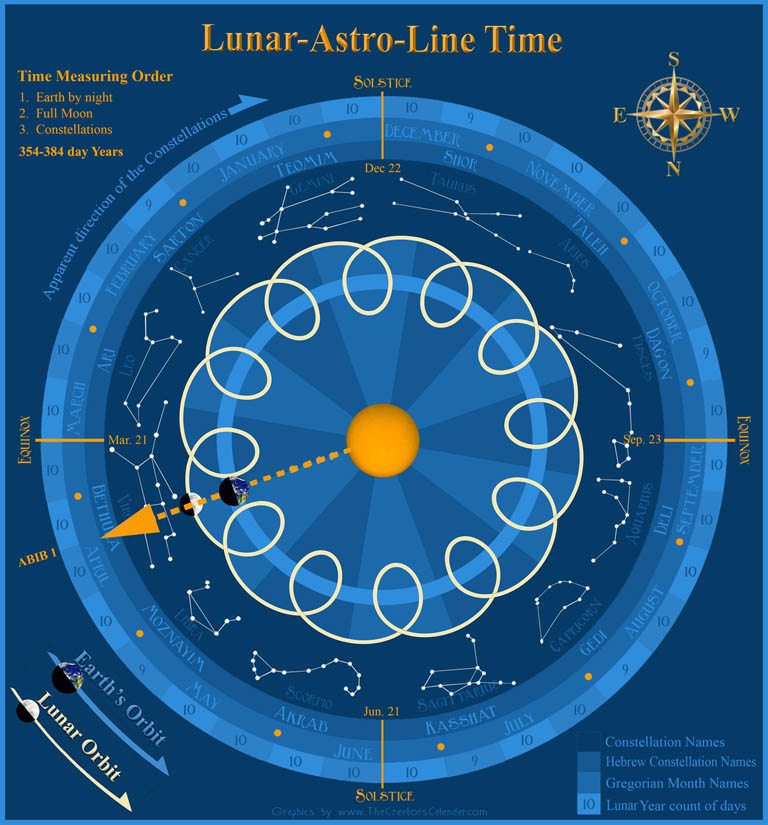
In its brilliant fullness, the full moon bears witness to the Creator’s appointed LIGHT in the night sky. Yahuah is the FATHER OF LIGHTS, and His celestial SIGNS continue to shine according to the purposes for which He appointed them.
“Every good gift and every perfect gift is from above, and comes down from the FATHER OF LIGHTS, with whom there is no variation or shadow of turning.” James 1:17
The Creator’s Master Key of Time
The Creator’s Master Key of Time has not changed. It was ordained at the Fall in Eden and reestablished with Moses and Aaron fourteen days before Passover and fifteen days before the Exodus from Egypt. What was established by Yahuah, demonstrated through His appointed SIGNS, and woven throughout the Plan of Salvation remains His testimony today.
Although Yahuah, His prophets, and the Messiah never abandoned His appointed TIME, humanity largely lost the ability to discern its celestial SIGNS. Within the prophetic interpretation presented in this study, Amos’s warning concerning a famine for discerning the SIGNS has found a striking fulfillment, yet restoration and reconciliation have begun among those who seek Yahuah’s truth and the promise of eternal life.
Below is the Creator’s Master Key of Time, bringing together the appointed rhythms established throughout this study. The Sacrifice Schedule reveals that Yahuah’s calendar was not composed of disconnected observances, but of an ordered pattern of TIME & EVENT. Daily offerings, seventh-day Sabbath offerings, New Moon offerings, and annual Feast Day offerings each occupied their appointed place within the sacred calendar. Together they formed a recurring testimony of the Plan of Salvation and pointed forward to the work of the promised Messiah.
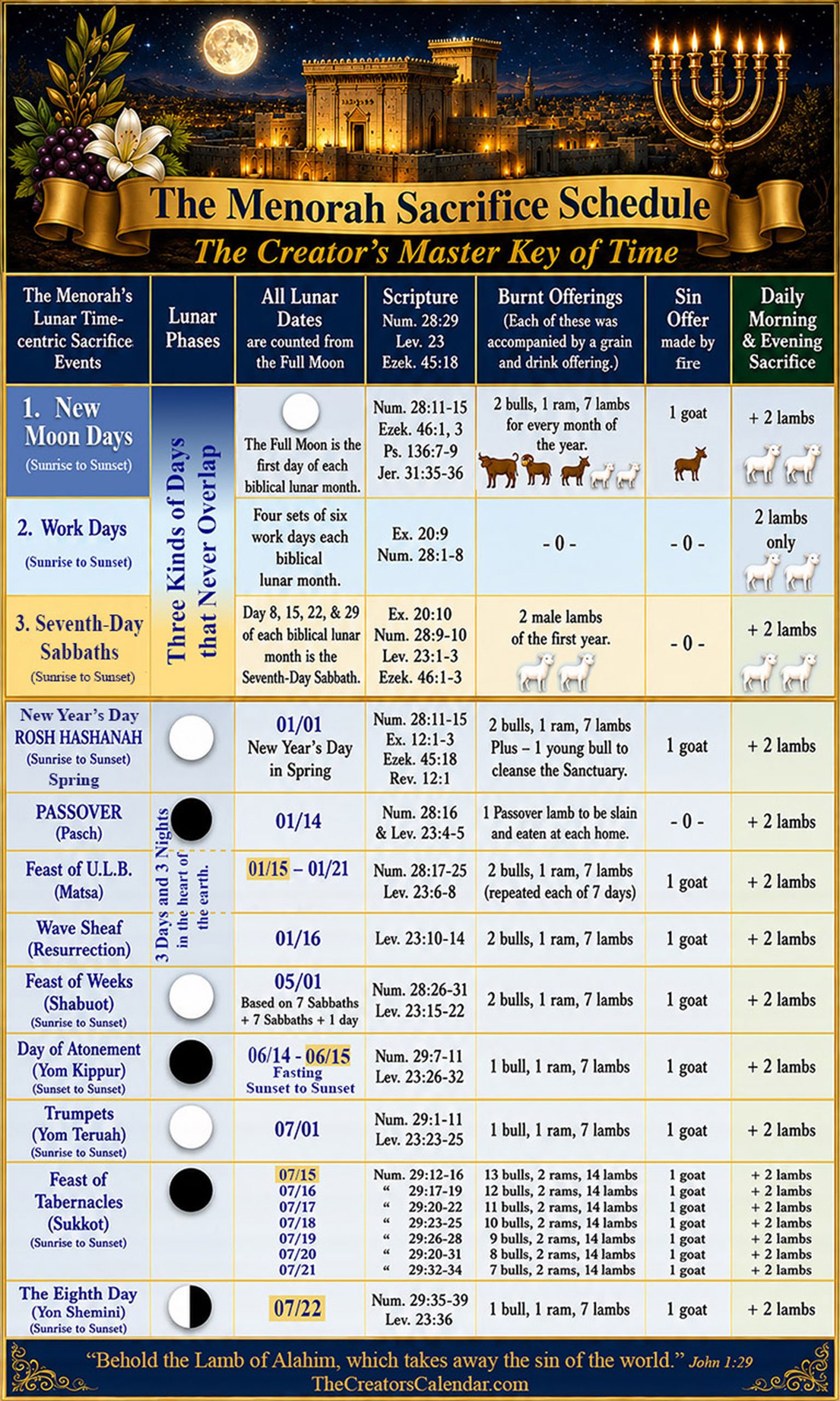 Seen together, these appointed sacrifices become more than a schedule. They reveal a Divine pattern in which TIME and EVENT move together according to Yahuah’s design. The calendar identifies the appointed TIME, while the sacrifices portray the redemptive EVENT. Ultimately, both converge in Yahusha, the authentic Messiah and sacrificial LAMB to whom the entire pattern points.
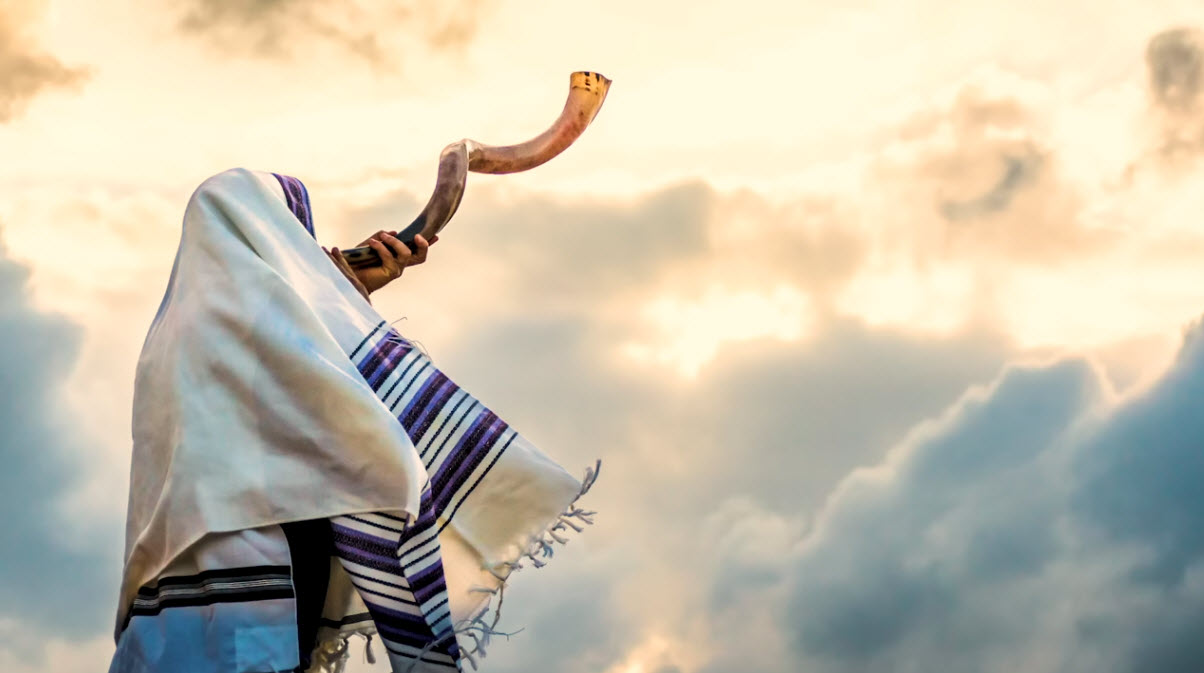
May the rich, clear sound of the New Moon shofar be heard once again from a not-too-distant hill as the full New Moon rises to rule the night, and again at sunrise, while the full moon is still present, announcing that New Moon Day has begun.
May its voice rise above Earth’s clatter and confusion, proclaiming the restoration of Yahuah’s years, months, weeks, Sabbaths, and sacred Harvest Feast Day celebrations.
And above all, may the shofar proclaim the identity of the authentic Messiah, Yahusha, the sacrificial LAMB who died at the appointed TIME on Passover, the 14th day of Abib, when the sun was darkened at noon.
The famine was never caused by the disappearance of the SIGNS.
The SIGNS have remained in the shamayim all along.
May we now have eyes to see them, hearts to understand them, and courage to follow wherever Yahuah’s WORD and appointed TIME lead.
“So teach us to number our days, that we may present to You a heart of wisdom.”
Psalm 90:12
GREAT IS OUR ALMIGHTY YAHUAH AND YAHUSHA, HIS SON, AND GREATLY TO BE HONORED AND PRAISED!