Three Months in a Row – the Exodus – Part 1
Introduction: A Three-Month Witness Written in Time
The chronological details recorded in the three consecutive months of the Exodus, the manna, and Yasharal’s arrival at Mount Sinai reveal a divine pattern of profound importance. These familiar biblical accounts are remembered for their extraordinary EVENTS: the first Passover, deliverance from Egyptian bondage, manna from the shamayim, and the encounter with Yahuah at Mount Sinai. Yet woven throughout these narratives is another remarkable witness, one written in TIME.
Moses records not merely what happened, but when. Months are identified, dates are preserved, and EVENTS unfold in a deliberate sequence. When examined together, these details provide the foundation for this study’s central argument: Yahuah restored His original appointed system of TIME before leading His people out of Egypt and continued demonstrating its order throughout their wilderness journey.
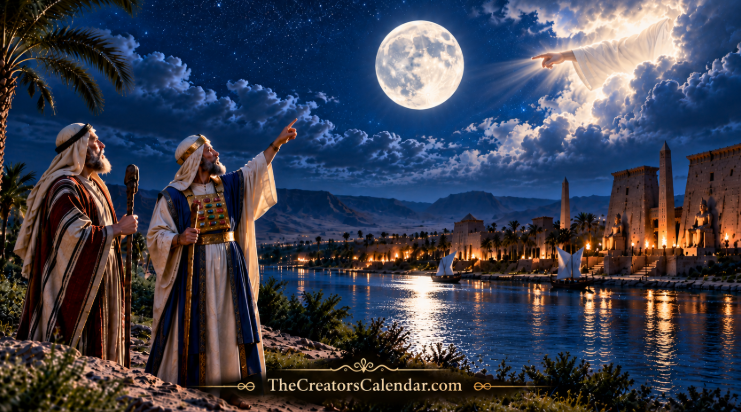
In the First Month of Abib, while Yasharal remained in Egypt, Yahuah instructed Moses and Aaron concerning the beginning of the year and the lunar month. Before Passover could be observed on the appointed 14th day, His people first had to recognize the New Moon from which the count began.
In the Second Month, the manna became a living testimony to the weekly rhythm of sacred TIME. Six working days of provision, a double portion on the sixth, and none upon the seventh-day Sabbath demonstrated the recurring order Yahuah expected His people to follow.
In the Third Month, Yasharal arrived at Mount Sinai, where the restoration of sacred TIME became connected with the establishment of the Bridal Covenant. The Sanctuary, instituted later, would unite TIME with EVENT through its appointed services, revealing the prophetic Plan of Salvation.
Forty years later, the manna ceased after Yasharal entered the Promised Land. Within the calendrical framework examined in this book, its final cessation provides a concluding witness through which the weekly pattern established at the beginning of the wilderness journey can be compared with its ending.
Together, these four accounts present a remarkable testimony of continuity, from the restoration of the calendar in Egypt to the completion of forty years of wilderness instruction.
Yet this study concerns far more than identifying dates upon a calendar. Yahuah was calling a people out of bondage and into covenant relationship with Himself. They were to learn not only WHOM they worshiped, but WHEN He had appointed to meet with them.
His New Moons, seventh-day Sabbaths, and annual Feast Days were sacred appointments woven into the relationship between the Bride and her Bridegroom. Through these appointed TIMES, Yahuah would reveal the prophetic EVENTS that ultimately find their fulfillment in Yahusha haMashiach.
The restoration of sacred TIME was therefore part of a much greater work: calling His people away from the traditions of bondage, restoring His authority over their worship, and preparing them to walk according to His WORD, His WAY, and His appointed order.
Before Yasharal could begin the journey toward the Promised Land, they first had to learn to walk according to the TIME appointed by the One who would lead them there.
Three Months-in-a-Row
Part One
Calendar Restoration
Fourteen-Day Count to Passover
The Exodus on the 15th by Night
Introduction: The First Month
The First Month of Abib provides the foundation for understanding Yahuah’s appointed calendar. While Yasharal (Israel) remained in Egypt, Yahuah instructed Moses and Aaron concerning the beginning of the year and the lunar month from which His sacred appointments were to be counted.
The sequence that followed was precise. The Passover lamb was selected on the 10th day, sacrificed on the 14th, and Yasharal departed Egypt on the 15th by night. Each EVENT depended upon correctly identifying the appointed TIME, beginning with the New Moon that established the first day of the lunar month.
Of particular importance is the relationship between Passover on the 14th and the seventh-day Sabbath of the 15th. Within the calendrical framework presented in this study, Yasharal remained in Egypt throughout the Sabbath daylight hours and departed by night, after those sacred hours had passed.
These chronological details establish the First Month as the opening witness in a series of divine appointments that will be examined through the manna, Mount Sinai, and forty years of wilderness instruction.
Before Yasharal could walk according to Yahuah’s WAY, they first had to recognize His appointed TIME.
Exodus 12:1-42 KJV
“Now Yahuah spoke to Moses and Aaron in the land of Egypt, saying, 2 “This month shall be your beginning of months; it shall be the first month of the year to you. 3 Speak to all the congregation of Israel, saying: ‘On the tenth day of this month, every man shall take for himself a lamb, according to the house of his father, a lamb for a household.
4 And if the household is too small for the lamb, let him and his neighbor next to his house take it according to the number of the persons; according to each man’s need, you shall make your count for the lamb. 5 Your lamb shall be without blemish, a male of the first year. You may take it from the sheep or from the goats.
6 Now, you shall keep it until the fourteenth day of the same month. Then the whole assembly of the congregation of Israel shall kill it in the evening. 7 And they shall take some of the blood and put it on the two doorposts and on the lintel of the houses where they eat it. 8 Then they shall eat the flesh on that night; roasted in fire, with unleavened bread and with bitter herbs they shall eat it.
9 Do not eat it raw, nor boiled at all with water, but roasted in fire–its head with its legs and its entrails. 10 You shall let none of it remain until morning, and what remains of it until morning you shall burn with fire. 11 And thus you shall eat it: with a belt on your waist, your sandals on your feet, and your staff in your hand. So you shall eat it in haste. It is Yahuah’s Passover.
For I will pass through the land of Egypt on that night and will strike all the firstborn in the land of Egypt, both man and beast; and against all the gods of Egypt I will execute judgment: I am Yahuah. 13 Now the blood shall be a sign for you on the houses where you are. And when I see the blood, I will pass over you; and the plague shall not be on you to destroy you when I strike the land of Egypt. 14 So this day shall be to you a memorial, and you shall keep it as a feast to Yahuah throughout your generations. You shall keep it as a feast by an everlasting ordinance.
15 Seven days, you shall eat unleavened bread. On the first day, you shall remove leaven from your houses. For whoever eats leavened bread from the first day until the seventh day, that person shall be cut off from Israel. 16 On the first day, there shall be a sacred convocation, and on the seventh day, there shall be a sacred convocation for you. No manner of work shall be done on them, but that which everyone must eat, that only may be prepared by you. 17 So you shall observe the Feast of Unleavened Bread, for, on this same day, I will have brought your armies out of the land of Egypt. Therefore, you shall observe this day throughout your generations as an everlasting ordinance.
18 In the first month, on the fourteenth day of the month at evening, you shall eat unleavened bread until the twenty-first day of the month at evening. 19 For seven days, no leaven shall be found in your houses since whoever eats what is leavened, that same person shall be cut off from the congregation of Israel, whether he is a stranger or a native of the land. 20 You shall eat nothing leavened; in all your dwellings, you shall eat unleavened bread.
21 Then Moses called for all the elders of Israel and said to them, “Pick out and take lambs for yourselves according to your families and kill the Passover lamb. 22 And you shall take a bunch of hyssop, dip it in the blood that is in the basin, and strike the lintel and the two doorposts with the blood that is in the basin. And none of you shall go out of the door of his house until morning. 23 For Yahuah will pass through to strike the Egyptians; and when He sees the blood on the lintel and on the two doorposts, Yahuah will pass over the door and not allow the destroyer to come into your houses to strike you. 24 And you shall observe this thing as an ordinance for you and your sons forever.
25 It will come to pass when you come to the land which Yahuah will give you, just as He promised, that you shall keep this service. 26 And it shall be, when your children say to you, ‘What do you mean by this service?’ 27 “that you shall say, ‘It is the Passover sacrifice of Yahuah, who passed over the houses of the children of Israel in Egypt when He struck the Egyptians and delivered our households.'” So the people bowed their heads and worshiped. 28 Then the children of Israel went away and did so, just as Yahuah had commanded Moses and Aaron, so they did.
29 And it came to pass at midnight that Yahuah struck all the firstborn in the land of Egypt, from the firstborn of Pharaoh who sat on his seat of power to the firstborn of the captive who was in the dungeon, and all the firstborn of livestock. 30 So Pharaoh rose in the night, he, all his servants, and all the Egyptians; and there was a great cry in Egypt, for there was not a house where there was not one dead. 31 Then he called for Moses and Aaron by night and said, “Rise, go out from among my people, both you and the children of Israel. And go, serve Yahuah as you have said.
32 Also, take your flocks and your herds, as you have said, and be gone; and honor me also. 33 And the Egyptians urged the people that they might send them out of the land in haste. For they said, “We shall all be dead.” 34 So the people took their dough before it was leavened, having their kneading bowls bound up in their clothes on their shoulders. 35 Now the children of Israel had done according to the word of Moses, and they had asked from the Egyptians articles of silver, articles of gold, and clothing. 36 And Yahuah had given the people favor in the sight of the Egyptians so that they granted them what they requested. Thus, they plundered the Egyptians.”
37 Then the children of Israel journeyed from Ramses to Succoth, with about six hundred thousand men on foot, besides children. 38 A mixed multitude went up with them also, and flocks and herds, a great deal of livestock. 39 And they baked unleavened cakes of the dough which they had brought out of Egypt, for it was not leavened, because they were driven out of Egypt and could not wait, nor had they prepared provisions for themselves.
40 Now, the sojourn of the children of Israel who lived in Egypt was four hundred and thirty years. 41 And it came to pass at the end of the four hundred and thirty years–on that very same day–it came to pass that all the armies of Yahuah went out from the land of Egypt. 42 It is a night of solemn observance to Yahuah for bringing them out of the land of Egypt. This is that night of Yahuah, a solemn observance for all the children of Israel throughout their generations.
The Restoration of Yahuah’s Calendar
The command recorded in Exodus 12:1-3 marked a turning point in Yasharal’s relationship with Yahuah. While His people remained in Egypt, He directed Moses and Aaron to recognize the beginning of the year and the lunar month from which His appointed days would be counted.
This instruction established more than a calendar. It restored the Creator’s authority over the measurement of sacred TIME, providing the foundation for identifying His New Moons, seventh-day Sabbaths, and annual Feast Days.
Here we discover that TIME is a significant ingredient of the sacred Bridal Covenant.
Yahuah was calling forth a people to be His own, chosen for a covenant relationship in which worship and obedience would be expressed through His appointed instructions. This included meeting with Him at the TIMES He Himself established.
His sacred calendar identified the appointed moments when the Bride was to assemble before her Bridegroom in worship, remembrance, and covenant fellowship. Sacred TIME was therefore not merely a means of counting days. It was woven into the very relationship Yahuah was restoring with His people.
The significance of this instruction becomes clearer when we examine the Hebrew words underlying Exodus 12:1-3. The following passage identifies several key terms alongside their Strong’s numbers, revealing the lunar terminology that is not always apparent in most Bible translations.
“And the
LORD[H#3068 – YHUH – Yahuah, the self-existing One] spoke unto Moses and unto Aaron, while in the land of Egypt, declaring that:”“This
month[H#2320 – chodesh – New Moon], this self-same one, is HEAD [H#7218 – rosh] of themonths[H#2320 –chodesh – lunar months]; it shall be the firstmonth[H#2320 – chodesh – lunar month] of the year [H#8141 – shanah – year] for you.You shall keep and teach this to all the congregation of Israel, saying, “In the tenth of the
month[H#2320 – chodesh – lunar month], do the following: And you shall reserve and keep every man a lamb for each household of the father, a lamb for each house.” Exodus (Shemot) 12:1-3
The Meaning of Chodesh
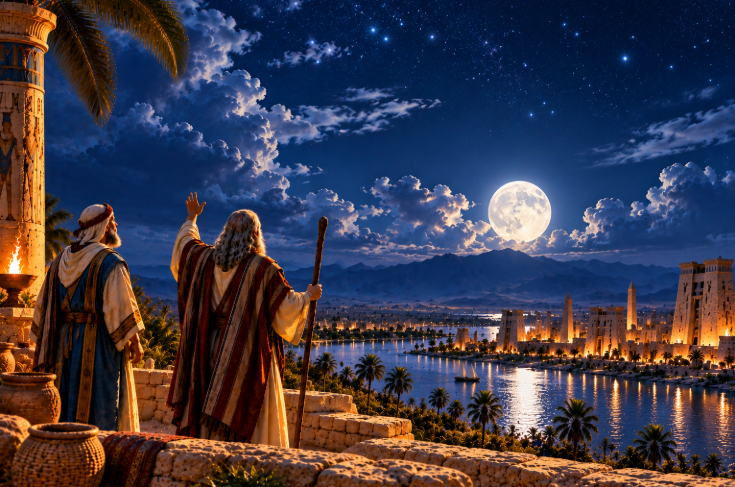
The Hebrew word translated “month” in Exodus 12:2 is chodesh (חֹדֶשׁ), Strong’s H#2320. Its connection with the moon is preserved in recognized Hebrew lexicons:
Strong’s Concordance: chodesh (H#2320), “new moon, a month.”
Brown-Driver-Briggs Hebrew Lexicon: chodesh, “new moon” and “month,” identifying its use in reference to a lunar month.
These definitions establish that the Hebrew terminology carries a lunar significance that will not be apparent when translated simply as “month.” Although the word itself does not identify which lunar phase marks the beginning of each month, referred to as New Moon Day, it directs our attention to the moon as an essential element in biblical timekeeping.
This distinction becomes particularly important when comparing the biblical calendar with the modern solar calendar, whose months are not governed by the lunar phases. Generations have inherited a different method of measuring TIME, often without recognizing how significantly their point of reference has changed.
It is as though the astrolabe has been recalibrated while generations of travelers continued their journey, unaware that the instrument by which they navigated TIME no longer followed the original reference point.
The Theological Wordbook of the Old Testament likewise observes:
“Although this word properly means ‘New Moon,’ it is commonly used as an equivalent to our word, ‘month…’” Theological Wordbook of the Old Testament, Harris, Archer, and Waltke, Number 613b, p. 266.
The lunar meaning of chodesh establishes an important foundation for examining the appointed dates recorded in Exodus. Identifying the particular lunar phase that marks the biblical New Moon, however, requires additional Scriptural and chronological evidence, which this study will develop.
The Foundational Word Study
The Hebrew word chodesh (H#2320) establishes the lunar context of the biblical month. For readers wishing to examine its meaning and Scriptural usage more thoroughly, the following Word Study provides additional supporting references.

Establishing the Beginning of the Count
Yahuah’s instruction in Exodus 12:2 established the beginning from which Yasharal was to measure the months and the year. Yet identifying the month as lunar raises an essential question: Which phase of the moon marks its beginning?
Throughout this book, the term New Moon refers to the visible full moon, which this study identifies as the original and authentic biblical marker for the beginning of the lunar month.
The evidence supporting this identification extends beyond the three-month chronology examined in the first four Parts of this book. A dedicated study presented later will examine that evidence in greater detail. For the present chronology, the full New Moon serves as the starting point from which the appointed dates and recurring Sabbath pattern are counted.
The importance of identifying that beginning becomes apparent in the Passover instructions:
“On the tenth day of this month every man shall take for himself a lamb…” Exodus 12:3
“Then the whole assembly of the congregation of Israel shall kill it between the evenings on the fourteenth day of the same month.” Exodus 12:6
The selection of the lamb on the 10th and its sacrifice on the 14th depended upon correctly identifying the first day of the month. The issue was not simply how many days to count, but which lunar phase established the beginning.
Before Passover could be observed on the 14th, the beginning of the count had to be established.

Separation From Egypt’s Time System
Yasharal’s deliverance from Egypt involved far more than leaving a physical location. After generations of captivity, the people had lived under Egyptian laws, religious traditions, and systems of time-measuring. Captive populations are commonly pressured to conform to the customs and regulations of the nations ruling over them, and over successive generations, those practices can become deeply ingrained. The descendants of Abraham were no exception.
Egypt possessed its own method of lunar reckoning. Egyptologist Richard A. Parker described the beginning of the ancient Egyptian lunar month as occurring:
“…on the morning when the old crescent could no longer be seen just before sunrise.” Richard A. Parker, “The Beginning of the Lunar Month in Ancient Egypt,” Journal of Near Eastern Studies, Vol. 29, No. 4 (1970), pp. 217-220.
What Richard Parker identifies as ancient Egypt’s beginning of the lunar month corresponds to the dark lunar phase associated with conjunction, when the Moon occupies nearly the same direction in the heavens as the Sun. During this phase, the Moon’s illuminated half faces away from Earth, leaving its Earth-facing side in darkness. Its close proximity to the Sun renders it invisible to the naked eye. It is also during this dark lunar phase that a solar eclipse can occasionally occur, when the Moon passes directly between Earth and the Sun.
Of particular significance is that this dark lunar phase does not fulfill the required identifying characteristics of the “lesser light” described in Genesis 1:14-16, according to the Scriptural framework presented in this study. The Moon was appointed to give light upon the Earth and to rule the night, yet at conjunction, it provides no visible light and cannot be observed governing the nighttime heavens. Instead, it remains in close alignment with the Sun, rising and setting at approximately the same time, with its passage across the sky occurring primarily during daylight hours. How, then, could this invisible, unilluminated phase represent the divinely appointed beginning of sacred TIME, when the Creator specifically identified the Moon as a light to rule the night with the stars?
Within the calendrical framework presented in this study, Yahuah, the Most High, was calling Yasharal to recognize the full New Moon as the beginning of each month, a radical 180-degree reversal from Egypt’s lunar reference point. This was far more than a correction in astronomical reckoning. It was a divine command to begin measuring sacred TIME according to the authority of their Creator. For a people about to embark upon their journey to the Promised Land, this would become a foundational test of faith, trust, and obedience.
The significance of this change cannot be overstated. The beginning of the month established the foundation upon which every appointed date would be counted. From the restored full New Moon would be determined Passover, the four seventh-day Sabbaths, and the annual Feast Days. If the starting point was incorrect, every sacred appointment that followed would likewise be misplaced. Before Yasharal could faithfully observe Yahuah’s appointed times, they first had to recognize His appointed beginning.
This was a vital first step in their preparation for the Promised Land. Yahuah was establishing the sacred rhythm by which His covenant people would live, worship, rest, and journey. The coming lessons of the Exodus, the manna, and the mountain would reinforce this restored order, demonstrating that His calendar was not an isolated command but an essential part of their covenant relationship with Him. Their willingness to follow His appointed TIME would reveal whether they truly trusted the One who had delivered them.
The same principle confronts us today. Genuine restoration requires the courage to examine inherited religious traditions in the light of Scripture and to return to Yahuah’s appointed order, even when doing so challenges what generations have accepted as familiar. Obedience cannot be measured by the popularity or antiquity of a practice, but by its faithfulness to His WORD.
The question is not whether a tradition has been followed for generations, but whether it was established by Yahuah Alahim, the creator of all things, including time.
The Exodus Timeline: Passover, the Fourteenth, the Fifteenth Day Sabbath Witness
The Exodus narrative provides the first chronological witness to the appointed order of TIME that Yahuah restored to His people. Beginning with the First Month of Abib, Scripture identifies a precise sequence of dates surrounding the Passover and Israel’s deliverance from Egypt.
The principal dates are:
-
The 1st: The beginning of the lunar month and year.
-
The 10th: The selection of the Passover lamb.
-
The 14th: The sacrifice of the Passover lamb.
-
The 15th: The first day of Unleavened Bread, identified in this study as the seventh-day Sabbath, and the date of Israel’s departure by night.
An essential distinction emerges from this chronology. Although Pharaoh commanded Israel to leave during the night of judgment, Scripture identifies their actual departure as occurring on the 15th, the day following Passover.
Within the sunrise-to-sunrise reckoning presented in this study, the Israelites remained in Egypt throughout the daylight hours of the 15th, departing by night after the Sabbath hours had passed.
This distinction between the Passover observance and the actual Exodus becomes an important witness to the relationship between the appointed dates, the seventh-day Sabbath, and Yahuah’s order of daylight followed by night.
To understand this sequence more fully, we must first examine the events surrounding the Passover night and the midnight judgment upon Egypt.
“Then the whole assembly of the congregation of Israel shall kill it between the evenings.” Exodus 12:6
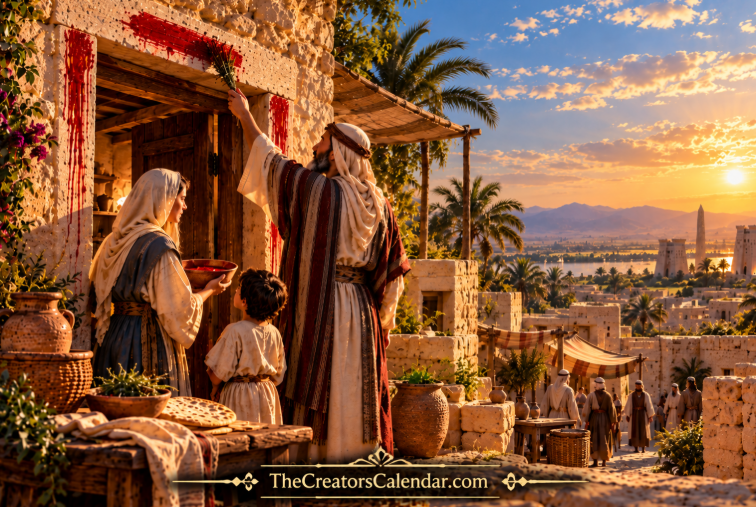
The blood was then placed upon the doorposts, and Israel remained within their homes throughout the Passover night, according to Yahuah’s command. This distinction is important because Scripture separates the Passover observance on the fourteenth from Israel’s actual departure on the fifteenth.
The timing of their departure becomes even clearer when we follow the events of that night in their appointed sequence.
The Midnight Judgment: The Angel of Death Passes Over Egypt
The Passover night unfolded according to the precise sequence established by Yahuah. Following the sacrifice of the lamb on the 14th, its blood was applied to the doorposts and lintel of each Israelite household. The people were then instructed:
“And none of you shall go out of the door of his house until morning.” Exodus 12:22
This command establishes an essential chronological distinction. Although the Passover meal was eaten that night, the Israelites were not permitted to leave their homes until morning. The blood of the lamb provided protection while judgment passed through Egypt.
At midnight, the appointed judgment came:
“And it came to pass at midnight that Yahuah struck all the firstborn in the land of Egypt, from the firstborn of Pharaoh who sat on his throne to the firstborn of the captive who was in the dungeon, and all the firstborn of livestock.” Exodus 12:29
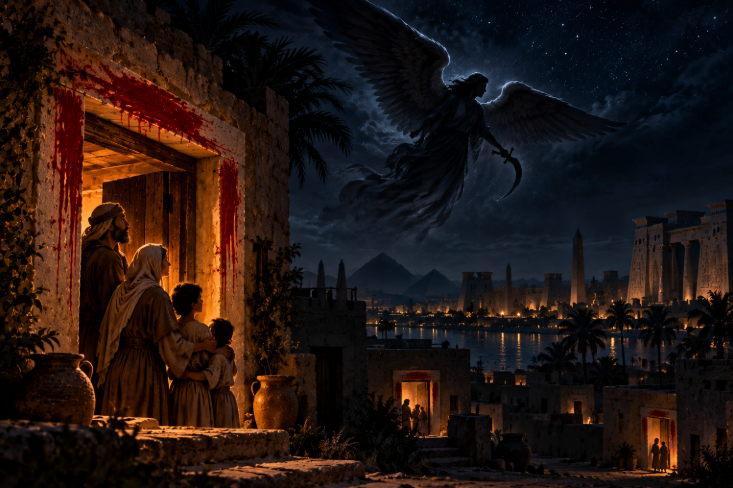
The destruction of Egypt’s firstborn demonstrated the seriousness of Yahuah’s judgment, while the blood upon the doorways distinguished those who had obeyed His instructions. This deliverance also carried prophetic significance, foreshadowing the greater redemption that would come through the sacrificial blood of Yahusha haMashiach, the true Passover Lamb.
Following the midnight judgment, Pharaoh summoned Moses and Aaron:
“Then he called for Moses and Aaron by night, and said, ‘Rise, go out from among my people…’” Exodus 12:31
Yet Pharaoh’s command and Israel’s actual departure were two distinct EVENTS. His order was issued during the night of judgment, while Yahuah’s earlier instruction required the Israelites to remain inside until morning.
The precise date of their departure is established in Numbers 33:3, while Deuteronomy 16:1 identifies its occurrence by night. Together, these passages provide the chronological evidence examined in the following section.
The Fifteenth Day: Departure From Egypt
Although Pharaoh commanded Yasharal to leave during the night of judgment, Scripture identifies the actual departure as a separate EVENT occurring on the following day.
Moses records the precise date:
“They departed from Rameses in the first month, on the fifteenth day of the first month; on the day after the Passover the children of Israel went out with boldness in the sight of all the Egyptians.” Numbers 33:3
The wording is significant. Yasharal departed on the 15th, the day after Passover, rather than on the 14th when the lamb was sacrificed.
Deuteronomy provides an additional detail concerning the time of departure:
“Observe the month of Abib, and keep the Passover to Yahuah your Alahim, for in the month of Abib Yahuah your Alahim brought you out of Egypt by night.” Deuteronomy 16:1
Together, these passages establish two essential chronological markers: the date was the 15th, and the departure occurred by night.
Within the sunrise-to-sunrise reckoning presented in this study, these details identify the night following the daylight hours of the 15th. This interpretation also harmonizes with the seventh-day Sabbath pattern examined throughout the three consecutive months.
The sequence of EVENTS is therefore:
-
The 14th: The Passover lamb was sacrificed.
-
The following night: The blood provided protection, and judgment fell upon Egypt at midnight.
-
Before morning: Pharaoh commanded Israel to leave.
-
The morning of the 15th: Israel had fulfilled the instruction to remain inside until morning.
-
The daylight of the 15th: Within this study’s calendar interpretation, the seventh-day Sabbath remained sacred.
-
The night following the 15th daylight: Yasharal departed Egypt, following the appointed Sabbath hours.
This chronology establishes the First Month’s central witness: Passover on the 14th, followed by the Sabbath of the 15th and Israel’s departure by night.
The same relationship between the lunar dates and the seventh-day Sabbath will become increasingly significant when we examine the manna in the Second Month and Israel’s arrival at Sinai in the Third Month.
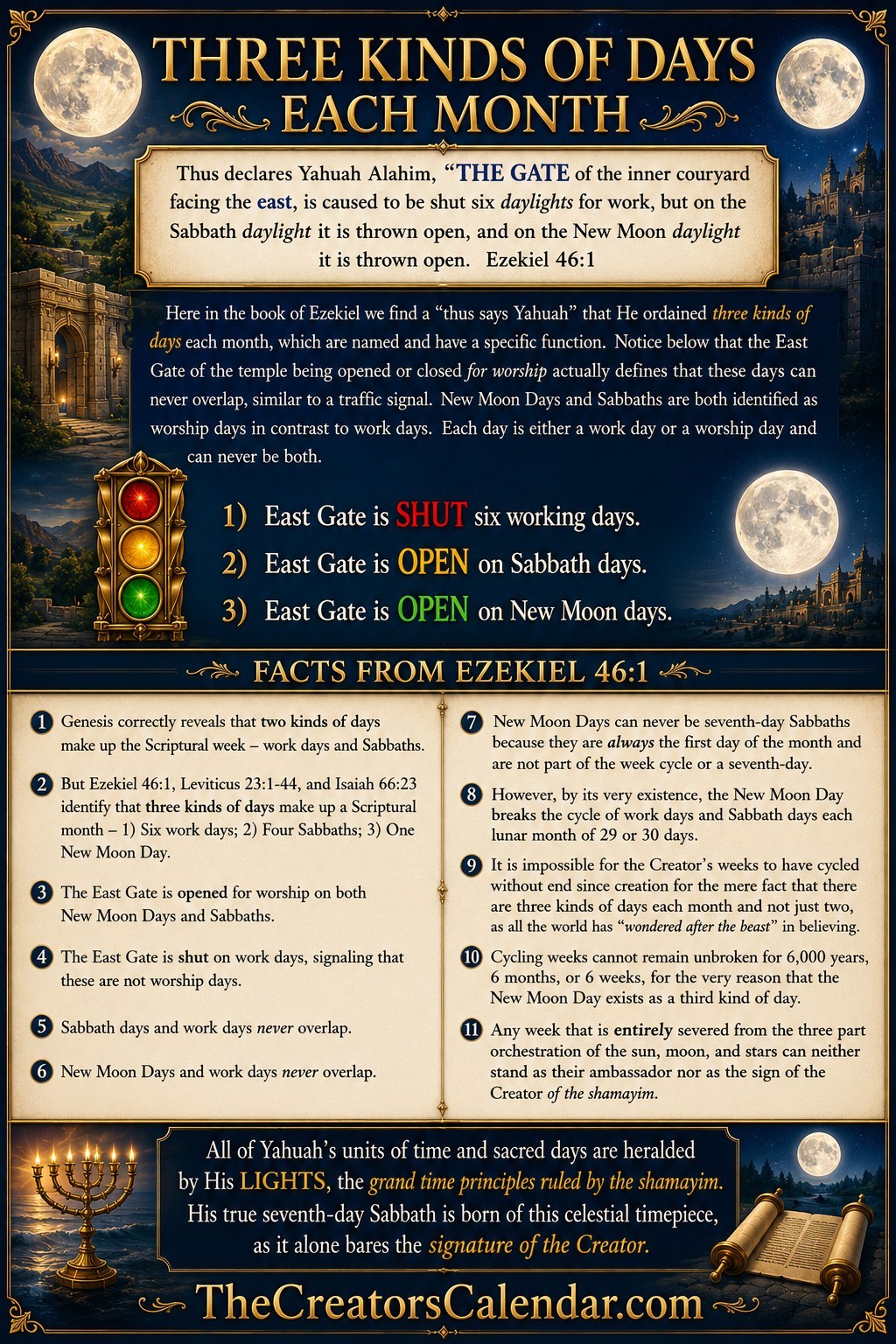
Three Kinds of Days in Yahuah’s Calendar
Within the calendrical framework presented in this study, Yahuah established three distinct kinds of days, each serving a specific purpose in His appointed order of TIME.
1. The New Moon Day
The New Moon Day marks the beginning of each lunar month. Identified in this study as the visible full moon, it establishes the starting point from which the remaining days of the month are counted. This sacred day stands apart from both the six working days and the seventh-day Sabbath cycle.
2. The Six Working Days
Following the New Moon Day are six working days, during which ordinary labor is performed. These days establish the recurring pattern of preparation leading to the seventh-day Sabbath.
3. The Seventh-Day Sabbath
The seventh-day Sabbath completes each cycle of six working days. Within this lunar arrangement, the Sabbaths fall consistently on the 8th, 15th, 22nd, and 29th days of the month.
Unlike the uninterrupted weekly cycle followed by modern calendars, this study identifies a Sabbath rhythm renewed with each lunar month. The New Moon Day establishes the beginning, the six working days provide the period of labor, and the seventh-day Sabbath remains Yahuah’s appointed day of rest and sacred assembly.
These three categories form the foundation for understanding the monthly pattern revealed through the manna in the Second Month and confirmed by the continuing chronology of the wilderness journey.
The First Sabbath Witness
The fifteenth day of Abib provides an important chronological marker within the lunar Sabbath pattern examined in this study.
According to this framework, the seventh-day Sabbaths fall on four recurring dates within each lunar month:
-
The 8th day
-
The 15th day
-
The 22nd day
-
The 29th day
The fifteenth day of the First Month held particular significance because it was both the seventh-day Sabbath and the first day of the Feast of Unleavened Bread, making it a High Sabbath.
Within the sunrise-to-sunrise reckoning presented here, Yasharal remained in Egypt throughout the sacred daylight hours of the 15th. Only after those hours had passed did Yahuah lead His people out by night.
 This understanding also explains why the chronology of the manna becomes so important. The Second Month provides an additional witness through six days of manna gathering, the double portion on the sixth working day, and the absence of manna upon the seventh-day Sabbath.
Thus, the First Month establishes the proposed Sabbath placement, while the Second Month supplies the recurring weekly pattern through the manna.
The relationship between Passover and the Sabbath also carries prophetic significance, pointing forward to the sacrifice of Yahusha haMashiach and the greater deliverance accomplished through Him.
Passover Fulfilled Through the Messiah
Approximately fifteen hundred years after the Exodus, Yahusha haMashiach fulfilled the prophetic symbolism of the Passover lamb. What had first been portrayed through the blood of the lamb in Egypt now found its greater fulfillment in the Messiah’s sacrifice for the redemption of humanity.
“For indeed Messiah, our Passover, was sacrificed for us.” 1 Corinthians 5:7
The Gospel record identifies the day of His crucifixion as the Preparation Day preceding a High Sabbath:
“Therefore, because it was the Preparation Day, that the bodies should not remain on the cross on the Sabbath (for that Sabbath was a high day)…” John 19:31
Within the calendrical framework presented in this study, this corresponds with the Exodus pattern: the Passover sacrifice on the 14th, followed by the seventh-day Sabbath on the 15th, which was also the first day of Unleavened Bread.
Another remarkable detail concerns the darkness recorded during Yahusha’s crucifixion:
“Now it was about the sixth hour, and there was darkness over all the earth until the ninth hour.” Luke 23:44
The darkness at the sixth hour invites examination of the relationship between the lunar phases and the appointed Passover date. A solar eclipse can occur only near the astronomical conjunction, when the moon passes between the earth and the sun. Within the calendar model presented here, this dark lunar phase occurs approximately fourteen days after the full New Moon that begins the month.
Scripture records the darkness but does not explicitly identify its astronomical cause. The proposed connection with a solar eclipse is examined separately in the article, The Sun Was Darkened from the Sixth to the Ninth Hour.
The Passover in Egypt and the sacrifice of Yahusha therefore bear a unified prophetic witness. The first portrayed deliverance through the blood of an unblemished lamb; the second revealed the Lamb of Alahim, whose sacrifice provides redemption from sin and death.
The appointed TIME and the prophetic EVENT were brought together in Yahusha haMashiach, revealing the greater purpose of Yahuah’s sacred appointments.
Time as the First Test of Obedience
The restoration of Yahuah’s appointed TIME presented Yasharal (Israel) with an important test of faith. After generations under Egyptian authority, His people were being called to trust His instructions rather than continue following the traditions they had inherited during captivity.
Their obedience began before they ever departed Egypt. By observing Passover according to the appointed dates, they demonstrated their willingness to follow Yahuah’s WORD, even while surrounded by the customs and religious practices of another nation.
This lesson would continue throughout their wilderness journey. The manna would test their obedience to the six working days and the seventh-day Sabbath. At Sinai, they would receive further instruction concerning their covenant responsibilities. Later, the Sanctuary would reveal how the appointed TIMES and prophetic EVENTS worked together to portray the Plan of Salvation.
Thus, the restoration of sacred TIME was not an isolated calendar correction. It was part of Yahuah’s preparation of a people who would learn to recognize His voice, trust His instructions, and walk faithfully according to His appointed order.
Before Yasharal could enter the Promised Land, they first had to learn obedience to the One who had delivered them from bondage.
TIME & EVENT: The Foundation Stone and Rock of Offense
Throughout Scripture, Yahuah reveals His Plan of Salvation through the harmonious relationship of TIME & EVENT. The appointed TIME identifies when a prophetic EVENT is to occur, while the EVENT reveals the redemptive purpose embedded within that TIME. Together, they illuminate the prophetic pathway by which His people may “follow the Lamb whithersoever He goeth.” Revelation 14:4
This relationship becomes especially significant in the Exodus. Before the Passover lamb could be selected on the 10th or sacrificed on the 14th, Yahuah first established the beginning from which those dates were counted. Within the calendrical framework presented in this study, that foundation was the full New Moon, standing at the head of the lunar month.
Thus, TIME has a foundation. But the prophetic EVENT also has a Foundation.
Isaiah declared:
“Therefore thus says Yahuah Alahim: ‘Behold, I lay in Zion a stone for a foundation, a tried stone, a precious cornerstone, a sure foundation…’” Isaiah 28:16
Peter identifies this precious Foundation Stone with Yahusha haMashiach:
“Behold, I lay in Zion a chief cornerstone, elect, precious, and he who believes on Him will by no means be put to shame.” 1 Peter 2:6
Here a remarkable prophetic parallel emerges. The full New Moon establishes the proposed foundation of sacred TIME, while Yahusha haMashiach establishes the foundation of the redemptive EVENT. The appointed dates are measured from the calendrical beginning, while their prophetic meaning and fulfillment are found in Messiah.
The Full Moon as a Heavenly Reflection
There is another beautiful connection between TIME & EVENT.
The full moon does not produce its own light. It receives and reflects the light of the sun, displaying its illuminated face in the darkness of night.
Likewise, Yahusha came as the perfect revelation of the Father. He declared:
“He who has seen Me has seen the Father.” John 14:9
Scripture further describes Him as:
“The brightness of His glory and the express image of His person.” Hebrews 1:3
Within the prophetic imagery developed in this study, the full New Moon becomes a fitting heavenly illustration of Messiah. Just as the full moon displays reflected sunlight in its fullness, Yahusha perfectly reveals the character and glory of Yahuah.
At the foundation of the lunar month stands the full New Moon, bearing reflected light. At the foundation of the Plan of Salvation stands Yahusha haMashiach, revealing the Father.
One identifies the appointed TIME. The Other fulfills the appointed EVENT.
The Rejected Foundation Stone
Yet Scripture reveals another important truth concerning the Foundation Stone. The very Stone established by Yahuah would become a stumbling stone to those who rejected Him.
Isaiah declared:
“He will be as a sanctuary, But a stone of stumbling and a rock of offense…” Isaiah 8:14
Peter applies this prophecy to Messiah:
“A stone of stumbling and a rock of offense.” 1 Peter 2:8
Yahusha, the Foundation Stone chosen by Yahuah, was rejected by those who refused to receive Him.
Within the calendrical interpretation presented in this book, a parallel rejection is proposed concerning sacred TIME. The full New Moon, identified here as Yahuah’s original beginning of the lunar month, was displaced by alternative methods of reckoning time.
Thus, the Foundation Stone of EVENT was rejected, and this study proposes that the foundation of TIME was likewise rejected.
Yet rejection does not change what Yahuah has established.
Yahusha remains the Foundation of the Plan of Salvation, and within the calendar argument developed here, the full New Moon remains the appointed beginning from which His sacred lunar dates are counted.
This parallel brings us back to the essential relationship between TIME & EVENT. Before the 10th, 14th, or 15th could be identified, the beginning of the lunar count first had to be established. And before the prophetic shadows of the sacrificial system could find their ultimate fulfillment, Yahusha haMashiach had to stand as the true Foundation Stone of redemption.
TIME bears witness to EVENT, and EVENT reveals the purpose of TIME. Both direct our attention to the One who established the appointed times and fulfilled the promises they contain.
The Creator’s Calendar Established at Creation
The calendar restored to Yasharal in Egypt was not presented as a new invention. Within the Scriptural framework examined in this study, it represented a return to the divine order established by Yahuah at Creation.
The sun, moon, and stars were not created as objects of worship, but as heavenly lights serving the purposes appointed by their Creator.
Genesis records:
“Then God [Yahuah Alahim] said, ‘Let there be lights in the firmament of the heavens to divide the day from the night; and let them be for signs and seasons, and for days and years.’” Genesis 1:14
The Hebrew word translated “seasons” is mo’edim (H4150), meaning appointed times. From Creation, the heavenly lights were established to serve as signs for measuring days, years, and appointed seasons.
Psalm 104:19 provides a further connection:
“He [Yahuah] appointed the moon for seasons (H4150, mo’edim)…” Psalm 104:19
Together, these passages establish an important Scriptural relationship. Genesis identifies the heavenly lights as instruments for marking appointed times, while Psalm 104 specifically identifies the moon in connection with those appointments.
Within the calendar interpretation presented in this study, the moon therefore serves as Yahuah’s heavenly timepiece for identifying His lunar months, seventh-day Sabbaths, and annual Feast Days.
The significance of Exodus 12 becomes clearer in this light. Yahuah was not merely instructing His people when to observe Passover. He was restoring their recognition of the sacred order of TIME that this study traces back to Creation.
The Creator who established the heavenly lights also established the appointed times by which His people were to worship Him.
The Passover Lamb and the Prophetic Timeline
The Passover sacrifice was not merely an EVENT of deliverance from Egypt. It was also a prophetic portrayal of the greater sacrifice that would be fulfilled through Yahusha haMashiach at His appointed TIME.
Exodus 12:6 instructed Yasharal concerning the sacrifice of the lamb:
“Then the whole assembly of the congregation of Israel shall kill it [H996 – beyn – between] the [H6153 – ereb – evenings].” Exodus 12:6
The Hebrew expression beyn ha’arbayim, commonly translated “at evening” or “between the evenings,” identifies the appointed period for the Passover sacrifice. Within the interpretation presented in this study, this period is understood to extend from approximately the third hour to the ninth hour of daylight, corresponding to 9:00 a.m. through 3:00 p.m., with the sixth hour marking the midpoint.
The Gospel accounts record that Yahusha was crucified at approximately the third hour (Mark 15:25), while His death occurred around the ninth hour (Matthew 27:45-50).
Within this prophetic interpretation, these hours reveal a remarkable correspondence between the Passover lamb sacrificed in Egypt and Yahusha, the Lamb of Alahim, who gave His life for the redemption of humanity.
The original Passover established the prophetic shadow. Yahusha’s sacrifice revealed its greater fulfillment.
The appointed TIME and the prophetic EVENT came together in the Messiah, demonstrating the redemptive purpose woven into Yahuah’s sacred calendar.
Yahuah intended the Passover to remain a living testimony throughout the generations. The appointed TIME was to be remembered, the EVENT of deliverance was to be taught to their children, and His law was to remain continually before His people.
“And you shall tell your son that day, saying, ‘This is done because of what Yahuah did for me when I came up from Egypt.’ “It [Passover] shall be as
athe sign to you on your hand and as a memorial between your eyes that Yahuah’s Torah may be in your mouth; for with a strong hand, Yahuah has brought you out of Egypt. You shall, therefore, keep this ordinance in its season [lunar appointed time] from year to year.'” Exodus 13:8-10
The instruction to observe this ordinance “in its season from year to year” reinforces the importance of preserving both the appointed TIME and the remembrance of the EVENT. Each generation was called to remember not only what Yahuah had done, but also when He had appointed its observance.
The Day Begins With Light
An essential principle of Yahuah’s calendar is the distinction between daylight and night. Within the Scriptural interpretation presented in this study, the complete day-and-night cycle begins at sunrise, with the daylight hours preceding the darkness that follows.
Yahusha declared:
“Are there not twelve hours in the day? If anyone walks in the day, he does not stumble because he sees the light of this world.” John 11:9
Genesis likewise identifies the heavenly lights according to their appointed responsibilities:
“Yahuah (God) made two great lights: the greater light to rule the day, and the lesser light to rule the night.” Genesis 1:16
These passages distinguish the daylight hours, governed by the sun, from the darkness of night. In the calendar framework presented here, the Scriptural DAY consists of the daylight hours from sunrise to sunset, while the complete civil date includes both daylight and the following night, concluding at the next sunrise.
This distinction is especially significant in the Exodus account. Yasharal remained in Egypt throughout the Sabbath daylight hours of the 15th. Only after those sacred hours had passed did Yahuah lead His people out by night, guided by the pillar of fire.
Thus, the appointed TIME of their departure becomes another witness within this study to the Creator’s established order of daylight followed by night.
The Red Sea: A Miraculous Event and Witness
Although the crossing of the Red Sea does not provide one of the primary TIME-centric witnesses examined in this study, it adds a remarkable dimension to the Exodus account. Here, the emphasis shifts from the appointed TIME to the miraculous event through which Yahuah completed His chosen people’s deliverance from Egyptian bondage.
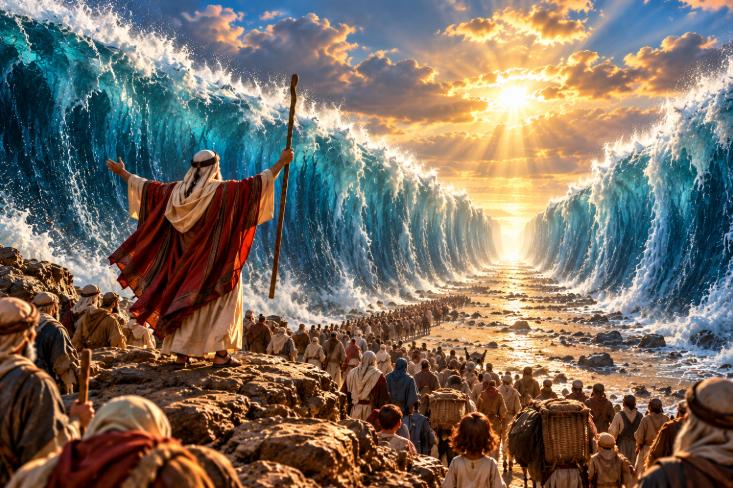
With Pharaoh’s army pursuing them and the sea before them, Yasharal appeared to have nowhere to go. Yet Yahuah opened a pathway where none existed, dividing the waters and allowing His people to cross on dry ground.
“And the children of Israel went into the midst of the sea upon the dry ground: and the waters were a wall unto them on their right hand, and on their left.” Exodus 14:22
But the miracle did not end with their safe passage. Pharaoh’s pursuing army followed into the divided sea, only to be overwhelmed when the waters returned.
“And the waters returned, and covered the chariots, and the horsemen, and all the host of Pharaoh that came into the sea after them; there remained not so much as one of them.” Exodus 14:28
In more recent times, underwater photographs from proposed crossing locations have generated considerable interest. Some investigators have interpreted coral-encrusted, wheel-shaped formations as possible remains of Egyptian chariots. Although these identifications remain unverified, they have encouraged further interest in the historical setting of the Exodus.
For our study, the primary witness remains the Scriptural record itself. The same account that describes Yahuah’s miraculous deliverance also preserves the appointed dates surrounding Israel’s departure: Passover on the 14th and the departure from Egypt on the 15th.
The Red Sea crossing therefore serves as a powerful reminder that the Exodus was more than a calendar lesson. It was the deliverance of a nation, the judgment of its oppressors, and the beginning of a journey through which Yahuah would reveal His appointed TIME and His Plan of Salvation.
The miraculous EVENT of deliverance and the appointed TIME of the Exodus belong to one unfolding testimony of Yahuah’s faithfulness.
Yah’s Restored Calendar: the Foundation of the Sanctuary
The restoration of Yahuah’s appointed TIME in the First Month established the foundation upon which the future Sanctuary worship system would operate. Every sacrifice, Sabbath, New Moon observance, and annual Feast was assigned its proper place within His divine order.
Leviticus later records:
“And Yahuah spoke to Moses, saying, ‘Speak to the children of Israel, and say to them: The feasts [H4150 – mo’edim – appointed time] of Yahuah, which you shall proclaim to be holy convocations, these are My feasts [H4150 – mo’edim – appointed time].’” Leviticus 23:1–2
The Sanctuary’s sacrificial schedule reveals the importance of these distinctions. Daily offerings marked the recurring morning and evening worship. Additional sacrifices distinguished the seventh-day Sabbaths, while separate offerings identified the New Moon Days and annual Feasts. Each observance had its appointed TIME and its particular purpose.
Within the lunar calendar framework presented in this study, these different appointments reveal an organized pattern of worship that could not function properly without first identifying the beginning of the month and the sacred days that followed.
The Sanctuary was therefore much more than a place of sacrifice. It was a living illustration of Yahuah’s Plan of Salvation, revealing through TIME & EVENT the prophetic work that would ultimately be fulfilled through Yahusha haMashiach.
What began with the restoration of sacred TIME in Egypt would eventually become the organized worship structure of an entire nation. Through the Sanctuary, Yahuah would continue teaching His people the relationship between His appointed TIMES, their corresponding EVENTS, and the unfolding promises of redemption.
The calendar established the appointed TIMES; the Sanctuary revealed the prophetic meaning of the EVENTS. Together, they portrayed the Creator’s Plan of Salvation.
The First Month Established the Foundation
The Exodus provides the first witness in the sequence of Three Months in a Row. Within the calendar framework presented in this study, Yahuah restored the full New Moon as the beginning of the First Month, establishing the foundation from which His appointed TIMES could be counted.
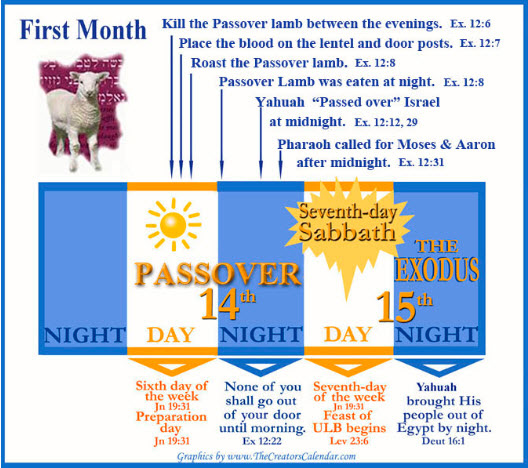
The First Month revealed the appointed TIME of Passover, the significance of the 14th and 15th days, and the miraculous EVENT of Israel’s deliverance from Egyptian bondage.
The Second Month would provide another witness through the manna from heaven, revealing the six working days and the seventh-day Sabbath pattern. The Third Month would complete this progression as Yasharal arrived at Mount Sinai, where Yahuah would prepare His people for the covenant relationship and the future Sanctuary worship system.
These three months were not isolated historical EVENTS. Within the interpretation presented here, they formed a progressive revelation of the Creator’s appointed order, teaching His people to recognize His TIME, trust His instructions, and prepare for the unfolding Plan of Salvation.
Three months in a row. Three distinct witnesses. One Creator, one sacred calendar, and one divine purpose.
Time-Centric Witnesses Revealed in the Exodus Account
The First Month establishes the foundational principles of sacred TIME that will be examined further through the manna, Mount Sinai, and the Sanctuary. Within the calendar interpretation presented in this study, the following witnesses emerge:
-
The Full New Moon: Yahuah restored the full New Moon as the beginning of the First Lunar Month in spring, establishing the foundation for counting His appointed dates.
-
Separation From Egypt: Yasharal was called to leave behind Egypt’s system of time and recognize the calendar established by their Creator.
-
Three Kinds of Days: Yahuah’s calendar distinguishes New Moon Day, the six working days, and the seventh-day Sabbath.
-
The Passover Appointment: Passover was established on the 14th day of the First Lunar Month. Exodus 12:6.
-
The Midnight Judgment: The death of Egypt’s firstborn occurred at midnight, while Yasharal remained protected by the blood of the Passover lamb. Exodus 12:22, 29.
-
The Fifteenth-Day Departure: Yasharal departed Egypt on the 15th day of the First Month, following Passover, and Yahuah brought them out by night. Numbers 33:3; Deuteronomy 16:1.
-
The Scriptural Day: Within the sunrise-to-sunrise reckoning presented here, daylight precedes night, with the sun governing the daylight hours. Genesis 1:16; John 11:9.
-
The Sacred Sabbath Hours: The seventh-day Sabbath is understood in this study to occupy the daylight hours from sunrise to sunset, excluding the following night.
-
The Monthly Sabbath Pattern: Counting from the full New Moon establishes the proposed lunar Sabbath dates of the 8th, 15th, 22nd, and 29th.
-
The Prophetic Passover Lamb: The original Passover foreshadowed the sacrifice of Yahusha haMashiach, revealing the relationship between the appointed TIME and its prophetic EVENT. 1 Corinthians 5:7.
-
The Sanctuary Foundation: The calendar established during the Exodus provided the proposed foundation for the later Sanctuary schedule of daily, Sabbath, New Moon, and annual Feast offerings.
-
The Bridal Covenant: TIME is a significant ingredient of the sacred Bridal Covenant, calling Yahuah’s chosen people to meet with Him according to His appointed New Moons, Sabbaths, and Feast Days.
Together, these witnesses establish the First Month as the foundation of the unfolding calendar testimony. The following two months will provide additional chronological evidence through the manna and the arrival at Mount Sinai.
Called Out of Egypt and Into the Dance of Eternity
The Exodus reveals something far greater than the deliverance of a nation or the restoration of a calendar. Yahuah was calling His people out of bondage and into a sacred covenant relationship with Himself. He was teaching them not only whom they were to worship, but when He had appointed to meet with them.
His New Moons, Sabbaths, and Feast Days were not merely dates upon a calendar. They were sacred appointments woven into the relationship between the Bride and her Bridegroom, revealing the unfolding Plan of Salvation through Yahusha haMashiach.
Before Yasharal could enter the Promised Land, they had to learn to trust the One who had delivered them. The wilderness would become their classroom, the manna their daily lesson in dependence, and the Sanctuary a living revelation of the prophetic relationship between TIME & EVENT.
The same invitation extends to His covenant people today. Within the Scriptural understanding presented in this study, Yahuah continues calling His people out of the traditions and systems of bondage that have obscured His appointed order, inviting them to return to His WORD, His WAY, and His sacred TIME.
For the Bride who longs to walk in harmony with her Bridegroom, the question is not merely, “What has Yahuah appointed?” but also, “When has He appointed it?”
The First Month established the foundation. The Second Month will reveal how Yahuah confirmed that foundation through the miraculous provision of manna, teaching His people to distinguish the six working days from His seventh-day Sabbath.
Yet the ultimate purpose of this restoration reaches far beyond the wilderness journey. It points toward the everlasting covenant relationship in which the redeemed will dwell with Yahuah and Yahusha haMashiach throughout eternity.
What began as a call out of Egypt was ultimately an invitation into the sacred rhythm of the Bridal Covenant, a journey from bondage to redemption, from obedience to everlasting fellowship, and into the Dance of Eternity.