Restored Prophetic Feast Days of Yahusha the Messiah
Restored Prophetic Feast Days
of Yahusha the Messiah
Introduction
Whether Feast keeping is already familiar or an entirely new concept for you, the objective of this article and TheCreatorsCalendar.com is restoration. It is an invitation to reconsider sacred truths that appear to have been obscured, altered, or lost sight of over nearly 2,000 years.
Among these are Yahuah’s set-apart New Moons, Sabbaths, and Feast Days, together with the lunar framework by which their appointed TIMES were originally determined. This study challenges three long-held assumptions: 1) the widely accepted Christian belief that the biblical Feast Days became obsolete at the sacrificial DEATH of Yahusha; 2) the Feast Day arrangement itself, as it has come down to us in Leviticus 23; and 3) the traditional identification of the New Moon. Throughout this article, the full moon alone is recognized as New Moon Day and the beginning of each lunar month. The evidence establishing the full moon as the New Moon is presented separately in The Treasury of Evidence: The Full Moon Announces Lunar Months and will not be repeated here.
The consequences would be far-reaching, affecting the placement of New Moon Day, the seventh-day Sabbaths, and the lunar-appointed Feast Days, ultimately rearranging the Creator’s sacred appointments from their original prophetic positions within an entirely different calendar framework. As a result, those sincerely seeking to align their soul temples with their Creator and Savior could unknowingly find themselves out of sync with His appointed TIMES.
This article will present evidence for what I believe is the original prophetic Feast Day arrangement, preserved in the fixed and immovable seven-lamp design of the Menorah, the Gold Standard by which the appointed lunar Feast Days can be tested and restored.
Two Feast Day Formats
This article will compare two Feast Day arrangements: the Feast Day dates recorded in Leviticus 23 and the restored prophetic Feast Day order revealed by the fixed seven-lamp design of the Menorah in Leviticus 24. When the appointed Feasts are placed upon the Menorah, their positions correspond to specific lunar phases and reveal an ordered pattern of prophetic TIME & EVENT.
It is the view of this website that this long-hidden lunar pattern preserved in the Menorah is the original and authentic BLUEPRINT OF SALVATION, revealing the PROPHETIC LUNAR DATE ARRANGEMENT from the fall of Eden to the restoration of the Earth at the end of the week of 7,000 years (seven millennia). Each portion of this lunar Menorah layout is born of love and is prophetically date-stamped with the duet of TIME and EVENT and solely accomplished by Yahusha, our Messiah, first on earth with Passover and then in the heavenly courts above on behalf of sinners like you and me.
Unequivocally, the Feast Day protocol reveals the Plan of Salvation established for restoring mankind to the Eternal Father. Each appointed Feast points to the redemptive work accomplished by Yahusha haMashiach and reveals Yahuah’s REMEDY for SIN! So, is it any wonder that humanity’s most marvelous and beneficent system of Divine revelation has been annulled and relinquished to the trash bin by those very ones who were entrusted to guard and protect it?
This alternate view of Feast Day TIMING and its application to each ordained Messiah EVENT is presented for the purpose of restoring what appears to have been obscured through centuries of calendrical and religious change. The evidence presented here invites each reader to test the received Feast Day arrangement against the fixed Gold Standard preserved in the Menorah.
Traditional Levitical Feast Days
Below is the line-up and date position of each of the traditional Feast Days as recorded in Leviticus 23:1-44. This is the arrangement with which most of us are familiar. Rabbinical and Karaite Jews follow different methods for determining the beginning of their lunar months and years, which results in their Feast Day observances occurring on different dates.
In contrast to both of these approaches, this study presents evidence that the original and authentic New Moon is the FULL MOON, ordained for the beginning of each lunar month. Throughout this article, all references to the New Moon will therefore identify the full moon. For the evidence supporting this conclusion, in contrast to several long-held traditions of men, refer to: Treasury of Evidence, the Full Moon, Announces Lunar Months
Leviticus 23 Feast Day Layout
- Feast of Passover (Pasch)
The 14th day as counted from the full New Moon of the First Month of Aviv (Nisan), which coincides with the dark conjunction lunar phase. Also the sixth day of the lunar week. Traditionally, this is the first Feast Day of the Year.- Feast of Unleavened Bread (Matzah)
The 15th day from the full New Moon of the First Month of Aviv, and the day after Passover. This is a seven day Feast that commences on a seventh-day lunar Sabbath.- Feast of Wave Sheaf Offering (Raysheet)
The 16th day from the full New Moon of the First Month of Aviv and always on the first day of the lunar week cycle.- Feast of Weeks/Pentecost (Shabuot)
This traditional view is the 50 day count from the 16th day of the First Month, falling on the 9th day of the Third Month of Sivan, and the 1st day of the lunar week.- Feast of Trumpets (Yom Teruah)
This Feast Day occurs on the 1st day of the Seventh Month of Ethanim, and always on the full New Moon Day.- Feast Day of Atonement (Yom Kippur)
The 10th day of the Seventh Month of Ethanim, as counted from the full New Moon, and the second day of the lunar week.- Feast of Tabernacles (Sukkot)
The 15th day of the Seventh Month of Ethanim, and always on a seventh-day Sabbath counted from the New Moon. This is the last of this seven day Feast arrangment.
While this Feast Day layout is recorded in Leviticus 23, Numbers 28-29, and Deuteronomy 16, there is compelling evidence that an alternate and more ancient order has been preserved in the fixed design of the Menorah. This raises the possibility that some Feast Day placements recorded in the received text may have been altered over time. Daniel 7:25 specifically warns of an attempt to “change times and laws.” You do not have to believe me, but please consider the evidence. Each person must follow the leading of the Ruach haKadosh (Holy Spirit) on this subject. You are not required to keep the Menorah Feast Days described below to be a lunar Sabbatarian. This is why I have consistently posted both views on all the calendars for the last 12 years.
Restored Prophetic Feast Days Displayed on the Menorah
With great surprise, it has been discovered that some of the Feast Days may have been manipulated over the years, but not all, as listed in the Book of Leviticus. It appears they have been proactively moved to dates that don’t fit the narrative of the Sanctuary/Temple/Menorah model and are, therefore, incorrect. If this is true, it causes all righteous seekers of truth to miss the true Feast Day roadmap of the Messiah’s ministry of prophetic events, with their targeted prophetic fulfillments. By extension, if these Feast days are either out of sequence or no longer synchronized to the temple time model above, not made with hands, we may be out of harmony with our Messiah as we seek to follow Him (the Lamb) whithersoever He goes.
Indeed, this is a bold conclusion, because it challenges portions of the received text of Leviticus 23. Please know that there is no interest here in changing the TRUTH, but only in restoring it, just as Nehemiah restored the walls of Jerusalem after Yasharal’s (Israel’s) long years in Babylon.
 Some may even consider this blasphemy, which is understandable given the deeply established belief that there are no errors or alterations in the Scriptures as they have come down to us, but that they stand as an unadulterated, pure, and perfect transcript of the Eternal Father. So, when we come to this fork in the road, why would we choose the road less traveled? It can only be because of the evidence and a deep desire to restore lost truths in preparation for our Messiah’s imminent return.
Most importantly, our Eternal Father did not leave us without a compass. He provided a Gold Standard of Truth by which each lunar Feast Day appointment can be tested. This Gold Standard was preserved “for such a time as this” so that we may seek, find, and resolve this long-hidden mystery.
The Gold Standard
If the Menorah is indeed Yahuah’s fixed Gold Standard for determining the prophetic placement of the Feast Days, then we should expect Scripture itself to provide evidence explaining how its seven lamps were to be ordered. Leviticus 24 provides an important key.
The following Word Study examines the Hebrew language of Leviticus 24 and compares the King James translation with the Creator’s Calendar restored Interlinear translation. The purpose is to determine what the original wording reveals about the ordering of the Menorah’s luminaries, their relationship to the night season, and the east-to-west progression that forms the foundation of the lunar arrangement presented in this study.
As you examine the Word Study, pay particular attention to the language describing the LIGHTS, their ORDER, and the NIGHT SEASON from sunset to sunrise. These details become especially significant when compared with the observable movement and changing phases of the moon.
After clicking on the image above to view the Word Study, compare the King James translation with the Creator’s Calendar restored Hebrew Interlinear translation below.
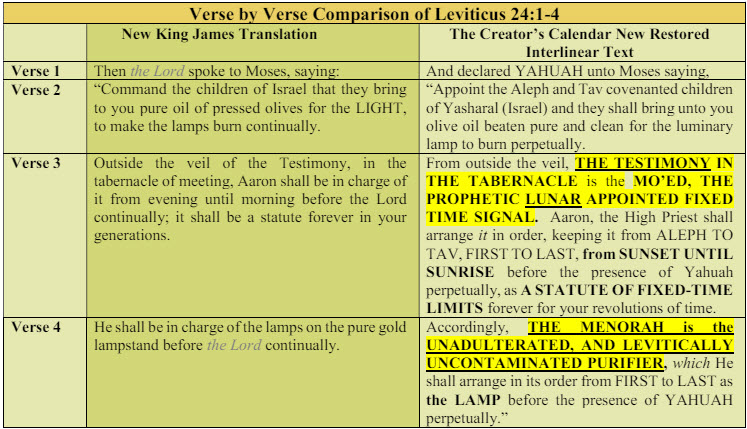 Notice that this important Scripture passage concerns placing the Menorah luminaries (lights) in their correct order according to their LUNAR layout during the night season, from sunset to sunrise. This establishes the Menorah as a nighttime luminary model, ordered according to the ruling moon while the sun is absent.
The full moon is the only lunar phase that qualifies for this task. It rules the entire night from east to west as the most brilliant lunar phase beacon in the night sky. All the other lunar phases follow in succession as they decrease and then rebuild with light to complete a 29 or 30-day lunar month. Refer to the article Treasury of Evidence, the Full Moon Announces Lunar Months.
From the East unto the West
The evidence becomes especially significant when the east-to-west orientation of the Sanctuary/Temple is compared with the positioning of the Menorah, whose three branches extend eastward and three westward. While the modern world commonly orients its maps toward the north, Yahuah Alahim, the Eternal Father, consistently oriented His Kadosh (sacred and holy) things to the EAST.
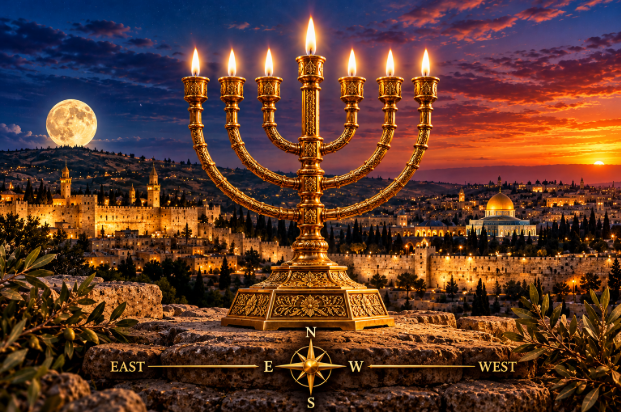
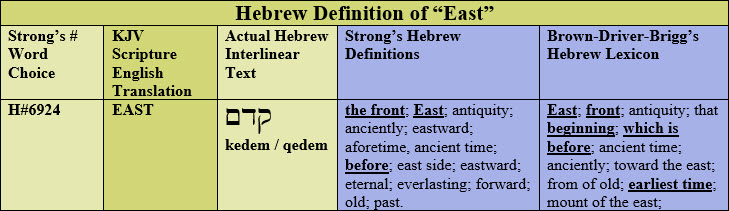
The Hebrew definition of EAST is kedem/qedem (קדם), conveying the idea of the front, what comes before, or the beginning. Within the framework presented in this study, Scripture’s units of time follow this east-west continuum, witnessed by the rising sun by day and the full moon together with the stars by night, as they visibly take their turns ruling in the heavens (Genesis 1:14). Thus, the east-to-west pattern becomes an important key to understanding Yahuah’s ordained full New Moon as the starting point for years, months, the count to weeks, and days. Refer to the article The East-West Time Continuum.
The Menorah-Oriented East-West Time Continuum
The Menorah was strategically placed along the southern wall of the first apartment of the Sanctuary/Temple, where it represented the East-West Time Continuum. Its seven fixed positions correspond to specific lunar positions and phases against the backdrop of the starry constellations. The Menorah was designed to illustrate the MOON’S LIGHT AS SEEN FROM EARTH. In this study, the Menorah emerges as the unadulterated key to Scripture’s treasure map of TIME.
The Menorah contains the long-lost TRUTH necessary to restore Yahuah’s sacred worship schedule. But most profoundly, the correct timing of the Feast Days in correlation with the Menorah pinpoints the appointed TIMES of these sacred and prophetic EVENTS within the Plan of Salvation. Each sacred Feast Day signifies an invitation to enter, both temporal and eternal, and to celebrate in unison. All this is important for those who seek Him with all their hearts and desire to be prepared for the epic EVENT of their Messiah’s Second Coming.
Thus, by design, every year, YAHUAH’s obedient followers are to rehearse the inspirational storyline of salvation, celebrating our Messiah’s provisions that have already been accomplished for us and those that are yet to be fulfilled. In synchronizing our soul temples to the rhythm of these prophetic lunar-appointed Feast Day Events, we show that we are His faithful and obedient Yasharal (Israel).
Entering at the East Gate
Please note that all the Menorah images in this article illustrate east on the left and west on the right. This follows the Scriptural Sanctuary orientation and represents the vantage point from which the Menorah would have been viewed. Upon entering through the East Gate of the Sanctuary/Temple outer court and proceeding into the first apartment, the Menorah was located to the left along the southern wall. Throughout this study, the Menorah is presented from this consistent vantage point, as illustrated below.
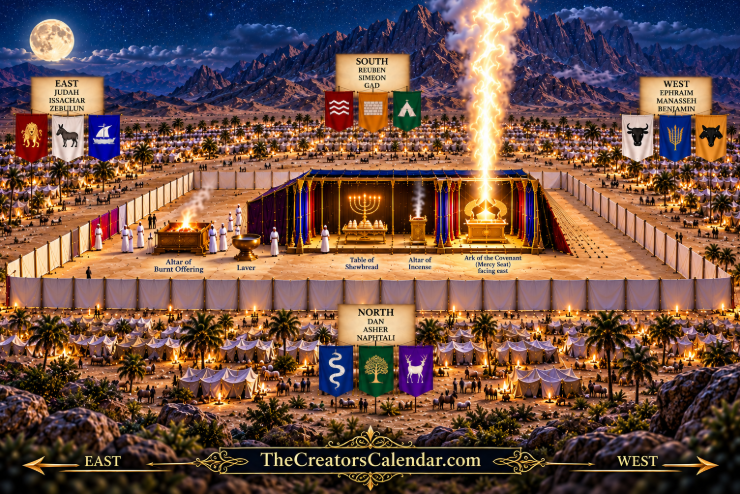
As we explore this restored perspective on the Feast Day arrangement according to the Menorah, another feature of the Sanctuary deserves our attention. In the image above, the pure white linen curtain surrounding the entire wilderness Sanctuary’s outer courtyard illustrates the encompassing path of the moon through one complete lunar month. Years later, the stone wall of the Temple’s outer court represented the same encompassing boundary. Beginning with the full New Moon rising in the east, the lunar circuit proceeds through its appointed phases until the next full New Moon returns to the eastern starting point.
The opening in the outer curtain or wall was the East Gate, which Ezekiel 46:1, 3 identifies as being opened for worship on New Moon and Sabbath days. Significantly, the full moon is the only lunar phase that rises in the east opposite the setting sun.
The East-West Time Continuum
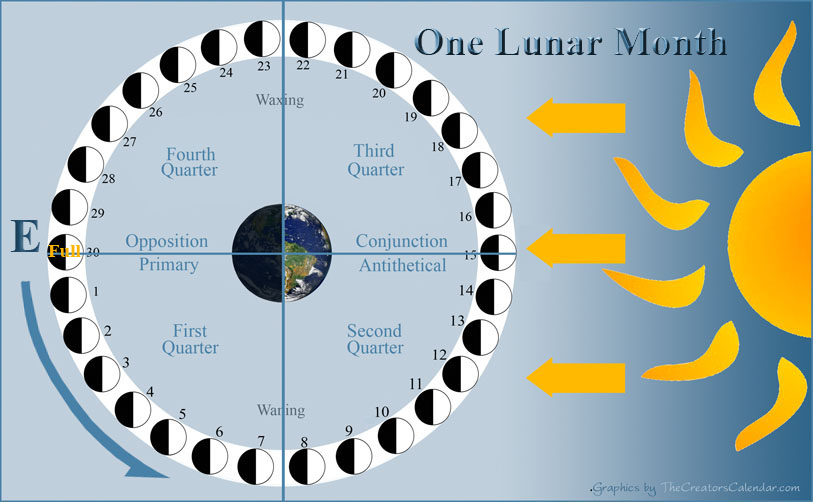
Only on the night of the full moon does the moon rise in the east opposite the setting sun and shine throughout the night toward the west, announcing that New Moon Day will begin at sunrise the following morning. Concurrently, the East Gate is opened for worship. Thus, the 29- or 30-day lunar count begins as though following the curtain around the entire courtyard until it returns to the East Gate, where another lunar month commences. Each full New Moon, together with the stars by night, marks the beginning of a new lunar month.
From the testimony of the linen curtain, the following can be established:
- The first day of the year (Rosh HaShanah), marked at the feet of the constellation of Bethulah (Virgo), together with the full moon rising in the east to rule all night.
- The first day of each lunar month, marked within its appointed constellation by the full moon, together rising in the east.
- The count to the four lunar Sabbaths begins on the day after each full moon Day, which is day number one. The first day of the first week is day two of the month.
- The count to each appointed Feast Day begins on Rosh Hashanah, the first day of the New Year marked by the full moon nearest the feet of the constellation of Bethulah.
Within the calendar framework presented in this study, each of these is marked or counted from the full New Moon as it rises in the east.
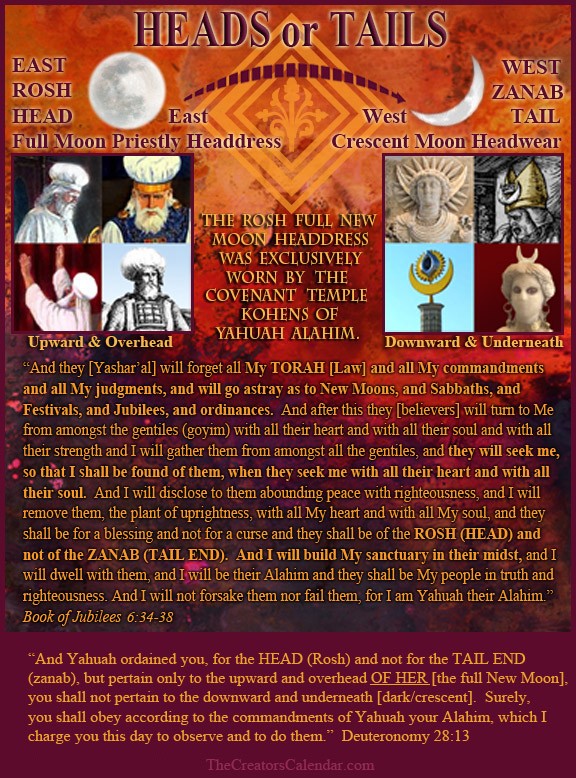
The Symbolic Full Moon Headdress of the Priests
In addition to the outer wall or linen curtain, consider the headdress of the Kohen (priests). Its round, entirely white appearance presents an intriguing resemblance to the full moon. Is this merely a coincidence, or might the headdress preserve another celestial witness? Compare the images below together with the accompanying verses. Priests of other contemporary religions wore celestial emblems associated with their deities upon their heads. Could the distinctive white headdress of Yahuah’s Levitical priests likewise have borne witness to the FULL MOON, standing in contrast to the crescent imagery of surrounding pagan religions?
The Menorah’s Gold Standard Feast Day Appointments
The current understanding of this website is that the Menorah (seven-branched candlestick) was ordained to preserve the GOLD STANDARD for the authentic prophetic lunar placement of the Feast Days. These fixed appointed Feast Days are prophetic because they reveal the restorative work of Yahusha haMashiach alone on behalf of mankind. Their appointed TIMES must therefore remain in harmony with the very throne room of our Creator, the Eternal FATHER OF LIGHTS (YAHcob [James] 1:17). In Yahuah’s foreknowledge, it appears that He preserved this fixed standard because His appointed TIMES and LAWS would become a target for alteration, as foretold in Daniel 7:25.
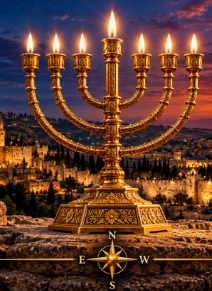
Significantly, the chapter immediately following the Feast Day appointments of Leviticus 23 is Leviticus 24, where the Menorah and its continually ordered lights are brought into view. Within the evidence developed in this study, the Menorah stands as an enduring witness to the Creator’s original calendar standard and its prophetic promise of salvation. If Feast Day dates or calendrical instructions were altered in the received text over time, the fixed design of the Menorah could not be rewritten or rearranged. Its seven positions remained unchanged. Thus, only a Feast Day arrangement that harmonizes with this fixed Gold Standard can satisfy the model presented here.
The Menorah was to be made of one hammered piece of gold, meaning that its branches were stationary and fixed. They could not be moved into different positions around the central shaft as the components of many desktop orreries can today. It was constructed according to the model presented by Yahuah Alahim to Moses on Mount Sinai. Therefore, within the evidence presented in this study, the Menorah corresponds to the fixed sequence of lunar positions and phases as they appear from Earth’s perspective. Its pattern is fixed, and the lunar arrangement must fit the Menorah, rather than the Menorah being adjusted to fit a preferred calendar model. Like Cinderella’s lost glass slipper that fits only one foot in all the kingdom, the Menorah fits only one calendar model. Sunday Worship and Cinderella’s Glass Slipper
“Their knobs and their branches shall be of one piece; all of it shall be one hammered piece of pure gold.” Exodus 25:36 NKJV
“And see to it that you make it according to the pattern [model], which was shown you on the mountain.” Exodus 25:40 NKJV
The Menorah’s Fixed Lunar Positions
The Menorah illustrates the full New Moon position in the East and, fifteen days later, the dark conjunction lunar position in the West. Its six immovable branches identify these two opposing lunar positions in perfect SYZYGY alignment with the Earth and Sun. The three eastern branches correspond to the full moon in opposition to the Sun, the alignment in which a lunar eclipse can occur. The three western branches correspond to the dark conjunction, when the Moon is positioned between the Earth and Sun, the alignment required for a solar eclipse. Thus, the fixed eastern and western branches preserve two opposing lunar positions half a lunar cycle apart.
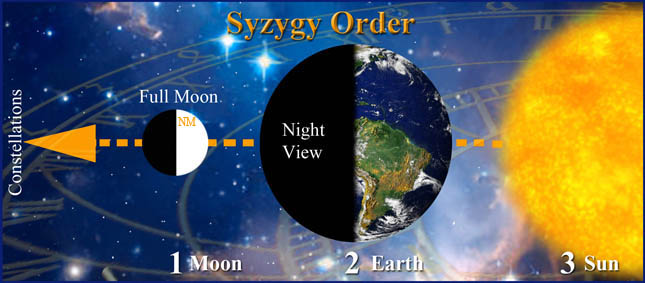
To the east, the first branch of the Menorah identifies the FULL MOON as Rosh Hashanah, New Year’s Day in the spring. This is the biblical and strategic beginning of the year, when the full moon rules the shamayim (heavens) throughout the night nearest the feet of the constellation Bethulah (Virgo). In their pre-appointed lunar months, the other two eastern branches likewise identify Feast Days occurring at the full moon. In contrast, the three western branches identify Feast Days occurring mid-month at the dark conjunction lunar phase by day.
The first of these western appointments is Passover. Luke records that on the day of Yahusha’s crucifixion, darkness covered the land from the sixth to the ninth hour and specifically states that “the sun was darkened” (Luke 23:44-45). Within the astronomical evidence developed in this study, this corresponds to the dark conjunction lunar position required for a solar eclipse and places Passover precisely where the Menorah’s fixed lunar arrangement indicates it should occur. This remarkable convergence of TIME and EVENT binds the Menorah’s lunar time-measuring model to the sacrificial DEATH of our Messiah and provides an important key for examining the placement of the remaining Feast Days. For more on this subject, refer to the article, The Sun was Darkened from the Sixth to the Ninth Hour.
Let it not be lost on the reader that throughout these Menorah-restored Feast Days, each one coincides with the date of the lunar month (counted from full New Moon Day) and its approximation to the seventh-day Sabbath. These dual assignments work together as a GPS to pinpoint each Feast Day with precision and ultimately announce that our Creator’s months are lunar, along with His weeks and Sabbaths.
Rosh Hashanah Alteration
Today, the modern Yahudim (Jews) observe Rosh Hashanah as New Year’s Day on the first day of the Seventh Month, placing their New Year celebration in the fall rather than at the beginning of the year established in Exodus 12:1-3. Within the restored calendar presented in this study, this places Rosh Hashanah six lunar months after its original spring position. During our Hebrew studies, Sarah Devolt, Professor of Hebrew at the Hebrew University of Jerusalem, taught our class that in ancient times the Hebrew New Year began in the spring rather than the fall, in harmony with the beginning of the year described in Exodus 12:1-3.
According to the Menorah’s fixed Feast Day arrangement, Rosh Hashanah occupies the primary first position, Aviv 1, establishing the commencement of the annual Feast Day order. It marks New Year’s Day and, within the prophetic pattern presented in this study, also commemorates Creation, the beginning of all things on Earth before the fall and entrance of sin in Eden, when all things remained in the perfection for which they were designed.
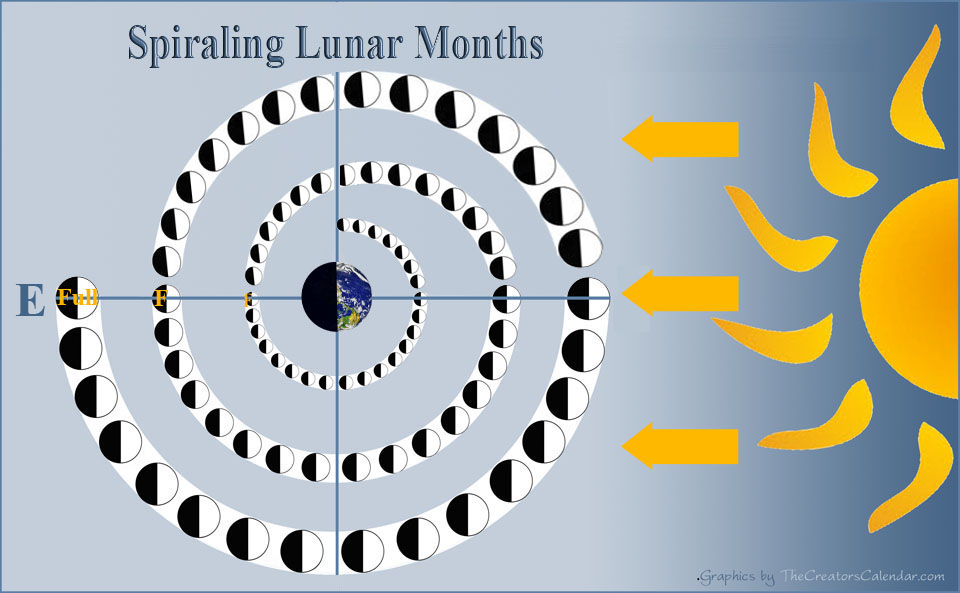
The Feast Day Begins at Sunrise
Within the restored calendar presented in this study, the sacred day begins at sunrise and continues until the following sunrise, with the daylight preceding the night. Accordingly, each Feast Day EVENT is measured according to this same sunrise-to-sunrise order. Passover consistently occurs on the 14th day, “between the evenings,” as counted from the full New Moon Day of Rosh Hashanah in the spring.
According to the Menorah Gold Standard, Unleavened Bread and the Wave Sheaf Offering do not occupy unique and separate Feast Day positions on the Menorah. Instead, they belong within the seven-day Feast of Unleavened Bread that begins on the 15th, the day following Passover. We continue to identify the 15th of Abib as the first day of Unleavened Bread and the 16th as the day of the Wave Sheaf Offering. Yahusha’s resurrection occurred during the night following the daylight portion of the 16th, consistent with the sunrise-to-sunrise order presented here. Refer to the article, Three Days and Three Nights.
The Menorah Orrery
Within the evidence presented in this study, the Menorah functions as an Orrery, perhaps the first in recorded history, a fixed model illustrating specific positions of the Moon as viewed from Earth. Constructed by Moses and his craftsmen according to the pattern shown to him by Yahuah upon the mountain, its seven fixed positions correspond to specific lunar positions and phases and, consequently, to specific dates within the lunar calendar. The Menorah was placed in the first apartment of the Sanctuary/Temple, where its seven lamps were continually tended by the Levitical Kohen (priests). Its fixed construction provides the key to understanding the lunar Feast Day arrangement illustrated below.
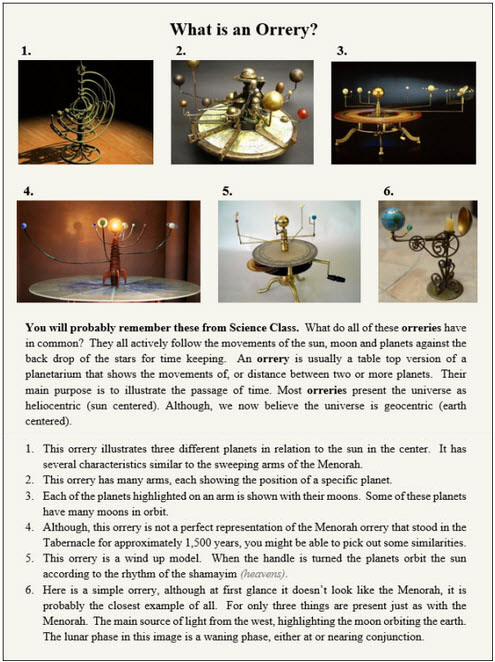 The Menorah’s six branches and central shaft provide seven fixed positions, each terminating in a luminary. Within the model presented in this study, these seven positions correspond to the Moon and its specific positional lunar phases as viewed from Earth. Because the Menorah was constructed as one hammered piece of gold, these positions are fixed and cannot be rearranged, providing an unchanging standard against which the prophetic Feast Day appointments can be tested.
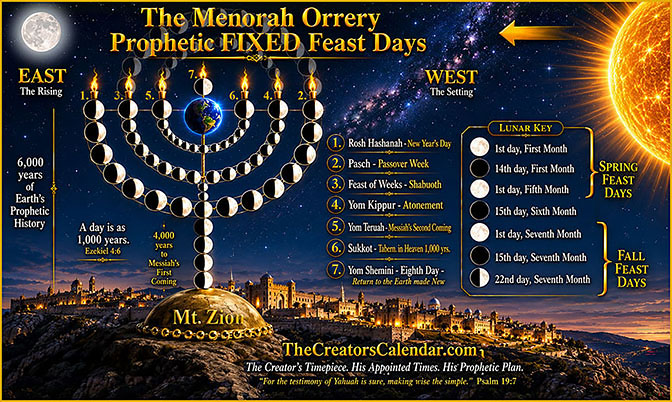
The Menorah also presents a prophetic model of the time allotted for mankind upon the Earth, extending from Creation through the Second Coming and the 1,000-year Sabbath in heaven, and ultimately to the restoration of the Earth. At the conclusion of this prophetic pattern, the redeemed return to their restored earthly home at Yom Shemini, the Last Great Day, to dwell in peace under the reign of Yahusha haMashiach, KING OF KINGS.
The Menorah marks the commencement of each year at the time the full New Moon rises in the East in the constellation Bethulah (Virgo). Revelation 12:1
The Menorah pinpoints the precise day of the lunar month for each of our Creator’s true ordained Feast Days to be fulfilled by YAHUSHA haMashiach (the Messiah) alone. Three occur on a full moon day, three on a dark conjunction lunar phase, and the one in the center appears to occur on the third quarter lunar position prior to full moon (The Last Great Day – Yom Shimini).
THE MENORAH ALONE IS THE GOLD STANDARD that bears testimony of the Creator’s Calendar, and His TIMEPIECE in the heavens. It CHANGES NOT, for each branch is FIXED and cannot be moved.
The placement of each ordained Feast Day is illustrated in the image above and below.
The Candlestick arms with their luminaries are permanently FIXED IN TIME to the coordinates of East and West, rigidly stationary and immovable. As a result, this identifies three full moon lunar phases to the east in opposition to the sun at sunset, as represented on the east side of the Menorah. On the west side, there are three dark lunar phases in the position of conjunction with the sun, as represented on the west side of the Menorah. The center flame symbolizes the last Feast of the Year and is represented by the third quarter lunar phase, counted from the full moon as the New Moon.
The Restored Feast Day Order
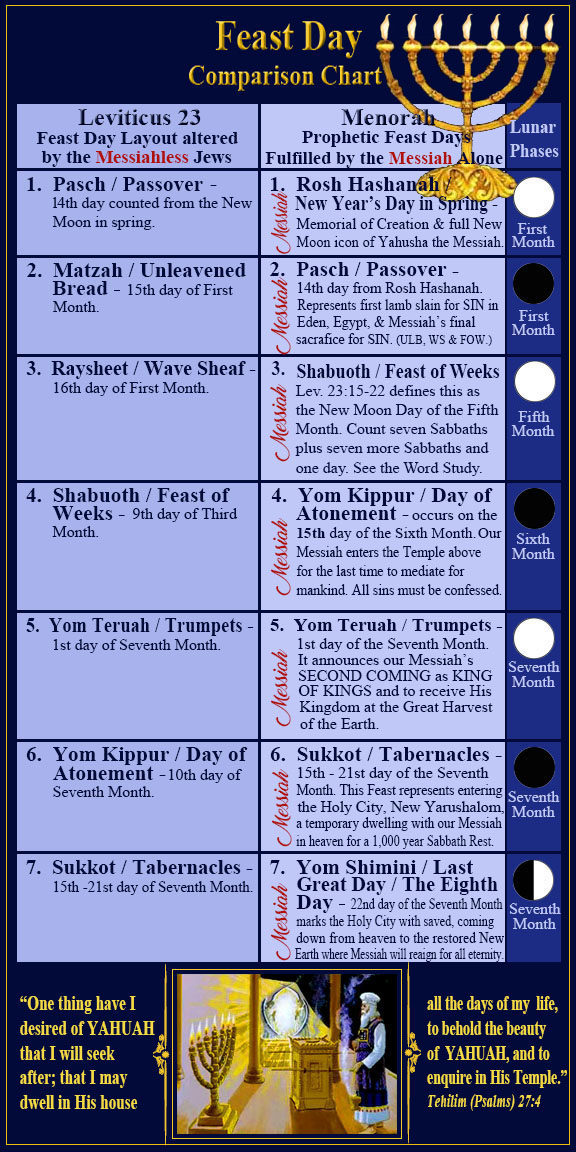
With the Menorah established as the fixed Gold Standard, we can now compare the traditional Levitical Feast Day arrangement with the restored prophetic order presented in this study. The chart below places the two arrangements side by side, making the differences in Feast Day timing immediately visible. Most importantly, it shows how the restored Feast Days correspond to the Menorah’s seven fixed lunar positions and their appointed TIME & EVENT within the Plan of Salvation.
-
ROSH HASHANAH – The first noticeable difference in the comparison chart is the placement of Rosh Hashanah, New Year’s Day in the spring, as the first of the seven Feast Day appointments on the Menorah. Rosh Hashanah not only marks the beginning of the year (Exodus 12:1-4), but within the prophetic model presented here, it also commemorates the beginning of time on Earth, “In the Beginning” of Genesis 1:1. Thus, it provides the starting point from which the annual Feast Day order proceeds.
Rosh Hashanah occurs at the full New Moon, fourteen days before Passover’s dark conjunction lunar position. This establishes the first east-to-west relationship displayed by the Menorah and provides the starting point for examining each of the remaining Feast Day appointments. Refer to the article Start of the Year Rules Establish Rosh Hashanah.
- PASSOVER (Pesach) is the second Feast appointment in the restored Menorah order. It occurs on the 14th day of the first lunar month of Abib, counted from Rosh Hashanah in the spring (Exodus 12:1-6). The following day, the 15th, is the seventh-day Sabbath and the first day of the seven-day Feast of Unleavened Bread.
Within this seven-day Feast are three significant appointments identified in the comparison chart as ULB, WS, and FOW: the first day of Unleavened Bread on the 15th, the Wave Sheaf Offering on the 16th, and the Feast of Weeks on the 21st. Unleavened Bread points to Yahusha as the perfect, sinless Bread of Life, whose sacrificial DEATH provides the means of salvation for mankind. The Wave Sheaf Offering points to His resurrection from the grave to everlasting life and the hope of resurrection made possible through Him. Refer to All Things Passover.
- FEAST OF WEEKS (Shabuoth) is determined by counting complete lunar weeks, each ending with the seventh-day Sabbath. New Moon Days and the 30th day of a lunar month are not included within these seven-day weeks. Because considerable controversy surrounds the timing of this Feast, its restored placement requires a careful examination of the counting instructions in Leviticus 23:15-16.
Within the calendar framework presented in this study, the count is understood as seven complete Sabbaths, followed by a second count of seven complete weeks plus one day, ultimately bringing the Feast of Weeks to the full New Moon Day of the Fifth Lunar Month. The Word Study below presents the Scriptural evidence and three witnesses supporting this interpretation.
“And you shall count unto you from the morrow after the Sabbath, from the day that you brought the sheaf of the wave offering; seven Sabbaths shall be complete. Even from the morrow after the seventh Sabbath shall you number fifty days; and you shall offer a New Moon offering unto Yahuah… And you shall proclaim and keep it according to the waxed mighty on the self-same day that the set-apart assembly occurs, for as all work, service and business employment shall not be done by you as a statute in set time of eternal perpetuity in all of your assemblies for all of your generations..” Leviticus 23:15-16 & 21
This is illustrated in this Word Study, which features three witnesses.

I believe the Feast of Weeks commemorates the deliverance of Noah and his family of eight in the Ark. While Jewish tradition and many Christian interpretations associate this Feast with the giving of the Ten Commandments at Mount Sinai, the evidence presented in this study points in another direction. The Ten Commandments were given in the Third Month, whereas the restored Feast of Weeks presented here occurs on the full New Moon Day of the Fifth Month. Furthermore, although the Ten Commandments stand as the eternal Standard of Righteousness, their giving was not itself an act of deliverance by the Messiah.
In contrast, the account of Noah and the Ark presents a dramatic EVENT of salvation and deliverance. Within the chronology presented here, the full New Moon Day of the Fifth Month commemorates the Ark coming to rest upon the mountains of Ararat. Noah and his family of eight had been preserved through the judgment of the Flood, carrying the remnant of mankind into a new beginning. This beautifully harmonizes with the Menorah’s prophetic pattern of TIME & EVENT, in which each Feast appointment reveals another aspect of Yahuah’s Plan of Salvation. Refer to The Count to Shabuot.
- DAY OF ATONEMENT (Yom Kippur) represents the close of probation for the living before the Return of the Messiah. Within the prophetic Feast Day arrangement presented here, it marks the time when the righteous living are sealed, and the destiny of every person is forever determined. Revelation 22:10-12 describes this solemn conclusion:
“And he said to me, ‘Do not seal the words of the prophecy of this book, for the time is at hand. He who is unjust, let him be unjust still; he who is filthy, let him be filthy still; he who is righteous, let him be righteous still; he who is holy, let him be holy still.’ And behold, I am coming quickly, and My reward is with Me, to give to everyone according to his work.”
Within the prophetic chronology presented in this study, this occurs two weeks before the Messiah’s Return. Revelation 8:1 describes “silence in heaven about the space of half an hour.” Applying the day-for-a-year principle used in Bible prophecy, together with the time framework presented here, this prophetic half hour represents approximately half of a lunar month, or two weeks. This is the precise interval between the restored placement of the Day of Atonement and the Feast of Trumpets on the Menorah.
- FEAST OF TRUMPETS (Yom Teruah) FEAST OF TRUMPETS (Yom Teruah) is the fifth Feast Day in both arrangements, but there are two significant differences in its restored placement and prophetic meaning. First, the Menorah Gold Standard places the Feast of Trumpets at the FULL MOON, rather than at the dark conjunction or visible crescent traditionally associated with the beginning of the Seventh Month. Second, within the prophetic arrangement presented in this study, the sounding of the trumpets announces the magnificent Second Coming of Yahusha haMashiach, when He returns to gather His faithful followers. Yahusha gave His disciples this promise of hope before His departure:
“Let not your hearts be troubled; you believe in Yahuah, believe also in Me. In My Father’s house are many mansions; if it were not so, I would have told you. I go to prepare a place for you. And if I go and prepare a place for you, I will come again and receive you unto Myself; that where I am, there you may be also.” John 14:1-3
Thus, within the Menorah’s prophetic sequence, the Feast of Trumpets follows the solemn Day of Atonement and announces the long-awaited EVENT of the Messiah’s return. Refer to the article Feast of Trumpets.
- THE FEAST OF TABERNACLES (Sukkot) is the sixth Feast Day in the restored Menorah order. It is a seven-day Feast beginning at the dark conjunction lunar position. As illustrated in the comparison chart above, it represents the redeemed of Earth entering the Holy City, the New Yarushalom (Jerusalem), where they will dwell with their Savior during the 1,000-year Sabbath Rest. In this prophetic sequence, the Feast of Tabernacles beautifully portrays the fulfillment of the Blessed Hope, when Yahusha has gathered His faithful followers and brought them into His promised dwelling place. Refer to the article: Feast of Tabernacles and How to Celebrate It.
- THE EIGHTH DAY (Yom Shimini) THE EIGHTH DAY (Yom Shemini) is the seventh and final Feast Day in the restored Menorah order and the only one occurring at a lunar position other than the full moon or dark conjunction. It occupies the Menorah’s unique center position, corresponding to the last-quarter lunar phase on the 22nd day, counted from the full New Moon. The 22nd consistently occurs on the seventh-day Sabbath within the lunar calendar framework presented in this study.
Prophetically, Yom Shemini represents the magnificent restoration of the Earth to its former glory. The Holy City, the New Yarushalom, descends from heaven with the redeemed, “prepared as a bride adorned for her husband.” Here Yahusha haMashiach reigns as KING OF KINGS throughout eternity. The Plan of Salvation has come full circle: from Creation and the entrance of sin to the complete restoration of all things. “And He shall reign FOREVER and EVER!” Refer to the article: Yom Shemini and How to Celebrate It.
“Now I saw a new heaven and a new earth,
for the first heaven and the first earth had passed away.
Also, there was no more sea.
Then I, John, saw the holy city,
New Jerusalem, coming down out of heaven from Yahuah Alahim,
prepared as a bride adorned for her husband.
And I heard a loud voice from heaven saying,
“Behold, the tabernacle of Yahuah Alahim is with men,
and He will dwell with them, and they shall be His people.
Yahuah Himself will be with them and be their Alahim.
And Alahim will wipe away every tear from their eyes;
There shall be no more death, nor sorrow, nor crying.
There shall be no more pain,
for the former things have passed away.”
Then He who sat on the throne said,
“Behold, I make all things new.” And He said to me,
“Write, for these words are true and faithful.”
And He said to me, “It is done!
I am the Alpha and the Omega, the Beginning and the End.
I will give of the fountain of the water of life freely to him who thirsts.
He who overcomes shall inherit all things,
and I will be his Alahim, and he shall be My son [and daughter].”
Revelation 21:1-7
The Master Key of Time
Together with the Menorah, the Temple’s Sacrifice Schedule serves as a GPS for identifying the distinct kinds of days within Yahuah’s calendar: New Moon Days, workdays, seventh-day Sabbaths, and the appointed Feast Days. Each was assigned its own prescribed sacrifices, providing another witness by which these sacred appointments can be distinguished and located with precision throughout the lunar year.
This Sacrifice Schedule provides an important key because its prescribed offerings distinguish one kind of sacred day from another. Within the calendar framework presented in this study, these distinctions reveal an orderly system in which New Moon Days, workdays, Sabbaths, and annual Feast Days maintain their appointed places without being merged into an endlessly cycling weekly calendar. Together, the Menorah and Temple Sacrifice Schedule provide two complementary witnesses to Yahuah’s sacred order of TIME.
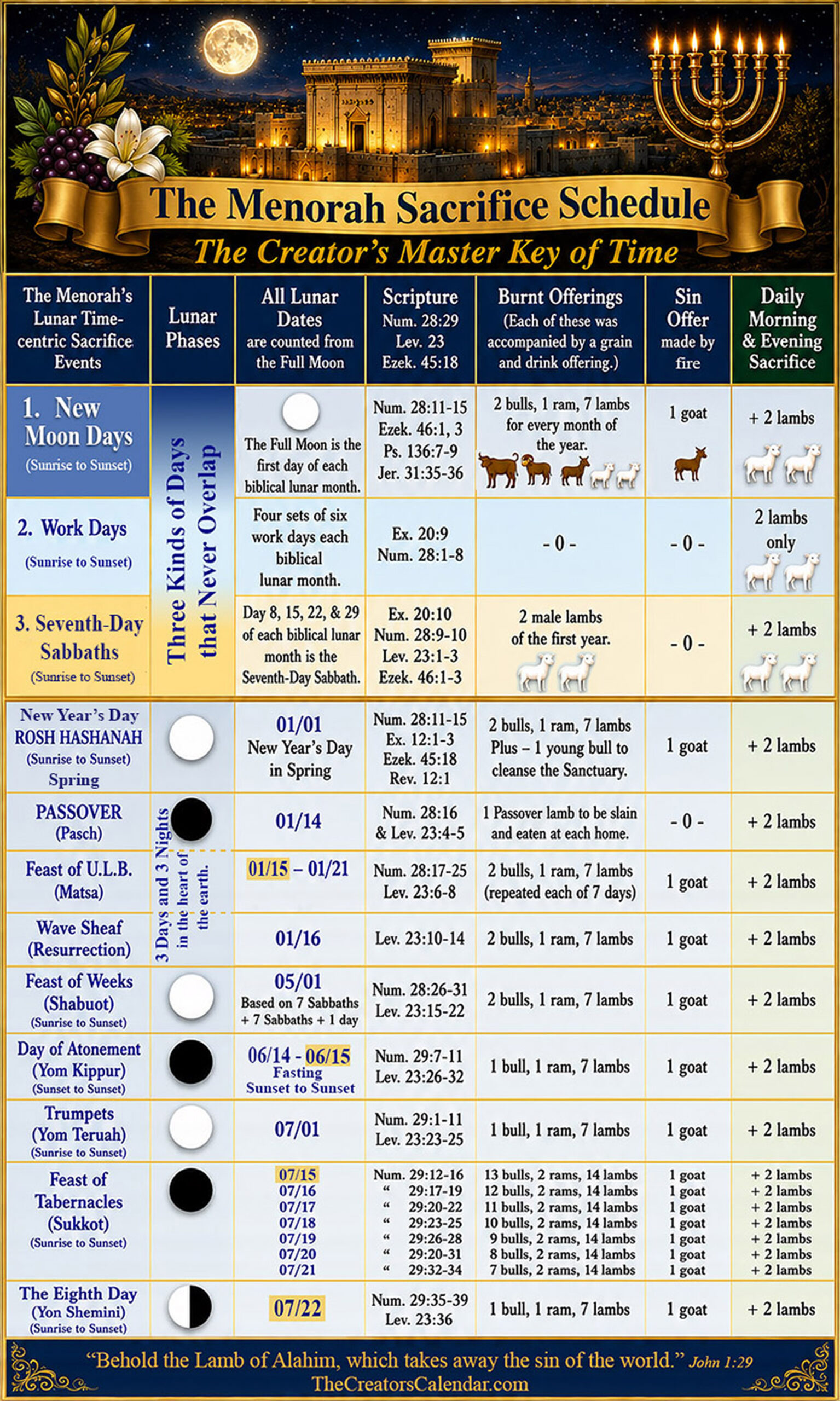
From Genesis to Revelation, no other time-measuring model is ever mentioned. As the evidence illustrated above reveals, none of the Creator’s sacred days can be accurately represented on a pagan solar calendar with its endlessly cycling weeks. Surprisingly, it may be that at this late hour, we are just discovering that the Tabernacle/Temple Sacrifice Schedule is the Master Key of Time, providing for no overlapping of days because of its specific attention to the number and kinds of animals sacrificed on each day of the year.
The Menorah’s Feast Day Treasure Map
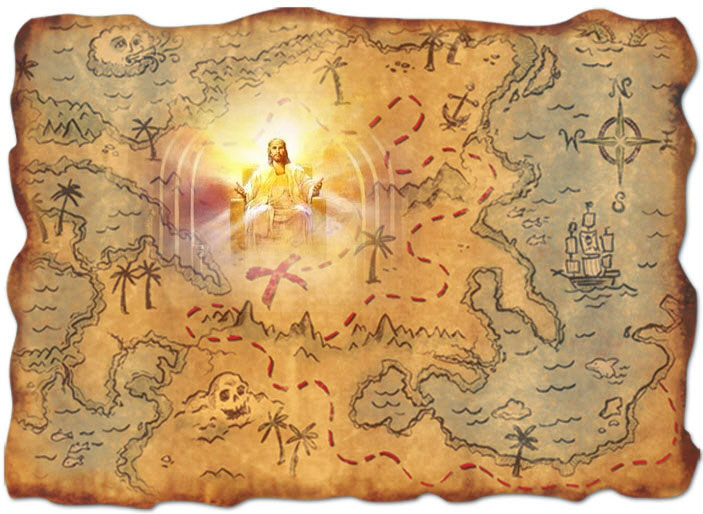 Just as a treasure map marks the path leading to its treasure, the Menorah’s Feast Day layout provides a prophetic roadmap through the Plan of Salvation. Its seven fixed positions reveal the journey from Creation to restoration, identifying the appointed turns along the way through the duet of TIME & EVENT. Within the evidence presented in this study, the Menorah provides an unchanging guide by which Yahusha haMashiach’s faithful followers may test the Feast Day order and follow the prophetic pathway it reveals.
As you consider this material, allow yourself time to study, contemplate, and pray over the evidence presented. Some conclusions may require time before they are fully understood or accepted. Continue seeking the guidance of the Ruach haKadosh, examining the evidence for yourself, and observing the Feast Days according to your conscience as your understanding grows.
The Feast Day protocol is unequivocally the Plan of Salvation’s mechanism for restoring mankind to the Eternal Father.
This is what Scripture has to say on the subject:
“I counsel you to buy from Me gold refined in the fire, that you may be rich; and white garments, that you may be clothed, that the shame of your nakedness may not be revealed; and anoint your eyes with eye salve, that you may see.
As many as I love, I rebuke and chasten. Therefore be zealous and repent.
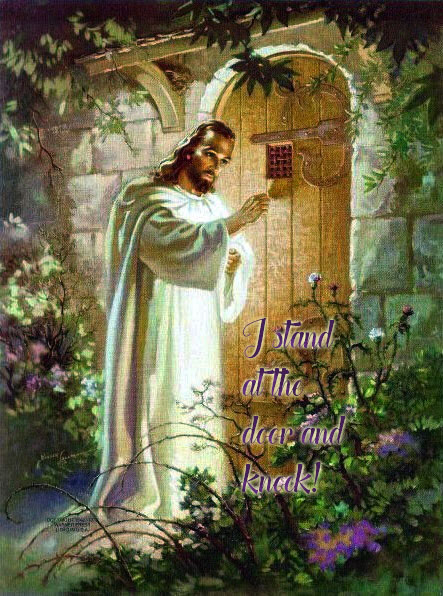
Behold, I stand at the door and knock. If anyone hears My voice and opens the door [East Gate], I will come into him and dine with him, and he with Me.
To him who overcomes I will grant to sit with Me on My throne, as I also overcame and sat down with My Father on His throne.
He who has an ear, let him hear what the
SpiritRuach (power, presence and provision of Yahuah) says to thechurchescalled out ones (G#1577 – ekkesia).’ ” Revelation 3:18-22
 The End
Scripture’s Conflicting Placement for Feast of Tabernacles
The following two passages from the books of Ezra and Nehemiah provide two witnesses that the fall Feast of Tabernacles may have at one time commenced upon the New Moon Day of the Seventh Month. These two books are in harmony with each other, yet they conflict with Leviticus 23:33-36. So the question is, which is correct, the 1st day or the 15th day of the lunar month?
At the very least, this is ample evidence that Scripture contains some conflicting passages and that the placement of the Feasts has been manipulated in the past. It also provides evidence and supports the necessity for the Menorah as Yahuah’s Gold Standard of Time and Feast Days.
Book of Ezra
Ezra 3:1 And when the seventh month was come, and the children of Israel were in the cities, the people gathered themselves together as one man to Jerusalem.
Ezra 3:2 Then stood up Yahusha the son of Yazadak, and his brethren the priests, and Zerubbabel the son of Shealtiel, and his brethren, and builded the altar of Alahim of Israel, to offer burnt offerings thereon, as it is written in the law of Moses the man of Alahim.
Ezra 3:3 And they set the altar upon his bases; for fear was upon them because of the people of those countries: and they offered burnt offerings thereon unto Yahuah, even burnt offerings morning and evening.
Ezra 3:4 They kept also the feast of tabernacles, as it is written, and offered the daily burnt offerings by number, according to the custom, as the duty of every day required;
Ezra 3:5 And afterward offered the continual burnt offering, both for the new moons, and for all the set feasts of Yahuah that were consecrated, and of every one that willingly offered a freewill offering unto Yahuah.
Ezra 3:6 From the first day of the seventh month they began to offer burnt offerings unto Yahuah. But the foundation of the temple of Yahuah was not yet laid.
Book of Nehemiah
Neh 8:1 And all the people gathered themselves together as one man into the street that was before the water gate; and they spake unto Ezra the scribe to bring the book of the Law [Torah] of Moses, which Yahuah had commanded to Israel.
Neh 8:2 And Ezra the priest brought the Torah before the congregation both of men and women, and all that could hear with understanding, upon the first day of the seventh month.
Neh 8:3 And he read therein before the street that was before the water gate from the morning until midday, before the men and the women, and those that could understand; and the ears of all the people were attentive unto the book of the Torah.
Neh 8:4 And Ezra the scribe stood upon a pulpit of wood, which they had made for the purpose; and beside him stood Mattithiah, and Shema, and Anaiah, and Urijah, and Hilkiah, and Maaseiah, on his right hand; and on his left hand, Pedaiah, and Mishael, and Malchiah, and Hashum, and Hashbadana, Zechariah, and Meshullam.
Neh 8:5 And Ezra opened the book in the sight of all the people; (for he was above all the people;) and when he opened it, all the people stood up:
Neh 8:6 And Ezra blessed Yahuah, the great Alahim. And all the people answered, Amen, Amen, with lifting up their hands: and they bowed their heads, and worshiped Yahuah with their faces to the ground.
Neh 8:7 Also Yahusha, and Bani, and Sherebiah, Jamin, Akkub, Shabbethai, Hodijah, Maaseiah, Kelita, Azariah, Jozabad, Hanan, Pelaiah, and the Levites, caused the people to understand the Torah: and the people stood in their place.
Neh 8:8 So they read in the book in the Torah of Alahim distinctly, and gave the sense, and caused them to understand the reading.
Neh 8:9 And Nehemiah, which is the Tirshatha, and Ezra the priest the scribe, and the Levites that taught the people, said unto all the people, This day is sacred unto Yahuah your Alahim; mourn not, nor weep. For all the people wept, when they heard the words of the Torah.
Neh 8:10 Then he said unto them, Go your way, eat the fat, and drink the sweet, and send portions unto them for whom nothing is prepared: for this day is sacred unto Yahuah: neither be ye sorry; for the joy of Yahuah is your strength.
Neh 8:11 So the Levites stilled all the people, saying, Hold your peace, for the day is sacred; neither be ye grieved.
Neh 8:12 And all the people went their way to eat, and to drink, and to send portions, and to make great mirth, because they had understood the words that were declared unto them.
Neh 8:13 And on the second day were gathered together the chief of the fathers of all the people, the priests, and the Levites, unto Ezra the scribe, even to understand the words of the Torah.
Neh 8:14 And they found written in the Torah, which Yahuah had commanded by Moses, that the children of Israel should dwell in booths in the feast of the seventh month:
Neh 8:15 And that they should publish and proclaim in all their cities, and in Jerusalem, saying, Go forth unto the mount, and fetch olive branches, and pine branches, and myrtle branches, and palm branches, and branches of thick trees, to make booths, as it is written.
Neh 8:16 So the people went forth, and brought them, and made themselves booths, every one upon the roof of his house, and in their courts, and in the courts of the house of God, and in the street of the water gate, and in the street of the gate of Ephraim.
Neh 8:17 And all the congregation of them that were come again out of the captivity made booths, and sat under the booths: for since the days of Yahusha (Joshua) the son of Nun unto that day had not the children of Israel done so. And there was very great gladness.
Neh 8:18 Also day by day, from the first day unto the last day, he read in the book of the Torah of Elohim. And they kept the feast seven days; and on the eighth day was a solemn assembly, according unto the manner.
Much more will be forthcoming on this subject as conflicting passages are clarified and the truth becomes clearer. The Menorah – The Gold Standard of our Creator’s Eternal Timepiece.
Kerrie French
www.TheCreatorsCalendar.com
TheCreatorsCalendar29.5@gmail.com
Clarifying Our Purpose
This article and the materials presented on this website are not directed against Jews, Romans, Seventh-day Adventists, or any other people or faith communities. Our purpose is not to single out individuals, question motives, or assign blame. People are not the issue.
What is examined here are doctrinal systems and inherited teachings, measured carefully against the testimony of Scripture. Where those teachings diverge from the biblical record, we believe it is both appropriate and necessary to name the discrepancy with clarity and respect.
Disagreement with doctrine is not an attack on persons. To question tradition is not to reject people. On the contrary, this work is offered in the spirit of informed choice, inviting readers to consider the sources of what they have been taught and to weigh those teachings thoughtfully against the Word of the Creator.
Each individual remains free to agree or disagree. Our role is not to persuade by pressure, but to inform with evidence, allowing conscience, prayer, and personal study to guide the outcome.
Truth can be examined without hostility, and conviction can be expressed without contempt. That is the standard we seek to uphold here.