Passover or Easter – What’s the Big Deal Anyway?
Passover or Easter
What’s the Big Deal Anyway?
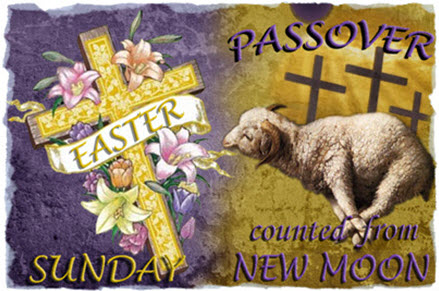
For those who desire a deeper understanding of the Passover and Easter question, and the historical path by which much of Christianity came to observe Easter rather than the biblical Passover, the following articles provide a thoughtful and well-documented foundation. This subject is not merely a matter of terminology or tradition, but one that reaches into the very framework of sacred time, worship, and the remembrance of the Messiah’s sacrifice.
By examining Scripture alongside historical developments, these studies seek to illuminate how and why a departure occurred, and what that means for those pursuing alignment with the original apostolic practice. They carefully trace the transition from the Passover observance established in the Torah and fulfilled in the Messiah, to the later adoption of Easter through Roman influence. It is my hope that as you explore these materials, you will weigh the evidence with discernment and rediscover the profound beauty and significance of the Creator’s appointed times.
 The Good Friday Deception
Virtually every Christian church denomination holds “Good Friday” in the highest esteem. Yet, is it in accordance with the time-centric PROMISE of Yahusha, the Hebrew Messiah, or is it a detour of ungodly proportions? Read More…
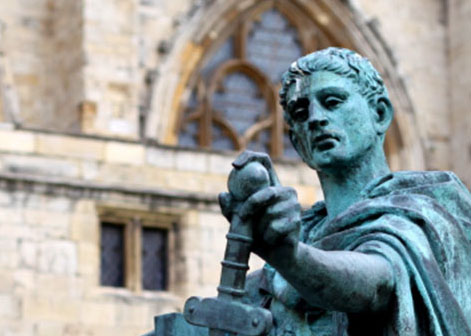 Constantine’s Easter Controversy
with the Obedient Quartodecimen
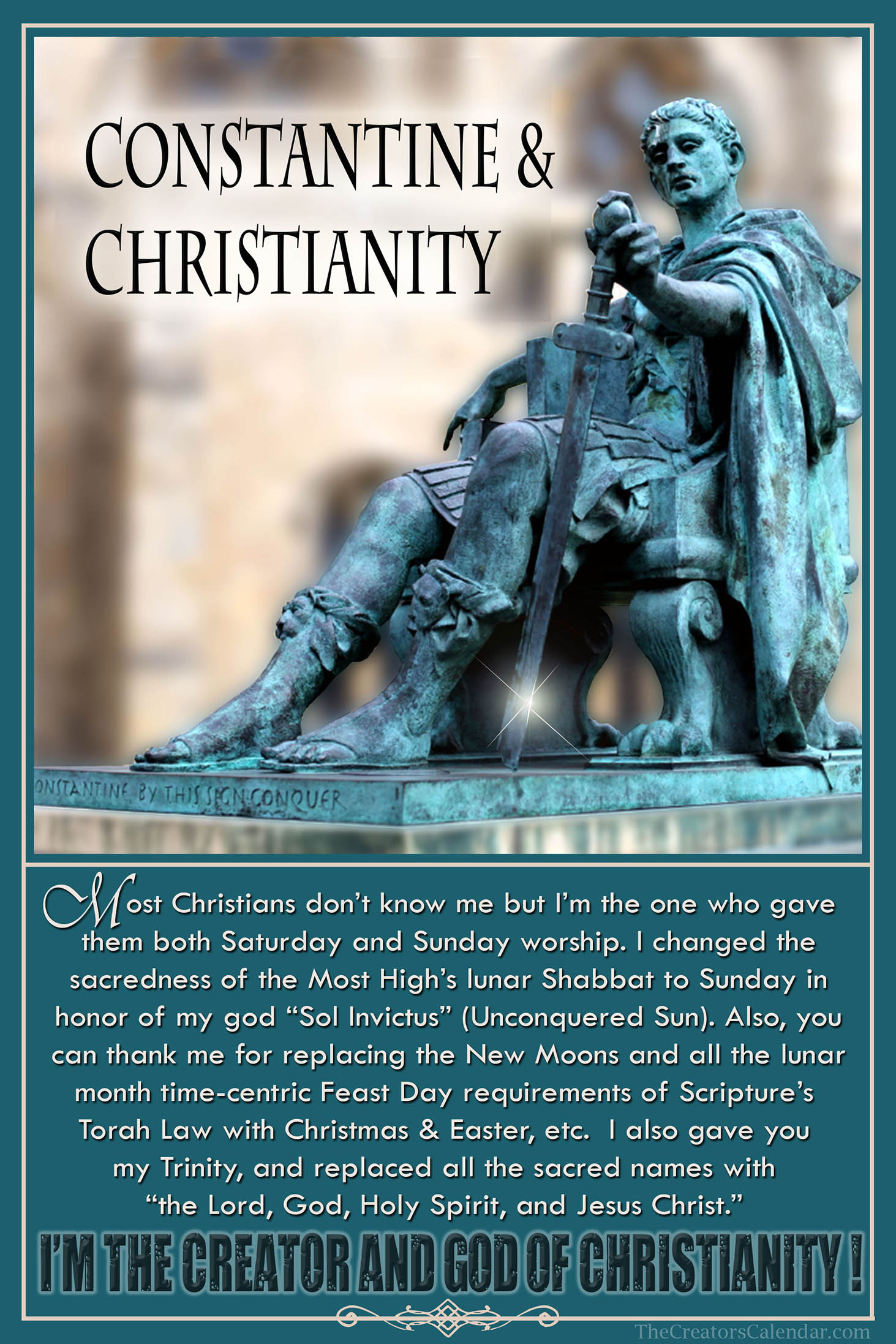
Equipped with his newly fabricated calendar and Easter Sunday, Constantine’s Easter Controversy with the Quartodeciman targeted the Messiah’s obedient followers. These were the last remaining obedient of Earth who counted 14 days to Passover from the full moon when it was still the New Moon. They also kept only a lunar Sabbath. Saturday and Sabbath were never synonymous terms before Constantine’s new calendar and captive Yahudahim (Jews). Read More…
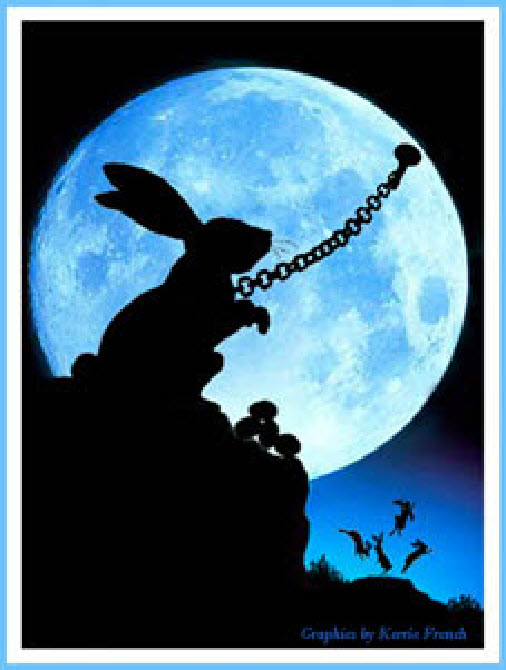 Why Must Rome Fix Easter to the Full Moon? Part 1
This article argues that Easter did not arise from the biblical Passover, but from a later Roman effort to establish a distinct Christian festival separated from the Torah, the lunar calendar, and the Hebrew roots of the Messiah’s death and resurrection. It traces how Rome, especially through Constantine and the Council of Nicaea, fixed Easter to the first Sunday after the full moon, after the Vernal Equinox, in order to replace Passover and reinforce a new solar-based religious system, while also reshaping the weekly cycle and sacred time itself. In doing so, the article calls readers to reconsider the historical shift from the Creator’s original calendar to Roman timekeeping and to explore a return to the Scriptural pattern of lunar-appointed worship. Read More…
Why Must Rome Fix Easter to the Full Moon? Part 2
This article argues that Rome, having earlier detached its civil calendar from the moon, was nevertheless compelled to retain the full moon in calculating Easter in order to keep its resurrection festival separated from the biblical Passover while still borrowing from the lunar framework it sought to replace. It presents this as evidence of a deliberate historical break from the Creator’s appointed calendar, later compounded by rabbinic calendrical changes, resulting in a widespread obscuring of the original Passover-centered timing of the Messiah’s death and resurrection. In doing so, the article calls readers to reexamine the historical, prophetic, and calendrical foundations of Easter and Passover, and to consider whether the heavens still preserve the Creator’s original measure of sacred time. Read More…
Conclusion
In the end, the question of Passover versus Easter is not a trivial matter of preference or tradition, but a profound inquiry into the very foundations of worship, time, and truth. These articles collectively reveal that what is at stake is far more than a date on a calendar; it is whether one follows a system established by the Creator through the ordered testimony of the heavens or one shaped by historical shifts, political motives, and inherited traditions. The contrast is not merely historical, but spiritual, calling each seeker to discern whether the rhythms they honor align with the prophetic design that testifies of the Messiah from beginning to end.
Thus, the “big deal” is this: sacred time was never meant to be altered without consequence, for it is woven into the fabric of redemption itself. Passover stands as a divinely appointed witness to the Messiah’s sacrifice and resurrection, precisely timed and prophetically fulfilled, while Easter represents a restructured observance that, though meaningful to many, follows a different framework altogether. The invitation before each reader is not one of condemnation, but of awakening, to examine, to seek, and to realign with the Creator’s appointed times, where truth, light, and redemption meet in perfect harmony.
 Kerrie L. French
TheCreatorsCalendar.com