How Often is “As Often As?”
How Often is “As Often As?”
Celebrating our Messiah’s Death and Resurrection
 by Kerrie French
Over the centuries, practices surrounding the Passover (Pasch), also referred to by a variety of churches as the Lord’s Supper, the Eucharist, or Holy Communion, and the remembrance of the Messiah’s sacrifice have taken on many forms, often shaped by custom rather than careful adherence to the biblical record. Yet Scripture calls us to prove all things (1Thes. 5:21) and to return to the foundation established from the beginning. With that in mind, let us thoughtfully consider the following questions, which will guide us back to the ordained sacred appointed times and the original intent of this sacred memorial.
The following questions rise above tradition, drawing us into a careful reconsideration of timing, truth, and obedience within Yahuah’s established order.
As Often As
Question 1:
When Scripture says, “as often as you eat this bread and drink this cup,” is it granting freedom of timing, to celebrate on any day in a year, or pointing back to a specific, already established memorial date defined in the Old Testament Torah?
Could it be that over time, the meaning of “as often as” has been separated from its original foundation?
Answer:
We will begin with the Bible verses in question as found in 1 Corinthians that seem to be at the heart of the confusion and questions.
1 Corinthians 11:25 In the same way, He took the cup also, after supping, saying, “This cup is the New Covenant in My blood; as often as you drink it, do this in remembrance of Me.”
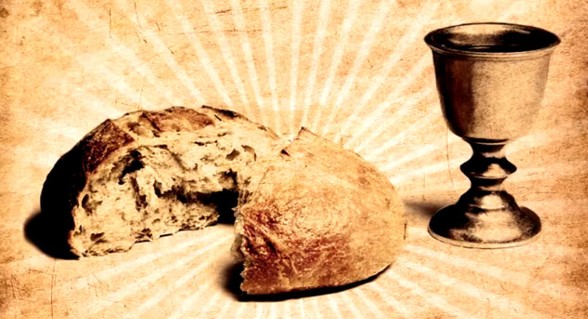
1 Corinthians 11:26 For as often as you eat this bread and drink this cup, you show” the YAHUSHA [the Messiah’s] death until He shall come.
The focus in these verses is on the cup of the New Covenant and the bread associated with the Messiah’s sacrifice. These are not presented as common elements for casual or frequent use, but as part of a sacred remembrance tied to a specifically ordained lunar appointed day. So, when Paul says, “as often as you eat this bread and drink this cup,” he is not establishing a new, undefined frequency but affirming that whenever this memorial is observed, it is to be done in remembrance of Him, proclaiming His death until He returns.
Many point to Acts 2:42 and 2:46, noting that the early believers “broke bread” daily, and conclude that the memorial of the Messiah was observed frequently. Yet in context, “breaking bread” refers to common meals of fellowship, not the sacred Passover observance. Passover was never a daily or weekly practice, but a divinely appointed, once-yearly memorial established in Torah and fulfilled by the Messiah at its precise time. These passages, therefore, do not override the appointed timing but describe the shared life of the early believers. As such, “as often as” remains anchored to the appointed day, not opened to unrestricted repetition.
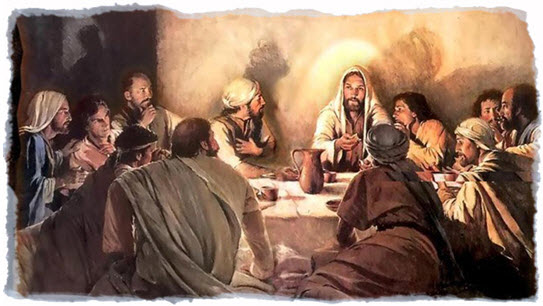
“The Lord’s Supper” was the last Passover meal, the Messiah shared with His disciples one day early in anticipation of its imminent fulfillment. This was done so that they might understand and be prepared for what was about to take place, for Yahusha haMashiach (the Messiah) alone was the Passover Lamb, the fulfillment of the promise given from the beginning of time. Refer to the article – The Last Supper Question.
The Messiah did not create a new memorial date detached from time; He affirmed the one already established.
Question 2:
Why do most churches today observe the Lord’s Supper, originally designated as the Passover (Pasch), according to their own chosen schedule, some weekly, others monthly, and still others celebrate it as Communion at varying intervals, such as every thirteenth Sabbath?
Answer:
The variation in how churches observe the Lord’s Supper today can be traced to a fundamental historical shift in the way time itself has been measured. From the first century B.C. through the fourth century A.D., the original lunar-based calendar system, which governed the timing of Passover and all the appointed times, was progressively set aside under Roman influence and replaced with a solar-based model. As this transition took hold, those who adopted the new system became increasingly disconnected from the lunar markers that precisely identified the 14th day of the first month, the appointed time of Passover.
Without the ability to locate Passover according to its original timekeeping framework, the memorial of the Messiah’s death gradually became detached from its fixed annual setting. In its place, alternate observances emerged, shaped by ecclesiastical authority rather than the Scriptural calendar. Over time, this led to the development of varied practices, some weekly, some monthly, and others at irregular intervals, each attempting to preserve the meaning of the memorial while no longer anchored to its ordained time.
Historical records reflect that this shift was not incidental but intentional. With the formal adoption of a solar calendar and the distancing from Hebrew practices in the early centuries of the Roman Church, the original Passover-based observance was replaced by new traditions, including what later became known as Communion and Easter. As a result, what was once a precise, time-appointed memorial became a flexible practice, varying from one group to another.
Thus, the diversity of modern observances is not rooted in Scripture itself, but in the loss of the original calendar system by which the appointed time of Passover was known and faithfully kept. Refer to the article, Stunning Historical Evidence.
Question 3:
Where in Scripture is the Passover frequency defined? Has this original appointed time been overlooked or replaced?
Answer: The Foundation of Passover
When we return to the Torah (the first five books of the Old Testament), we see that the call to remembrance is firmly anchored in Passover, observed once each year on the 14th day of the first lunar month in spring, and according to a specific New Moon lunar phase.
Please notice that in each of these verses from the Hebrew Old Testament, when Scripture refers to the term “month,” it always means (H#2320 – חדשׁ – chodesh – lunar month, New Moon Day, or first day of the lunar month) and never a Roman solar month.
Exodus 12:2 and 6:
“The New Moon [H#2320 – chodesh – first day of the lunar month], this self-same one, is the beginning [H#7218 – rosh – beginning] of lunar months [H#2320 – chodeshim – of first day of the lunar months]; it is the first [H#7223 – roshon – first in place] lunar month [H#2320 – chodesh – first day of the lunar month] of the year [H#8141 – shanah – year, revolution of time]… And you shall keep it up until the fourteenth day of the same month [H#2320 – chodesh – lunar month]: and the whole multitude of the assembly of Yasharal shall kill it between the evenings.”
Leviticus 23:5 — “In the fourteenth day of the first
month[H#2320 – chodesh – lunar month] between the evenings is Yahuah’s Passover.Numbers 28:16 — “In the fourteenth day of the first
month[H#2320 – chodesh – lunar month] is the Passover of Yahuah.
- Full New Moon Day – Day 1 of the lunar month
- Passover – Day 14 of the same lunar month, as counted from the full New Moon Day
- First Day of Unleavened Bread – the seventh-day Sabbath, Day 15, counted from the same full New Moon Day.
- First Fruits (Wave Sheaf), the Resurrection – Day 16, counted from the same full New Moon Day.
It is essential to distinguish between Passover (the 14th), Unleavened Bread (the 15th–21st), and First Fruits (the 16th), as each is a separate and purposeful appointment in time. The bread and wine of the New Covenant are not associated with a general season, but are specifically tied to Passover, between the evenings, the very moment the Messiah fulfilled His sacrifice.
The First Fruits represents Yahusha, our Messiah, as the first fruits from the dead on the Resurrection Day, the 16th of Abib, at the end of the night immediately before sunrise on the 17th, counted from the full New Moon.
Let’s review the instructions surrounding Passover at the time Yahuah Alahim was preparing to free the captive Isralites from Egyptian bondage and lead them to the Promised Land. Here are the recorded instructions He detailed to Moses and Aaron on the night of a Full Moon, fifteen days before Passover.
The Passover
Exo 12:1 And Yahuah spoke unto Moses (Mosheh) and Aaron in the land of Egypt (Mitsrayim), saying,
Exo 12:2 The New Moon [H#2320 – chodesh – first day of the lunar month], this self-same one, is the beginning [H#7218 – rosh – beginning] of lunar months [H#2320 – chodeshim – of first day of the lunar months]; it is the first [H#7223 – roshon – first in place] lunar month [H#2320 – chodesh – first day of the lunar month] of the year [H#8141 – shanah – year, revolution of time].
Exo 12:3 Speak you unto all the assembly of Yasharal, saying, In the tenth day of this month they shall take to them every man a lamb, according to the house of their fathers, a lamb for a house:
Exo 12:4 And if the household be too little for the lamb, let him and his neighbor next unto his house take it according to the number of the souls; every man according to his eating shall make your count for the lamb.
Exo 12:5 Your lamb shall be without blemish, a male of the first year: you shall take it out from the sheep, or from the goats:
Exo 12:6 And you shall keep it up until the fourteenth day of the same month [H#2320 – chodesh – lunar month]: and the whole multitude of the assembly of Yasharal shall kill it between the evenings.
Exo 12:7 And they shall take of the blood, and strike it on the two side posts and on the upper door post of the houses, wherein they shall eat it.
Exo 12:8 And they shall eat the flesh in that night, roast with fire, and unleavened bread (matzah); and with bitter herbs they shall eat it.
Exo 12:9 Eat not of it raw, nor sodden at all with water, but roast with fire; his head with his legs, and with the purtenance thereof.
Exo 12:10 And you shall let nothing of it remain until the morning; and that which remains of it until the morning you shall burn with fire.
Exo 12:11 And thus shall you eat it; with your loins girded, your shoes on your feet, and your staff in your hand; and you shall eat it in haste: it is Yahuah’s Pecach.
Exo 12:12 For I will pass through the land of Egypt this night, and will smite all the firstborn in the land of Egypt, both man and beast; and against all the [pagan] gods of Egypt I will execute judgment: I am Yahuah.
Exo 12:13 And the blood shall be to you for a SIGN upon the houses where you are: and when I see the blood, I will pass over you, and the plague shall not be upon you to destroy you, when I smite the land of Egypt.
Exo 12:14 And this day shall be unto you for a memorial; and you shall keep it with a feast to Yahuah throughout your generations; you shall keep it a feast by an ordinance forever.
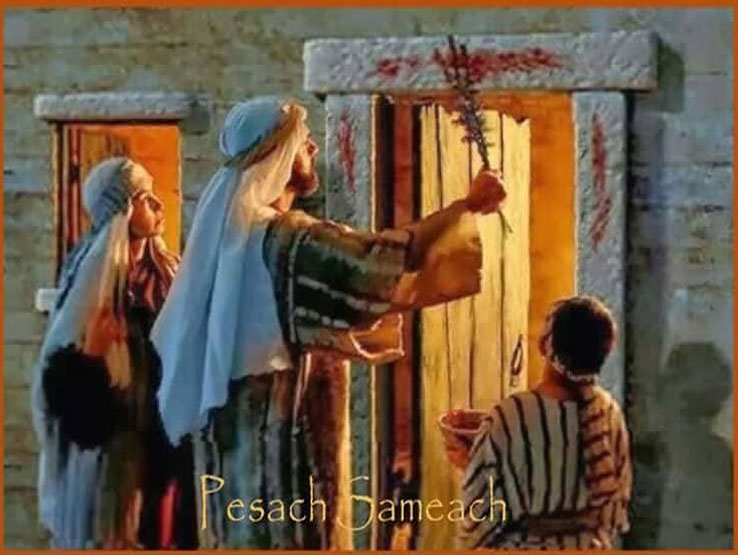
Passover was not an arbitrary moment in history, but the very time foreordained from the beginning, woven through the pattern of redemption from the day sin entered the garden, to Abraham and Isaac at Mount Moriah, to the deliverance of Israel from Egypt, and then ultimately fulfilled according to the same time-centric pattern by the long-promised Messiah. His sacrifice did not occur at a random point, but at the specific and precise lunar appointed time that had long been established. In this light, “as often as” finds its meaning not in repetition apart from the calendar, but in faithful observance when that appointed time returns once each year. Refer to the article – Restoring the Creator’s Calendar in Egypt.
Scripture clearly defines Passover as an annual appointed time, observed on the 14th day of the first lunar month, establishing its frequency as once each year according to the Creator’s calendar. Over time, this original timing has often been set aside or reinterpreted through later traditions, leading many to observe it apart from its Scripturally appointed placement.
Question 4:
Why has Easter Sunday become the widely accepted commemoration of the Messiah’s death and resurrection? Why the different name and different dates? Why observe it on the first Sunday after the full moon following the Vernal Equinox, complete with an Easter ham, bunny, and eggs? Why not return to the biblically established Passover on the 14th of Abib, counted from the full New Moon, and the Feast of First Fruits on the 16th, observed with unleavened bread and wine?
What led to this shift away from the clearly defined lunar appointed times given in the Torah?
Answer:
Over time, alternate calendars and traditions replaced the original appointed times. As a result, many have come to observe this memorial more frequently, often out of sincere devotion. Yet, one’s sincerity does not always preserve precision. As the lunar appointed times were first set aside by the ancient Babylonians and Egyptians, and later by the Romans and all her daughter churches, with alternate rhythms, some solar and some lunar, the original anchoring of the lunar count to Passover became obscured. Over time, this shift occurred as earlier influences from Babylonian and Egyptian timekeeping were later formalized under Roman authority, when ecclesiastical leaders established a fixed, solar-based calendar that replaced the original lunar-appointed system.
The introduction of a solar-based time-keeping system entirely disconnected the memorial from its Scriptural foundation. Thus, with it, the clarity of this instruction and its meaning were lost among their adherents.
With this shift came new names, new symbols, and new dates, Easter replacing Passover, and cultural elements overshadowing the original meaning. What was once a precise, prophetic appointment became a generalized tradition, severed from its time-centric prophetic application to the Plan of Salvation.
For example, the Roman Catholic Church celebrates Mass every week, with what they call the Eucharist or Holy Communion, in which the participants receive a wafer in their hand or on their tongue, representing the body of the Messiah. Refer to the article – Constantine’s Easter Controversy with the Quartodecimen.
Then there is the Seventh-Day Adventist Church, which claims Roman Catholicism is the Beast of Revelation. Yet they still adhere to her man-made solar calendar and the alterations to the name “Passover,” and to all days of the week, even their seventh-day. They changed the name of Passover to “Communion” and celebrate “the Lord’s Supper” (Passover) every thirteenth Sabbath. Interestingly, they even celebrate Easter Sunday as the true Resurrection Day. As a result, they are entirely severed from the lunar count to Passover. Refer to the article – The Great easter Controversy Cover-up.
This illustrates how far many mainstream practices have moved from the original Scriptural pattern, especially regarding their yearly rehearsal of the Plan of Salvation, leading to a separation from the Bridal Covenant of Promise. Refer to the article – Why Must Rome Fix Easter to the Moon?
Question 5:
If the Messiah fulfilled Passover at its exact lunar appointed time, would His followers not be called to remember and honor Him accordingly, at that same divinely fixed time once a year for all time?
And if so, what are the implications of observing this sacred memorial at alternate times throughout the year?
Answer:
The story of Cain and Abel offers a sobering example for reflection. The heart may be sincere, but the offering must still align with what Yahuah Alahim has prescribed, or it becomes disobedience.
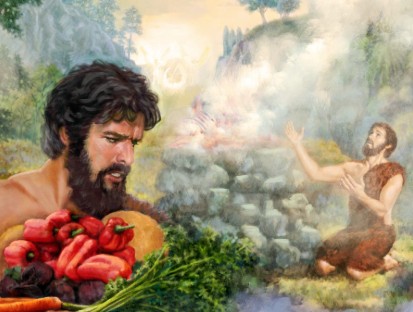 Yahuah Alahim, the Most High, instructed Cain and Abel to sacrifice a lamb as a memorial of the original promise given to Adam and Eve in the garden of the very date they first sinned. This was to be the standard for the generations to follow. (I personally believe this was the second recorded event of Passover, the first being in the Garden the day Adam and Eve sinned.) That was the day the first lamb was slain, and its skins were placed on our first parents as a promise and perpetual covenant from that day forward. It declared that sinners can be forgiven as they are covered by the blood of the Lamb, symbolizing the Messiah’s great mercy and the Robes of Righteousness granted to all who humbly confess their sins as they seek forgiveness.
“Unto Adam also and to his wife did Yahuah Alahim make coats of skins, and clothed them.” Genesis 3:21
Abel was obedient to the specifics of Yahuah’s instructions, and his sacrifice was accepted and consumed. But Cain chose his own way, offering fruit from his garden instead. In doing so, he disregarded Yahuah Alahim’s clear covenant requirements, and his offering was not accepted. In the end, his disobedience gave way to jealousy, hatred of his brother, and ultimately murder.
Is this not a parallel to what has taken place with Passover and all the other lunar appointed Feast Days, New Moon Days, and Sabbaths? Yahuah’s instructions have not changed, yet human-devised patterns of worship have replaced His clearly defined commands, severing the connection to the Bridal Covenant and the fullness of the Plan of Salvation to restore mankind into His righteous (right doing) image.
Though many read in Scripture what is required, yet they have instead altered the Passover’s name and observe it on a solar calendar multiple times throughout the year. In this, they appear to seek righteousness but all the while disregarding the distinct command of Yahuah Alahim to keep Passover according to His lunar calendar once per year, counted fourteen days from the full New Moon.
Traditions, though often well-intended, can obscure truth over time. They become customs without meaning. The original lunar-appointed worship rhythm, as demonstrated in the wilderness Sanctuary and later Temple sacrificial ceremonial services, which defined New Moon Days, lunar Sabbaths, and lunar appointed Feast Days, has been largely forgotten.
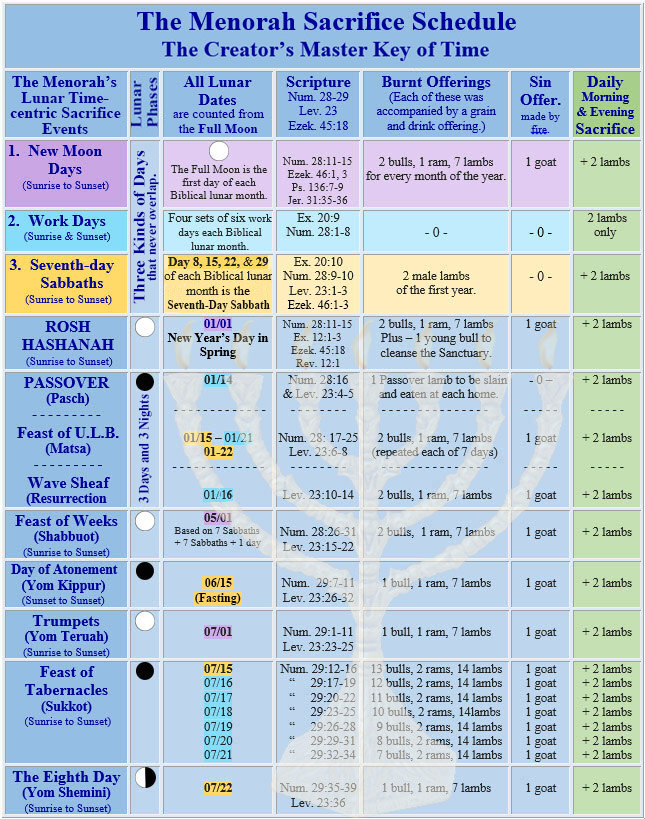
Yet, the call of Scripture remains consistent: to return, to examine, and to restore all things according to the original and authentic full New (Renewed) Moon.
Exodus 12:14 And this day shall be unto you for a memorial; and you shall keep it with a feast to Yahuah throughout your generations; you shall keep it a feast by an ordinance forever.
So, the question stands: Does Yahuah honor altered observances, or only those of faithful obedience that align with His ordained lunar appointed times? The answer is evident: Yahuah honors what He has ordained, not what man has changed. Refer to the article – Passover, the True Sign and Seal of Yahuah.
Question 6
Have long-standing traditions, though sincere, gradually obscured the Creator’s original calendar and its prophetic rhythm?
Answer:
Yes, traditions, though often well-intended, have obscured the truth over time. The original lunar-appointed rhythm that once clearly defined New Moons, Sabbaths, and Feast Days has been largely forgotten, along with the Passover name designation.
Yet the call of Scripture remains: to return, to examine, and to restore. Refer to the article – Passover’s Blood-Stained Trail of Promise.
Question 7:
If the lunar appointed times were usurped and altered, what else might have been affected in our understanding of the sacred Feast Days, the Bridal Covenant, and the Plan of Salvation?
Answer:
The appointed times are not merely dates; they are prophetic markers. They reveal the unfolding Plan of Salvation with precision and purpose. Together, these are part of the yearly rehearsals of the Bridal Covenant.
If these appointed markers are shifted or replaced, our understanding of the remedy for sin becomes obscured, and the Bridegroom will not find His Bride among those who, though given the invitation, choose not to be restored to His truths, but instead remain anchored in what is familiar as taught by their church, pastor, prophet, or rabbi, rather than returning to His appointed ways. Refer to the article – Restored Prophetic Feast Days of Yahusha the Messiah.