The Star of David Deception
The Star of David Deception
Unmasking a Symbol
Symbols speak. They carry legacies, communicate allegiances, and often serve as visible declarations of invisible loyalties. Among the most universally recognized religious and political emblems in the modern world is the six-pointed star, commonly known as the “Star of David.” It adorns the flag of the State of Israel, graces synagogues, jewelry, and national monuments, and is generally accepted as a cherished sign of Jewish identity and heritage. But what if this assumption, so widely held and emotionally defended, has no biblical foundation at all? What if this symbol, long presumed to honor the royal lineage of King David, instead veils a much older, darker legacy?
This article explores what may be one of the most profound and unsettling deceptions of our time: that the so-called “Star of David” is not a symbol of the biblical Davidic covenant at all, but a repurposed hexagram, a geometric emblem historically linked to pagan worship, Babylonian astrology, occult magic, and even Satanic ritual. Tracing its origins through ancient civilizations, apostate Israelite practices, and into modern religious and political systems, this investigation seeks to lay bare a symbol’s true identity, hidden beneath centuries of cultural appropriation and theological assumptions.
While this subject may challenge long-held beliefs and stir emotional resistance, it is presented not in a spirit of accusation, but in a spirit of sincere inquiry. Those who value Scripture above tradition, and who desire to worship Yahuah Alahim (the Eternal Father) in Spirit and in Truth, must be willing to ask hard questions:
-
Did King David ever use a star as his emblem?
-
Does the Torah or the writings of the biblical prophets endorse this symbol in worship or national identity?
-
Could its placement on the modern Israeli flag be part of a deeper air jordan 13 black flint prophetic narrative, a warning rather than a witness?
Through historical evidence, scriptural testimony, and symbolic analysis, this article aims to lift the veil on the hexagram’s true origins and its prophetic implications. It calls all who follow YAHUAH and His Son, Yahusha haMashiach, to discern between the holy and the profane (Ezekiel 44:23), and to ensure that our faith is not built upon counterfeit signs and symbols that may honor another Alahim/elohim (god) entirely.
This is not a condemnation of individuals or ethnic groups, but an earnest appeal to believers across all backgrounds to reconsider the emblems we accept as sacred. In an age of global deception and spiritual confusion, the pursuit of truth, even when it leads us away from cultural familiarity, is a path of faithfulness and freedom.
Let us press in with open hearts and Berean minds, remembering the words of the Messiah:
“You shall know the truth, and the truth shall make you free.” John 8:32
The Hexagram: Ancient Symbol or Mark of Deception?
The hexagram is a geometric symbol consisting of two interlocking equilateral triangles, forming what is widely recognized today as a six-pointed star. While often referred to as the “Star of David,” historical evidence does not support its use by King David or any ancient Israelite patriarch as a sacred emblem. Rather, its earliest known uses appear in the religious practices of ancient Babylonian, Egyptian, and Assyrian cultures, where it served as a mystical symbol in pagan rituals. Within Scripture, the prophetic rebuke against Israel for worshiping the “star of their god Remphan” (Amos 5:26; Acts 7:43) may indicate the adoption of such imagery during times of national apostasy.
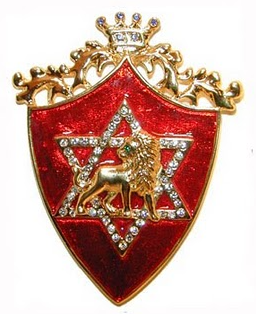
According to various occult and esoteric traditions, the hexagram was employed as a powerful magical sigil, capable of invoking spiritual forces. King Solomon, during his period of compromise and idolatry, is said to have used such symbols in alignment with the worship of foreign deities. The symbol later gained notoriety in the mystical traditions of the Kabbalah, ceremonial magic, and astrology, and has been consistently used by Satanists, Luciferians, and occult practitioners to this day.
The Roman Catholic Church, identified by some prophetic interpreters as the first beast of Revelation 13, has also incorporated the hexagram in various forms of ecclesiastical and architectural symbolism. Some researchers assert that elite financial powers, such as the Rothschild family, have adopted the hexagram both as a family emblem and as a broader marker of influence, including its appearance on the modern flag of the State of Israel, a choice viewed by critics as laden with spiritual and prophetic implications.
Numerical Associations and the Symbolic Identity of 666
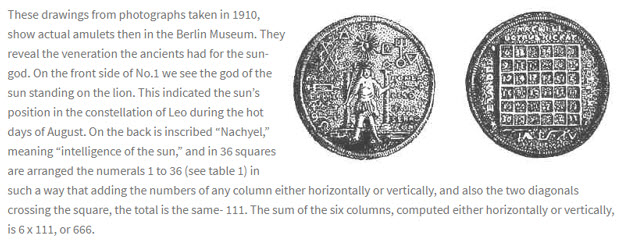
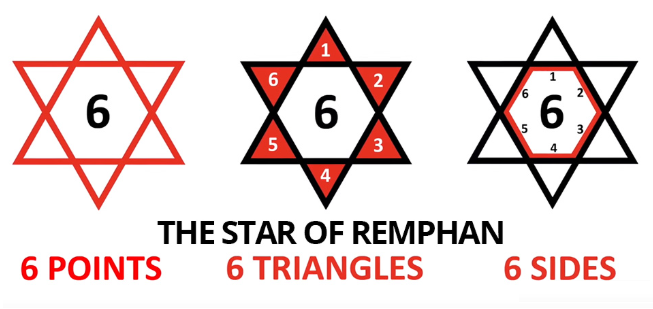
Closely tied to the hexagram is its numerical configuration. It consists of six points, six interlaced triangles, and a six-sided hexagon at its center, yielding a symbolic representation of 666, the number famously associated with the Beast in Revelation 13:18. This numerical signature is also linked to ancient Babylonian astrological systems, where the starry heavens were divided into 36 constellations, each representing ten days of the year. Pagan priests utilized magical amulets known as Sigilla Solis (Seals of the Sun), which contained all numbers from 1 to 36 arranged in a square grid. Remarkably, adding any row, column, or diagonal of this grid results in the number 111, and the sum of all six such lines totals 666. These sun-seal amulets were used in predictive divination and are thought to be direct precursors to the modern association of this number with false worship and spiritual corruption.
Taken together, the geometric and numeric properties of the hexagram raise serious theological questions. Its historical usage and symbolic associations make it difficult to reconcile with the worship of the Creator, Yahuah Alahim, who commands His followers to reject the symbols of pagan nations and remain separate from the idolatrous practices of the world (Deuteronomy 4:19; 2 Corinthians 6:17).
Sun Worship, 666, and the Star of False Elohim
The number 666, as identified in Revelation 13:18, is historically and symbolically linked to pagan sun worship, a system that finds its roots in the mystery religions of ancient Babylon. In these early civilizations, solar deities were revered as supreme, and their worship was deeply embedded in astrology, temple rituals, and magical symbolism. Though repackaged under different forms throughout history, the underlying theme of sun veneration as a counterfeit to worship of the true Creator has continued unabated. This form of worship, according to many researchers, persists today under the veil of Mystery Babylon, most notably within the religious framework of the Roman Catholic Church, as well as among certain global elite factions that promote ecumenicalism and occult symbolism.
In Scripture, the House of Israel is repeatedly shown to fall into apostasy by turning to the worship of foreign “elohim” (gods). Among the clearest rebukes is their adoption of the six-pointed star, identified as the “Star of Remphan” or Chiun, during their exile in Babylon. This star, often linked with Saturn worship, served as a symbol of spiritual rebellion and became associated with what some scholars interpret as the “mark of Cain,” a representation of those who reject the commands of Yahuah in favor of pagan practices.
The prophet Amos directly addresses this transgression when he declared:
“But you have borne the tabernacle of your Moloch and Chiun your images, the star of your alohim/elohim (heathen god), which you made to yourselves.” Amos 5:26
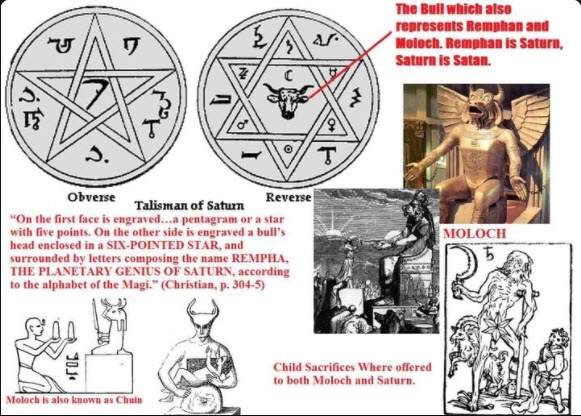 Centuries later, this same charge is echoed in the words of Stephen, the first recorded martyr of the Renewed Covenant. In his final testimony before the Sanhedrin, just moments before being stoned, Stephen boldly confronts the Jewish leaders for their continued idolatry and rejection of divine truth, a rejection that, he asserts, traces back to these same ancient apostate practices.
“And you took up the tent of Moloch, and the star of your alahim/elohim [heathen god] Remphan, the figures which you made in order to worship them.” Acts 7:43
The Fall of Solomon and the Reintroduction of the Hexagram
King Solomon, once celebrated for his divinely granted wisdom and chosen to build the Temple of Yahuah, tragically fell into spiritual apostasy. After forming a political alliance with Egypt through marriage to Pharaoh’s daughter around 922 B.C., Solomon began to embrace the idolatrous worship practices of the surrounding nations. He constructed altars to Moloch, Ashtoreth, and Remphan—foreign deities steeped in occultism and associated with Saturn worship. Essentially, Saturn worship is Satan worship. Among the most concerning elements of this apostasy was Solomon’s use of a six-pointed star, which later became known as the “Seal of Solomon,” a symbol widely believed to possess mystical power and invoke demonic forces.
“Satanists, Occultists, and Freemasons venerate King Solomon, who [according to the sages] owned a magic ring that was engraved with the “Seal of Solomon,” which gave him power over the invisible monarchy of demons.” The History and Practice of Magic, Vol. 2.
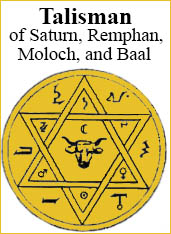 This six-pointed star, two interlocking equilateral triangles, was adopted into ritual magic as the Talisman of Saturn. In occult traditions, it was often engraved with the image of a bull’s head, representing Moloch, and inscribed with the name Remphan, a deity linked to Saturn.
The structure of the hexagram, with its six points, six surrounding triangles, and six-sided hexagon, forms a striking numerical pattern associated with 666, a number prophetically described in Revelation 13:18 as connected to the Mark of the Beast.
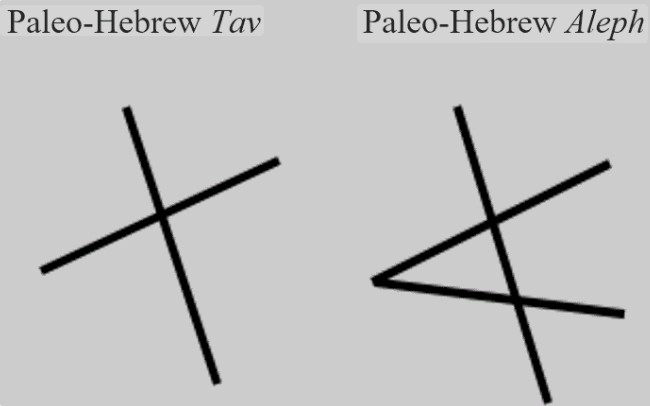
The Jews today claim that the first letter of their alephbet (alphabet) begins with the “aleph,” representing the head of a bull, yet this too is connected to Moloch. Originally, the “aleph” was understood to represent the first lamb slain in the Garden of Eden to cover the sins of Adam and Eve, which was established as the ongoing promise of the Plan of Salvation to be accomplished by the coming Messiah who would ultimately die on the cross, represented by the “tav,” the last letter of the Alephbet.
The Hexagram as a Satanic Emblem
Throughout history, this symbol has been revered not only in occult circles but also by Freemasons and certain esoteric branches of Judaism and Christianity. Occult texts and traditions suggest that Solomon’s use of the hexagram gave him power over demonic entities, a claim embraced by those seeking mystical influence to this day. Yet, from the biblical perspective, Solomon’s descent into idolatry ultimately led to Yahuah’s judgment. Upon his death, the United Kingdom of Israel was torn apart, signaling divine disapproval of the practices he had introduced.
Despite modern associations of the hexagram with King David, the historical and spiritual evidence points clearly to Solomon as its originator within Israelite history. The Scripture does not endorse this symbol, but rather connects it to rebellion, apostasy, and false worship.
The Number of the Beast and Its Associations
The six-pointed star’s connection to 666 is not merely visual but deeply embedded in ancient numerology and sun worship. Babylonian astrologers, who worshipped celestial bodies, developed a system dividing the sky into 36 constellations. They wore amulets called Sigilla Solis (Seals of the Sun), which contained the numbers 1 through 36 arranged in a magic square. Each row, column, and diagonal added up to 111, and the total sum equaled 666, the same number later revealed in the book of Revelation as the number of the Beast.
“Here is wisdom. Let him that hath understanding count the number of the beast: for it is the number of a man; and his number is SIX HUNDRED THREESCORE AND SIX.” Revelation 13:18
“Now the weight of gold that came to Solomon in one year was SIX HUNDRED THREESCORE [sixty] AND SIX talents of gold…” 1 Kings 10:14
This number, symbolic of man’s rebellion and Satanic imitation, has been consistently linked to sun worship, which in biblical theology equates to the worship of Satan under a different name. The presence of the hexagram on the flag of Israel and in religious traditions today raises critical questions about what is being honored and by whom.
Worship of Saturn: A Hidden Continuum
The worship of Saturn, also known as Chiun or Remphan, was repeatedly condemned in the Scriptures as a form of idolatry practiced by apostate Israelites. The prophet Amos rebuked the people, saying:
“But you have borne the tabernacle of your Moloch and Chiun your images, the star of your elohiym, which you made to yourselves.” Amos 5:26
This very charge was echoed by Stephen in Acts 7:43 as he confronted the Jewish leaders just before his martyrdom. His words expose the nation’s long-standing tendency to adopt foreign pagan deities and their symbols. This apostasy, born in Babylonian exile and reinforced through occult practices, carried through the generations, even influencing the symbols used in modern religious and political contexts.
Who Is the Beast of Revelation?
To understand the Mark of the Beast, one must first identify the Beast itself. Traditional interpretations identify the first Beast of Revelation 13 as the Roman Catholic Church, arising from the ruins of pagan Rome. Its religious leader, the Pope, is often linked to the “Son of Perdition” in 2 Thessalonians 2. The second beast, described as lamb-like with two horns, is often believed to be the United States. However, an alternative interpretation sees this second beast as representing the divided Jewish religious authority—Rabbinical Pharisees and Karaites, who appear outwardly benign but speak with the voice of the dragon.
Historically aligned with Roman power, these Jewish factions have collaborated in significant ways, notably during the crucifixion of Yahusha. Their rejection of Yahusha as the Messiah led to significant calendar changes, some imposed under Roman pressure, others self-directed to support the claim that the true Messiah had not yet come. This alteration distorted the prophetic alignment of Yahusha’s fulfillment of the Torah, especially His death at Passover.
The Image of the Beast and Its Symbol
As we consider the identity of the Image of the Beast, the hexagram stands out as a prime candidate. It is already embraced across religious and cultural lines, making it an ideal emblem for a unified global faith system. While technologies like RFID chips may enforce economic control, the true nature of the Mark lies in worship and allegiance.
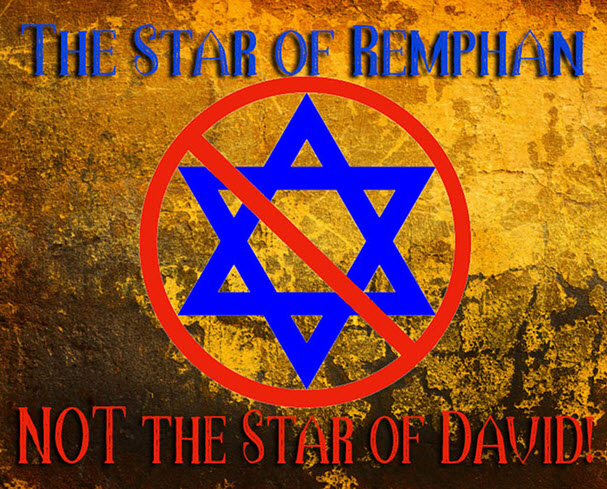
Revelation 13:15 warns that the image of the Beast will be given breath and authority to persecute those who refuse to worship it. The consequence of refusal will be exclusion from economic systems and, ultimately, death. Yet, those who remain loyal to Yahusha haMashiach and the Torah of Yahuah are promised eternal life, even if it comes through martyrdom (Revelation 12:11).
“He was granted power to give breath to the image of the beast, that the image of the beast should both speak and cause as many as would not worship [honor] the image of the beast, to be killed.” Revelation 13:15
This choice between life and compromise, truth and tradition, will mark the final test of faith. The symbol we revere may very well determine whose authority we acknowledge.
Revelation 13:17 says, “…and that no one may buy or sell except one who has the mark or the name of the beast, or the number of his name.”
“And they overcame him by the blood of the Lamb and by the word of their testimony, and they did not love their lives unto the death.” Revelation 12:11
The Jesuit Network and the Control of Commerce
The Jesuits, long considered the secret enforcers of Roman power, are identified by some as the force behind the enforcement of the Mark of the Beast. Their influence extends beyond religion into global finance, where they exercise control over institutions such as the World Bank, the IMF, and major central banks through their strategic base in the City of London. This financial domination grants them the ability to determine who may buy or sell, fulfilling the prophecy of Revelation 13:17.
Linked to this network is the Rothschild family, financiers of the Zionist movement and instrumental in founding the modern State of Israel. The Balfour Declaration of 1917, addressed to Lord Rothschild, secured British support for a Jewish homeland in the land of Palestine. However, the symbol chosen for the new state, the hexagram, sparked controversy, as many Jews recognized its historical use in pagan worship and occult traditions.
Zionism and the Identity of True Israel
Historical and genetic studies suggest that a large percentage of modern Jews, particularly Ashkenazi Jews, are not biologically descended from Abraham. From a biblical perspective, true Israel (Yashar’al) is not defined by bloodline or geography, but by obedience to Torah Law and faith in Yahusha haMashiach. This aligns with Isaiah 8:20 and Revelation 14:12, which together describe the remnant people of Yahuah as those who keep His commandments and hold the testimony of Yahusha.
The modern geopolitical State of Israel, while fulfilling certain political objectives, may actually serve to mislead many believers who expect an end-time regathering in fulfillment of Daniel’s 70th week. However, Scripture reveals that Yahusha has already fulfilled this prophecy, and the true gathering occurs at His second coming. This gathering is based upon those who have been faithful and trust in Yahusha, and is neither national nor racial. It is the final harvest of the faithful, drawn from every tribe, nation, and tongue.
Occult Symbol Central to Luciferian Worship
The hexagram is not only a political or religious emblem; it is also a sacred symbol in occult traditions. From the Theosophical Society of Helena Blavatsky to the rituals of Aleister Crowley, the hexagram has been venerated as a source of mystical power. Blavatsky openly declared Lucifer as the true god and incorporated the hexagram into her society’s emblem. Crowley, who referred to himself as “The Beast 666,” developed and promoted the use of the hexagram in ceremonial magic.
“It is Satan who is the God of our planet and the only God, and this without any metaphorical allusion to its wickedness and depravity.” Helena Blavatsky, The Secret Doctrine: The Synthesis of Science, Religion and Philosophy (Volume II: Anthropogenesis), p. 234.
Former occultists, including Bill Schnoebelen, have confirmed that the hexagram is essential for demonic invocation. Its presence in modern witchcraft, Freemasonry, and astrology is widespread. The very word “hex,” used to describe a curse, derives from hexagram, underscoring its dark legacy.
Satanic Rituals and the Solar Calendar Wheel of Time
According to sources within former occult circles, the Illuminati and Luciferian sects follow a solar calendar for their ritual sacrifices, corresponding to the solstices and equinoxes:
-
March 21 – Human sacrifice on the spring equinox
-
April 19 – Fire and human sacrifices (e.g., Waco, Oklahoma City)
-
June 21 – Human sacrifice on the summer solstice (Litha)
-
September 21 – Human sacrifice on the fall equinox (Mabon)
-
December 21 – Human sacrifice on the winter solstice (Yule)
These dates, considered sacred in sun worship and mystery religions, reflect the ongoing attempt by Satan to counterfeit and replace Yahuah’s appointed times.
Luciferians and the Sacred Geometry of the Hexagram
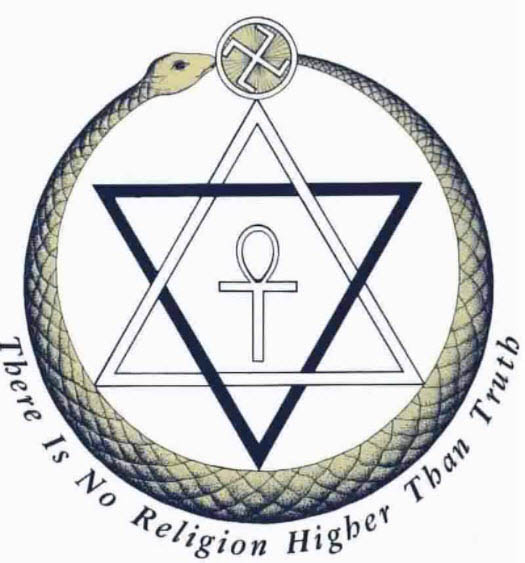 While many associate Satan with open rebellion, Luciferians view their deity quite differently. In their belief system, Lucifer is regarded as the true light-bearer, and Yahuah, the Elohim (God) of the Scriptures, is perceived as the oppressor of knowledge. One of the most prominent advocates of this ideology was Helena Blavatsky, founder of the Theosophical Society in 1875. She openly declared, “Lucifer is the true God,” and incorporated the hexagram into her organization’s emblem.
This emblem also features the Swastika, the Ankh (symbolizing eternal life), the Aum (a sacred sound in Eastern mysticism), and the Ouroboros (a serpent devouring its own tail, representing the cyclical nature of existence). According to Blavatsky, the interlocking triangles of the hexagram, one light and ascending, the other dark and descending, represent the tension between spiritual ascension and material entrapment. When enclosed by the serpent-circle, they symbolize the boundaries of the physical universe, a concept central to occult cosmology.
Satanists and the Ritual Power of the Hexagram
The hexagram also holds a revered place in modern Satanism, particularly in the legacy of Aleister Crowley, a notorious occultist who self-identified as “The Beast 666.” Crowley, whose life was marked by rebellion, substance abuse, and sexual deviance, believed himself to embody the anti-Messiah of the apocalypse. He founded the Order of the Silver Star and crafted a variant of the universal hexagram, using it as a tool in ceremonial magic.
Crowley’s motto, “Do what thou wilt shall be the whole of the Law,” became the guiding creed of his magical system, one that emphasizes self-will over divine authority. The hexagram, in this context, was not merely decorative but instrumental in rituals designed to invoke demonic entities and manipulate spiritual forces. For this reason, conscientious followers of Scripture are strongly cautioned against adopting or honoring this symbol.
The Roman Catholic Church and the Hidden Use of the Hexagram
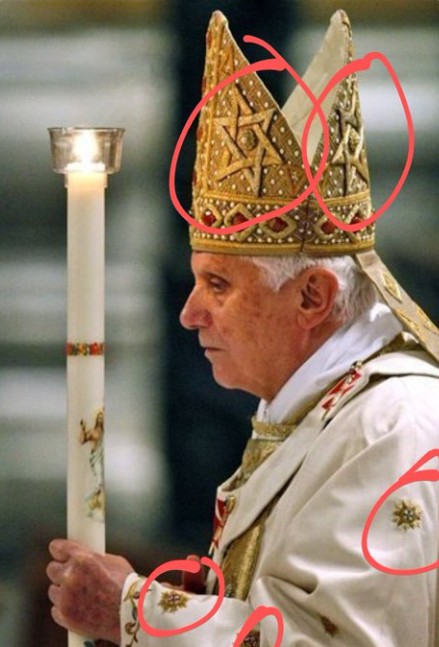
The hexagram is not limited to Easter mysticism or fringe occultism; it also appears in the traditions and regalia of the Roman Catholic Church, which many identify as the Beast of Revelation. Evidence suggests that the Church, through centuries of syncretism, adopted varioius pagan symbols, including the hexagram. This emblem is found on ecclesiastical vestments such as the Pope’s miter, which is itself styled to resemble the head of Dagon, the ancient fish god of Babylon.
In Mystery Religion initiations, it was common to tattoo the forehead and hands with symbolic marks, mirroring the prophetic placement of the Mark of the Beast (Revelation 13:16). This striking parallel invites serious reflection. David Spangler, a New Age figure and former Director of the United Nations Planetary Initiative, chillingly affirmed:
“No one will enter the New World Order unless he or she will make a pledge to worship Lucifer. No one will enter the New Age unless he will take a Luciferian Initiation.” David Spangler, Reflections on the Christ, p. 44.
The Rothschilds and the Political Appropriation of the Hexagram
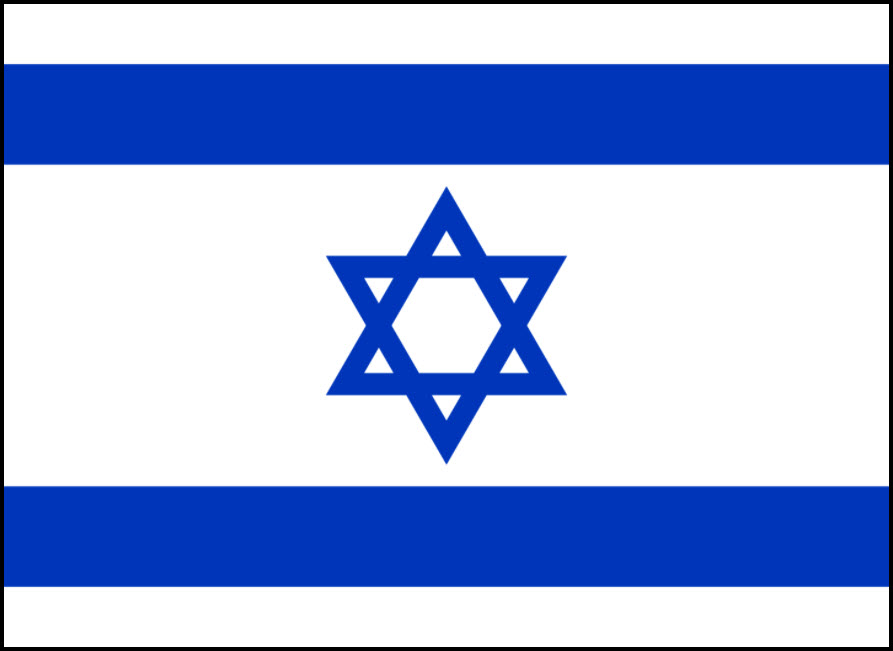
Zionist’s Star of Moloch
The modern reappearance of the hexagram on the flag of Israel is deeply linked to the efforts of the Rothschild family, powerful financiers connected to Jesuit political strategy. In 1895, Edmond James de Rothschild funded the purchase of land in Palestine to establish Jewish colonies. In 1897, the family helped found the Zionist Congress, whose emblem, the so-called “Star of David,” was none other than the hexagram. This symbol later became the national emblem of Israel.
The Balfour Declaration of 1917, a letter from the British Foreign Secretary to Baron Rothschild, pledged support for a Jewish homeland in Palestine. This document was a geopolitical strategy orchestrated by the Jesuits and their allies to secure influence in the Middle East. Some assert that persecution during World War II was leveraged to encourage Jewish migration to this newly secured territory.
In his book, Legacy: A Genetic History of the Jewish People, Harry Ostrer (2012) provides evidence that, contrary to common assumption, historical and genetic studies suggest that up to 97% of those identifying as Jews today are not. This particularly includes Ashkenazi Jews, who are not direct descendants of Abraham. This calls into question the legitimacy of modern Zionism as the fulfillment of biblical prophecy and highlights its potential as a tool of global political manipulation.
A Global Strategy for the New World Order
Control of Israel and the broader Middle East is part of a larger Jesuit-led agenda to implement a New World Order. This includes replacing independent leaders in Islamic nations with compliant puppet regimes, often through U.S.-backed military interventions. Countries like Iraq, Libya, Afghanistan, and Egypt have already undergone such transformations, with Syria and Iran remaining in the crosshairs.
Challenging the End-Time Narrative: Daniel’s 70th Week Fulfilled
One of the most pervasive theological misconceptions among Bible believers today is the belief that the modern State of Israel must play a central role in fulfilling the 70th week of Daniel, commonly interpreted as a future seven-year tribulation period. Yet a careful reading of Daniel 9, alongside the Gospel accounts, supports the view that Yahusha haMashiach has already fulfilled this prophetic timeline. His ministry, death, and resurrection align precisely with the events outlined in the 70th week, rendering any expectation of a future fulfillment unwarranted.
Moreover Adidas Adidas Sports Resort Club Sweater , Украина #174050986 , Футболные шорты adidas real madrid🔥 — цена 350 грн в каталоге Спортивные шорты ✓ Купить мужские вещи по доступной цене на Шафе, the notion that the house of Israel and the house of Judah must be regathered at the end of time ignores the already completed regathering that took place before and during the Messiah’s earthly ministry. By that time, remnants from all twelve tribes were present in the land. The prophetic emphasis, therefore, is not on geopolitical restoration but on covenantal restoration, the gathering of all faithful believers into one spiritual body through the Messiah.
“And if you are Messiah’s, then you are Abraham’s seed, and heirs according to the promise.” Galatians 3:29
Ultimately, the belief that modern Israel must be the epicenter of end-time prophecy has been used by the Jesuit order and other global interests to justify control over the region and to prepare a counterfeit stage for a false messianic figure. The intent is to position this false messiah in Jerusalem, a city held sacred by three major religions, thereby deceiving multitudes.
True Israel: Defined by the Torah and the Testimony
Scripture consistently teaches that the Second Coming of the Messiah is a global event, not confined to a specific ethnic group or nation-state. It is described as the Great Gathering or Final Harvest of the earth, when Yahusha returns to claim those who have remained faithful, both the living and the resurrected righteous of all ages. This harvest transcends nationality and is rooted in a singular qualification: faithful obedience to Yahuah’s commandments and the testimony of Yahusha, the Messiah.
Throughout the entire Scriptural narrative, Israel (Yashar’al) serves as a symbol of those who walk in covenant fidelity. The authentic Israel is composed of those who keep the Torah Law and bear the testimony of Yahusha haMashiach. These two defining characteristics are echoed in both the Tanakh and the Brit Chadasha:
As Isaiah 8:20 warns:
“To the TORAH LAW and to the Testimony [of Messiah]: if they do not speak according to this word, it is because there is no light in them.” Isaiah 8:20
Essentially, these two-part criteria defined in the Old Testament Tanakh are repeated in the Renewed Covenant:
“Here is the patience of the saints; here are they that keep the
commandmentsTORAH LAW of Yahuah, and the faith [or Testimony] of Yahusha [the Messiah].” Revelation 14:12
Taken together, these passages reveal a consistent and enduring measure of faithfulness: devotion to the Torah of Yahuah joined with allegiance to the testimony of the Messiah. It is this unified witness, rather than institutional identity or inherited tradition, that Scripture presents as the defining mark of the people of Alahim/Elohim.
In light of this, it becomes evident that the remnant described in Scripture is not identified by denomination or religious system, but by a sincere pursuit of truth, characterized by obedience, faith, humility, and a willingness to let the Word of Yahuah speak for itself.
A New Flag for Israel
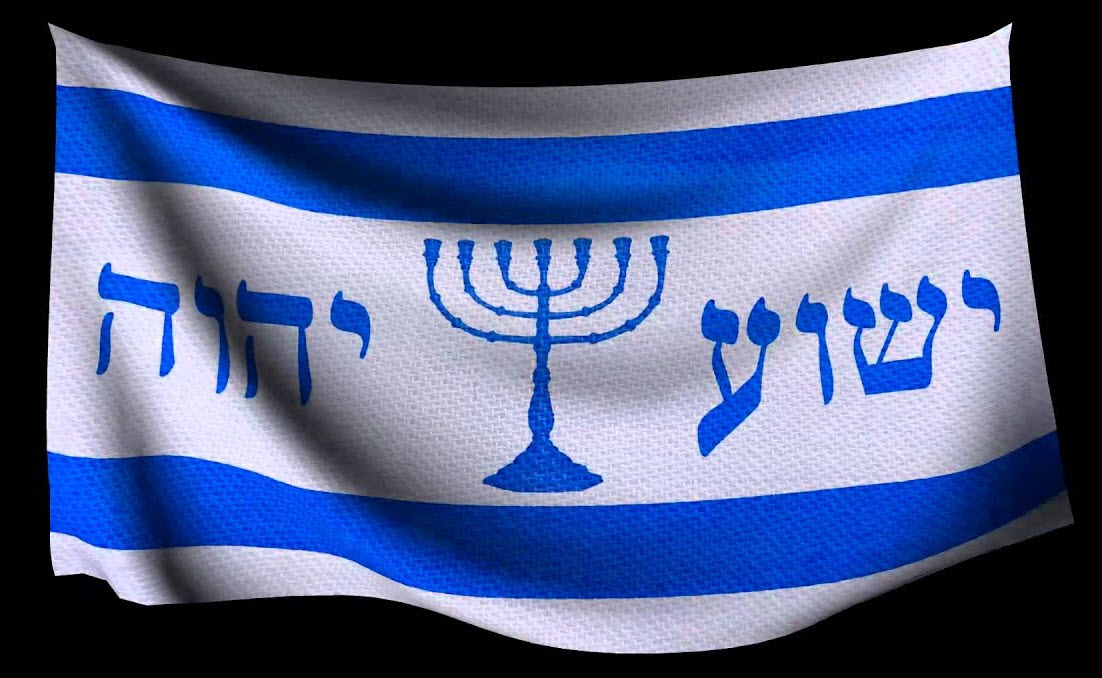
Israel’s original flag with their sacred symbol illustrating obedience to the Alahim (God) of Abraham, Isaac, and Jacob, and the correct astro-lunar-solar calendar that commences with the full moon in the east on the Menorah.
Since ancient times, Israel, when faithful, adorned their coins and banners with the Menorah, the symbol that lay at the heart of their sacred Temple, and their lunar calendar, the foundation of their economy.
When the modern flag of Israel, bearing the six-pointed hexagram, was first unveiled, it sparked significant controversy among many Jews who recognized this emblem as a symbol long associated with the ancient mystery religions and the worship of Moloch. Historically, the hexagram, later adopted by the Rothschild banking dynasty as their identifying mark, was known as the “Red Shield” or “Red Sign.” The blue adaptation that now appears on Israel’s flag is widely understood by some researchers to reflect that same Rothschild heritage. Thus, rather than representing the Scriptural “Star of David,” this six-pointed figure has been linked by critics to occult origins and, symbolically, to the adversary himself.
So it wasn’t YAHUAH, the Eternal Father, who created the modern State of Israel, allowing them to return to their land. It was Satan himself. Today, every major religion uses the hexagram.
May we be reminded that what we accept as sacred symbols today may ultimately reveal the spiritual allegiance we claim tomorrow nike sb dunk low ae86 cream black purple for sale. Let every believer test the symbols they honor against the Word of Yahuah Elohim.
Satan’s Long War for Worship
The six-pointed star, whether viewed through the lens of Scripture, history, or occult practice, carries a legacy that should prompt every Bible follower to pause and consider. Its associations with Saturn, Moloch, and Remphan are not innocent cultural coincidences but part of Satan’s long war for worship (Isaiah 14:12-15).
“How art thou fallen from heaven,
O Lucifer, son of the morning?
How art thou cut down to the ground,
which didst weaken the nations?
For thou hast said in thine heart,
‘I will ascend into heaven,
I will exalt my throne above the stars of Alahim (God):
I will sit also upon the mount of the congregation,
in the sides of the north:
I will ascend above the heights of the clouds;
I will be like the most High.’
Yet thou shalt be brought down to hell,
to the sides of the pit.” Isaiah 14:12-15
As we near the fulfillment of end-time prophecies, each follower of Yahuah Elohim must discern whether the symbols they accept align with the Kingdom of Light or the kingdom of darkness and deception.
Geopolitical borders or religious institutions no longer define the true gathering of Yasharal (Israel), but by those who honor Yahuah Alahim/Elohim and keep the Torah Law, and carry the testimony of His son Yahusha haMashiach, the authentic Messiah. (Isaiah 8:20; Revelation 14:12). In this light, the popular symbol so widely embraced may in fact be the very “image of the Beast” that Scripture warns us to reject.
May we each seek truth with humility, laying aside every tradition that cannot withstand the test of Scripture, and may we stand boldly for Yahuah in a world increasingly aligned with the counterfeit.
“Here is the patience of the saints; here are they that keep the commandments of Yahuah, and the faith of Yahusha.” Revelation 14:12
“And they overcame him by the blood of the Lamb and by the word of their testimony, and they did not love their lives unto the death.” Revelation 12:11
Summary: The Hexagram and Its Contested Identity
This article, The Star of David Deception, presents a provocative and controversial exploration of the six-pointed star, commonly known as the “Star of David.” Contrary to modern Jewish tradition and political symbolism, the article asserts that this emblem has no biblical association with King David, and is instead rooted in ancient occultism, Babylonian Saturn and Baal worship, and Satanic ritual. Referred to throughout history as the hexagram or the Seal of Solomon, this symbol has been identified in diverse contexts of false worship—from Egyptian and Babylonian rites to Freemasonry, Kabbalah, and modern Satanism.
The article traces the hexagram’s historic use in idolatry, particularly its association with Moloch, Remphan, and the planetary deity Saturn, all condemned by Scripture (Amos 5:26; Acts 7:43). The text contends that Solomon, in his apostasy, reintroduced this symbol into Israelite worship, which contributed to the nation’s spiritual downfall and eventual division. The number 666, associated with the beast in Revelation, is connected symbolically and numerically to the hexagram’s structure, six points, six triangles, and a six-sided hexagon.
Further, the article claims that modern Zionism, particularly under the influence of the Rothschild family, reintroduced this symbol onto the Israeli flag, not as a biblical representation of David’s lineage, but as a Jesuit-backed emblem tied to the New World Order, financial control, and the preparation for an anti-Messiah global system. The Jesuits, Roman Catholic elites, and Zionist factions are described as collaborative agents in reestablishing the hexagram to masquerade as Satanic worship under religious and political legitimacy.
Both Rabbinical and Karaite Jewish elites may represent the lamb-like beast of Revelation 13:11, historically and prophetically, in league with Rome. The Rabbinical Jews, according to the analysis, orchestrated the denial of Yahusha as Messiah and altered the calendar system to conceal the prophetic fulfillment of the Torah-based Feast days, instituted in Eden as the pathway of the Messiah in the Plan of Salvation, and restored to Moses at the exodus.
In this light, the true remnant people of Yahuah are those who uphold the Torah Law and carry the testimony of Yahusha haMashiach, rather than nationalistic or denominational labels of either synagogue or church, both of which march to the beat of a pagan solar calendar cadence. Neither of these seeks to honor the two-part covenant defined in Scripture as the Torah Law and the Testimony of the Messiah or the ordained Feast Days, the revelation and order of sin’s REMEDY. Isaiah 8:20 and Revelation 14:12 are cited as clear criteria for identifying the faithful in the final days of earth’s history.
Conclusion: A Call to Discernment and Restoration
This study presents believers with a sobering warning: symbols matter, and the widespread adoption of the hexagram by modern Judaism, Christianity, and political entities may constitute a deceptive counterfeit, rather than a divine affirmation. The “Star of David,” rather than honoring King David or biblical truth, may actually mark allegiance to a false religious system that traces its roots to ancient Babylon, apostate Israel, and Satanic rites.
This article invites every truth-seeker to re-examine Buy now adidas SUPERSTAR PARLEY – adidas pro bounce louisville ohio football – GV7615 inherited traditions, particularly those that have been widely popularized but lack scriptural foundation. It challenges readers to distinguish between the authentic symbols of Yahuah, such as the Menorah, which identify His sacred, Torah-based, lunar-appointed Feast Days based on the full moon for the start of Years and months, and His eternal covenant, in contrast to those repurposed by the enemy of souls for spiritual delusion. For more on the full moon, refer to The Treasury of Evidence, the Full Moon Announces Lunar Months.
In the final moments of Earth’s history, the call goes forth, “Babylon has fallen, come out of her, My people” (Revelation 18:4). Those who would avoid the Mark of the Beast must stand apart from false systems and their symbols, aligning instead with the heavenly government of the Lamb, marked not by pagan images made with hands, but by faithful obedience to Torah Law and the testimony of Yahusha, as symbolized on the Menorah and revealed in the seven Holy Feast Day celebrations.
Clarifying Our Purpose
This article and the materials presented on this website are not directed against Jews, Romans, Seventh-day Adventists, or any other people or faith communities. Our purpose is not to single out individuals, question motives, or assign blame. People are not the issue.
What is examined here are doctrinal systems and inherited teachings, measured carefully against the testimony of Scripture. Where those teachings diverge from the biblical record, we believe it is both appropriate and necessary to name the discrepancy with clarity and respect.
Disagreement with doctrine is not an attack on persons. To question tradition is not to reject people. On the contrary, this work is offered in the spirit of informed choice, inviting readers to consider the sources of what they have been taught and to weigh those teachings thoughtfully against the Word of the Creator.
Each individual remains free to agree or disagree. Our role is not to persuade by pressure, but to inform with evidence, allowing conscience, prayer, and personal study to guide the outcome.
Truth can be examined without hostility, and conviction can be expressed without contempt. That is the standard we seek to uphold here.