Who is Israel Today?
Who is Israel Today?
 by Kerrie French
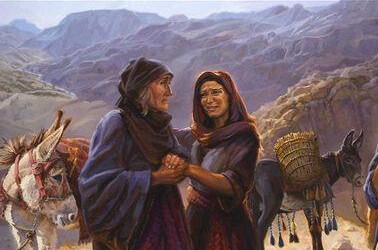
This article opens with a brief presentation from The Book of Mysteries by Jonathan Cahn, offering as a point of thoughtful reflection the story of Ruth and Naomi. This account presents far more than a historical narrative; it offers a deeply layered prophetic portrait that reaches across generations. Within this simple yet profound story, themes of covenant, exile, redemption, and restoration unfold with remarkable clarity. As we reflect upon these elements, we are gently invited to consider whether the identities represented within this account extend beyond their immediate setting and into a broader, ongoing reality. While not every interpretation is adopted, the narrative provides a meaningful and engaging framework through which we may approach a deeper and more enduring question: Who, according to Scripture, truly embodies Israel (Yasharal) today?
Ruth and Naomi
“It was a warm and windy afternoon. We were sitting outside on the ground. The teacher was reading from a small scroll.
“This is one of the ‘hamesh migillot,’ the five scrolls. Each one is read publicly during the year. And this, the second scroll, is the Book of Ruth.”
“What’s it about?”
“It’s the story of the love between a Jew and a Gentile. But behind the story is a prophetic revelation that involves the entire world, the mystery of Yasharal (Israel), the church, and the age itself.”
“The Book of Ruth begins with a Jewish woman named Naomi. She will represent the nation of Israel. Naomi is married to a man named Elimelech. Elimelech means My God is King. So Israel is joined in a covenant of marriage to God, her King. In the course of the story, Naomi finds herself with no husband and living in exile from her homeland, a stranger in a foreign land, an existence of pain and sorrow. So too, the Jewish people, for the last two thousand years, have found themselves living in exile from their homeland, strangers in foreign lands, in an existence of pain and sorrow. But in the days of Naomi’s exile, a Gentile woman named Ruth becomes, through Naomi, part of the nation of Israel and is brought to the knowledge of Yahuah Alahim (God). So in the days of Israel’s exile in the nations, those who are not of Israel, Gentiles, are, through the Jewish people, brought to the God of Israel and are spiritually joined to His nations.”
“The church,” I said, “those who are born again. They are Ruth.”
“Ruth becomes Naomi’s adopted daughter.”
“So those of the new covenant are the adopted children of Israel. Israel is their mother. And the church is Israel’s daughter.”
“At the end of the story, Ruth bears a child who becomes the blessing of Naomi’s life. So through Naomi came Ruth’s redemption, and through Ruth comes Naomi’s blessing.”
“So it is through the Jewish people,” I said, “that blessing has come to the Gentiles…and it will be through the Gentiles that blessings will come to Israel.”
“Yes,” said the teacher. “And so those who are blessed with salvation are blessed through Israel, and to Israel, they are joined. They are Ruth, and Israel is their Naomi. And only when Ruth blesses Naomi and Naomi blesses Ruth will the circle and the story be complete.” Ruth 1:16-17; 4:13-17; Isaiah 40:1-2; Romans 11:11; 15:26-27.Disclaimer: “The Book of Mysteries” by Jonathan Cahn presents a series of lessons he attributes to “The Teacher” in the land of Yasharal (Israel). While we do not affirm all of Cahn’s interpretations or theological positions, we welcome the insights that harmonize with Scripture.
A Prophetic Pattern Hidden in Plain Sight
While many have traditionally defined Israel through lineage, nationhood, or religious affiliation, the testimony of Scripture consistently directs us to a deeper measure. The relationship between Naomi and Ruth suggests that belonging is ultimately rooted in covenant faithfulness rather than outward identity alone. Those who walk in obedience and respond to the call of the Most High become participants in a story that is both ancient and still unfolding.
If this is so, then we must ask: by what standard is this identity measured? Scripture does not leave us without clarity. Rather, it provides a consistent and unchanging witness, one that reaches back to the foundation and remains the same through every generation.
The Scriptural Measure of Identity
The Scriptural measure of the true and authorized identity of Yasharal (Israel) is not left to assumption or tradition, but is clearly established within the Torah and affirmed by the prophets. The prophet Isaiah provides this enduring standard:
“To the Torah [teachings] and to the testimony [of the Messiah]: if they speak not according to this word, it is because there is no light in them.” Isaiah 8:20
These two pillars, obedience to the Torah and the testimony of Yahusha the Messiah, form a unified and inseparable measure of truth. Together, they reveal not only who Yasharal is, but also the path by which all who seek Yahuah may walk in His light. From the beginning, these have never stood in opposition, but in harmony, bearing witness to the same covenant reality.
Some within the churches may respond, “That pertains to the Old Testament, and we are no longer under the Torah, but under grace.” Yet, while often expressed sincerely, such conclusions overlook the continuity of this very standard within the New Testament itself. The same foundational measure is echoed by John on the Isle of Patmos, where he describes the faithful at the end of the age:
“Here is the shalom (peace) of the zadok (righteous); here are those who keep the commandments [Covenant TORAH LAW] of Alahim/Elohim and trust in
Jesus[Yahusha the Messiah].” Revelation 14:12
In this, we see not a departure from the original measure, but its confirmation. What was established in the beginning remains intact to the end. The identity of Yasharal, Yahuah’s faithful people, is consistently defined by those who walk in obedient trust, holding fast both to His Torah Law containing the Ten Commandments, the Statutes, the Judgments, and the Testimonies, including the testimony of His Messiah. (Psalm 119, Deuteronomy 5:31-33; 30:16; 1 Kings 2:3; 1 Kings 11:38; Jeremiah 7:23; Malachi 4:4.)
If this Scriptural measure is applied consistently, it invites an honest and careful examination of all who claim covenant identity. This includes not only those who identify as the historical nation of Israel, but also those within the various expressions of the Christian church. For the same standard must apply equally to all, for Yahuah is no respecter of persons. The question, then, is not who claims the name, but who walks according to the light that has been given.
“And if you are Messiah’s, then you are Abraham’s seed, and heirs according to the promise.” Galatians 3:29
When Covenant Identity is Tested by Truth
Throughout history, the people known as Israel have experienced cycles of faithfulness and departure, as faithfully recorded in Scripture. In modern times, many point to their restoration to the land as evidence of continued divine favor. Yet Scripture consistently reveals that covenant blessing has never been based upon location or lineage alone, but upon obedience and faithfulness to Yahuah’s instructions.
Over time, layers of tradition, including reliance upon oral teachings and later interpretive systems, have shaped the religious identity of the people. At the same time, the testimony of Yahusha as the promised Messiah remains a central point of divergence. These realities invite a sober and careful reflection, not for condemnation, but for alignment with the original standard outlined in the Torah and affirmed by the prophets.
You see, the Nation of Israel has been in and out of faithfulness and obedience to Yahuah Alahim from the beginning until today, as recorded in Scripture and later in History. It was because of their unfaithfulness and disobedience to the Torah Law teachings that they denied Yahusha haMashiach as their Messiah nearly 2,000 years ago. They soon went into Roman captivity, wherein they adopted the Talmud and all the oral Babylonian traditions, and were additionally stripped of their ancient calendar truths, leaving them unrecognizable according to Yahuah Alahim’s Torah Law standards. Have they repented of these errors? No! Today, they continue in the adopted traditions from their captivity, where they were in deep disobedience and unfaithfulness. Simply because they claim they have been honored by Yahuah and restored to the land of Israel is of no consequence.
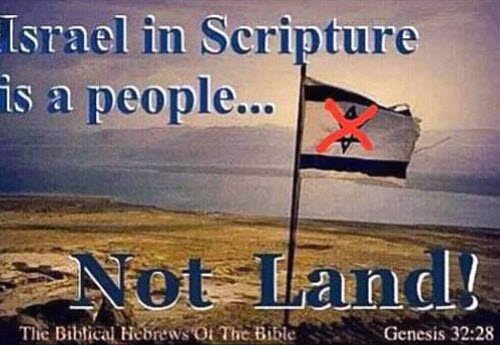
Yahuah Alahim knows all and sees all, and He alone will bless anyone who repents and returns to His ancient paths of truth found in the Torah Law (teachings). It is only when His people are restored and obedient to His oracles of truth that He can bless them and that His prophetic word may be fulfilled in them in the end times to the glory of the whole earth.
So it is sad to say, but the reality is that today those who claim to be the Nation of Israel, who may even carry the DNA of His original “chosen people,” hold not to the two principles required: 1) Obedience to the unadulterated Torah Law teachings; 2) and have the testimony of the Messiah. They have obscured the teachings of the Tanakh (entire Old Testament), the Torah Law (first five books of the Old Testament), and the Nevi’im (the books of the prophets) through a continued tradition of adhering first to the oral traditions of the Babylonian Mystics. They continue to absolve themselves through the cover-up of the part they played in their denial and crucifixion of the Messiah in the 1st century A.D. They continue to promote a false calendar system that is out of sync with the worship rhythm of the Most High, Yahuah Alahim, with every time unit.
By this Scriptural measure, they do not meet the full criteria of Israel (Yasharal) as defined by both the Torah and the testimony of the Messiah.
When Devotion Becomes Detached from Foundation
On the other hand, those from among the nations who have embraced faith in the Messiah are likewise called to this same Scriptural standard. While there is often a sincere devotion to the Messiah within the churches, whether Roman, Protestant, Sunday keepers, Saturday keepers, or otherwise, this devotion has frequently developed apart from the foundational role of the Torah as instruction. Yet, the same two-fold measure still applies:
“To the Torah [teachings] and to the testimony [of the Messiah]: if they speak not according to this word, it is because there is no light in them.” Isaiah 8:20
Over time, many have been taught that the Torah Law was set aside, replaced by a concept of grace separated from obedience. This belief, though widely held, reflects a departure from the consistent witness of Scripture, where grace and obedience stand together, not in opposition. Neither the Law nor Grace can exist without the other. And this has been true from the beginning.
Historically, this shift did not occur in isolation. In the early centuries, particularly under the influence of Roman authority, efforts were made to distance the faith from its Hebrew foundation. Language, names, and appointed times were gradually altered. The Messiah’s identity was increasingly presented through a Greco-Roman lens, and the sacred calendar that once defined the rhythm of worship and prophetic fulfillment was replaced with a continuous solar-based system.
As a result, the appointed times, once precise markers of the yearly rehearsal of the Plan of Salvation, became obscured. Ask any Christian on which day the Messiah was crucified, and they will declare it was “Good Friday.” And when it comes to His resurrection, they will say, “Easter Sunday.”
Yet, neither of these sacred appointed events, which had historically been observed according to the original and authentic Hebrew lunar calendar, was ever aligned with the Roman solar framework that later defined them. What was once anchored to specific, appointed times became recast into a continuous weekly cycle, detached from its original prophetic setting.
This departure becomes even more evident when we consider how Scripture itself defines the structure of a day and the progression of time:
“And Alahim called the light Day, and the darkness He called Night. Then came
andthe evening and the morningwerethe first day.” Genesis 1:5“And Alahim made two great lights; the greater light to rule the day, and the lesser light to rule the night with the stars. Genesis 1:16
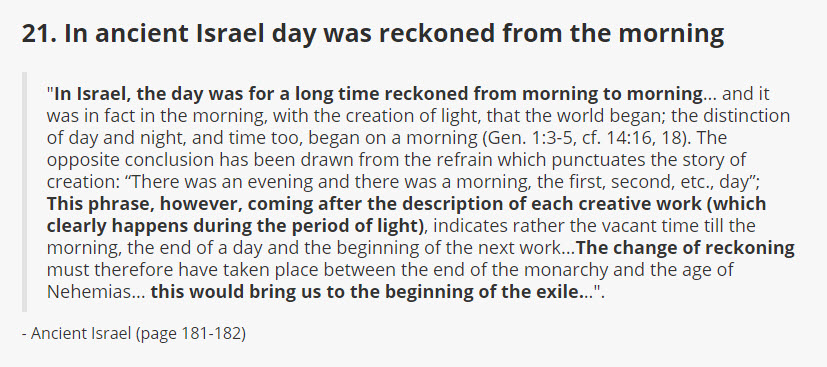
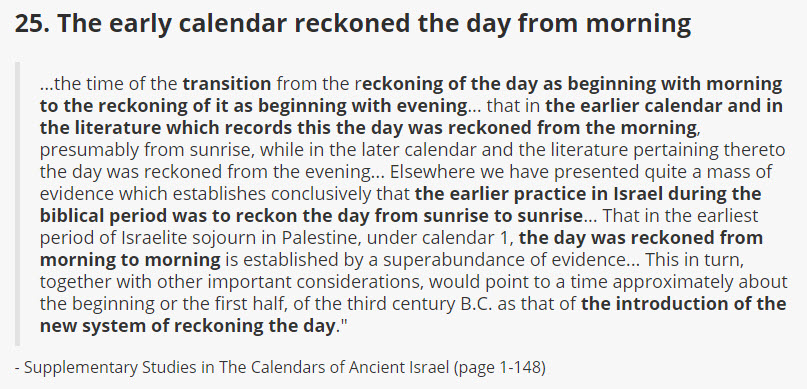 When the foundational structure of time is altered, the appointed events that depend upon it cannot remain intact. While these examples refer only to when the day begins, every other unity of time has also been changed by the Jews, including the New Moon from the full to the dark. The same holds true for all the churches, as they have all adopted the Roman Solar calendar. What results is not merely a difference in observance but a shift in meaning, where prophetic fulfillment is replaced by tradition, and precision is exchanged for human invention.
Thus, what is often practiced today, though sincere, reflects a form of devotion that has become disconnected from its Scriptural foundation. It is not the heart’s desire to honor the Messiah that is in question, but whether that devotion remains aligned with the pattern established by Yahuah from the beginning.
A Call to Humility for Every Generation
In this light, both Jewish and Christian traditions carry elements of devotion alongside areas that invite reexamination. This is not a call to accusation, but to humility. For every generation must ask: Have we inherited patterns that require testing? Have we embraced portions of truth while overlooking others?
Throughout history, the people of Israel have walked a path marked by both faithfulness and struggle, as faithfully recorded in Scripture. Seasons of obedience brought blessing, while seasons of departure brought hardship and dispersion. This pattern invites not condemnation, but humility, reminding us that all who seek Yahuah must continually return to His ways.
In the same spirit, many within modern Judaism hold deep reverence for the Scriptures, yet differ in their understanding of the Messiah. Likewise, within Christianity, there is a sincere devotion to the Messiah, yet often a distancing from the Torah’s foundational teachings.
Rather than casting judgment, these realities invite a deeper question for every heart: Have we, in any way, set aside part of the whole counsel of Scripture?
The Mystery of Reunion and Restoration
If Naomi and Ruth together complete the story, then perhaps their relationship points not to division, but to restoration, and in their case, a return to the land of Israel.
Those who come to faith are indeed grafted into something ancient and enduring. And those entrusted with the sacred oracles of Yahuah carry a calling that has never been withdrawn. The beauty of the story is not in separation, but in the eventual harmony between the two.
Yet this harmony does not come through tradition alone, nor through inherited identity. It comes through a return, a sincere and wholehearted turning to the fullness of truth as revealed in Scripture.
Rediscovering the Ancient Order
Over time, both Jewish and Christian traditions have developed layers of interpretation, practice, and emphasis. Some of these may reflect truth, while others may invite reexamination. The call of Scripture is not to defend tradition, but to seek alignment with Yahuah’s Word in its purity. This includes both the Torah Law of the Old Testament containing the Bridal Covenant, and the testimony of the true Messiah, Yahusha, the Bridegroom of the renewed Covenant identified by the time and event of the lunar calendar’s Passover, the fourteenth day counted from the full moon as the original New Moon.
This includes a thoughtful reconsideration of:
- The role of the Torah as instruction
- The identity and testimony of the Messiah
- The appointed times and their sacred worship rhythm
These are not merely historical details, but living patterns woven into the Creator’s design.
A Personal Invitation to Return
The restoration of truth does not depend upon institutions, nor upon collective movements, but upon the response of the individual heart. No one must wait for systems to change. Each person, guided by the Ruach haKodesh, may lay aside what does not align with His Word, as one removes an old garment, and return to the ancient paths with humility and purpose.
Each person, guided by the Ruach haKodesh (promise, power, and presence of Yahuah), may choose to lay aside anything that does not align with His Word and return to the ancient paths with humility and joy. In doing so, they become part of the unfolding story, one in which Ruth blesses Naomi, and Naomi blesses Ruth, until the circle is complete and in full harmony with the sacred Oracles.
In this return, there is no loss, but covering. Not of tradition, but of righteousness. For it has already been accomplished through Yahusha haMashiach for those who seek Him in truth. It is personal. It is profound. And it is available to all who are willing to turn, to seek, and to walk in the fullness of His light.
And in that restoration, there is covering, not of tradition, but of righteousness, granted through the blood sacrifice of Yahusha the Messiah.
 Completing the Story
In the end, the question of who is Israel, is not answered by lineage alone, nor by tradition, nor by the claims of land or institution. It is revealed through a life that aligns with the unchanging witness of the recorded Word of Scripture, walking in the Torah of Yahuah and holding fast to the testimony of Yahusha the Messiah. These two pillars have never stood apart, and wherever they are found together, there the light of truth remains.
The account of Ruth and Naomi points us forward to a restoration that is both personal and collective. It reminds us that the story is not yet complete, and that its fulfillment does not rest in systems, but in hearts that are willing to return. Just as Ruth chose to leave what was familiar in order to cleave to truth, so each generation is invited to step beyond inherited understanding and into covenant faithfulness.
This is not merely a theological exercise, but a living call. It is an invitation to examine, to seek, and to walk in the fullness of what has been given from the beginning. For in that return, the division between Ruth and Naomi begins to heal, the scattered are gathered, and the purpose of the Most High moves toward its appointed completion.
If the appointed times, the calendar, and the very structure of worship have been altered, then the implications reach far beyond tradition alone. For identity itself becomes obscured when it is no longer anchored to the order established by Yahuah from the beginning. Thus, the question of who is Yasharal is inseparably linked to whether one walks in harmony with His appointed times, His Torah, and the testimony of His Messiah. Where these remain united, truth remains. Where they are separated, confusion inevitably follows.
What emerges, then, is not merely a difference of interpretation but a profound divergence from the original foundation. When both long-established religious systems depart from the unified witness of the Torah and the testimony of the Messiah, the result is a form of worship that, though often sincere, no longer reflects the fullness of truth as given in Scripture.
Yet the answer to this paradox is not found in attempting to reconcile systems that have been shaped over centuries by inherited traditions. Rather, it is found in a full and personal return of both identities to truth itself. Each individual is invited, without delay, to lay aside what does not align with the Word, as one removes an old garment, and to walk again in the ancient paths established from the beginning.
For this calling is not institutional, but deeply personal. It is a restoration of identity, of worship, and of covenant faithfulness. And it remains open to all who will seek Him with a sincere heart, honoring both His Torah and the testimony of His Messiah. In this, the true Israel (Yasharal) is revealed.
And so the question remains, not only for nations, but for each of us: Will we be found among those who return, who align, and who walk in His light?

Prayer of Repentance
Heavenly Father, Yahuah Alahim,
we come before You with grateful hearts for the mystery
revealed through Naomi and Ruth.
Its a testimony of Your redeeming love that reaches
across all peoples.
Teach us to walk in humility and truth, holding fast to
Your Torah and the testimony of Yahusha
the Messiah, that we may be
found in Your light.
Stir within us a heart like Ruth, to cling to You faithfully
and to bless the heritage You have established
from the beginning.
Restore what has been scattered, and bring unity where
there has been division, that Your purposes
may be fulfilled in their appointed
time and worship rhythm.
May we each respond to Your calling, returning to Your
ancient paths, and be counted among those who
help bring Your story to its
glorious completion.
Barak hashem Yahusha haMashiach!
(Bless the name of Yahusha the Messiah!)