Abraham’s Prophetic Appointment: The Day, The Mountain, and the Sacrifice
Abraham’s Prophetic Appointment:
The Day, The Mountain, and the Sacrifice
From the windswept ridges of Mount Moriah comes one of the most astonishing and prophetic narratives in all of Scripture, Abraham’s call to offer up his son, Isaac, as a sacrifice unto YHUH (Yahuah). At first glance, this sacred test appears to be about obedience alone. But upon closer study, it reveals a breathtaking orchestration of divine prophecy that stretches across time to unveil the very foundation of Yahuah’s redemptive plan.
In the pinnacle test of a long and faithful life, Abraham responded with unwavering obedience, asking no questions, raising no objections, and seeking no counsel from man. When the call of Yahuah was clear, he needed no further confirmation beyond the conviction of duty etched upon his heart. For the seasoned believer, such obedience flows not from fear or obligation but from a deep well of love and trust in the Eternal. Abraham walked as one who lived perpetually before the face of Alahim, his vision Алмазная мозаика на подрамнике strateg премиум ніжність рожевих півоній без підрамника розміром 40х50 см — цена 446 грн в каталоге Картины по номерам ✓ Купить товары для спорта по доступной цене на Шафе , Украина #161859722 of truth unclouded by human reasoning or emotional hesitation. And yet, even for the one called “the friend of Alahim,” this moment must have stirred a storm nike ja 1 scratch within, not over whether he would obey, but whether he had rightly discerned the divine voice and was not misled by emotion or misunderstanding. It was a test not of willingness, but of perception, requiring full surrender of both reason and heart.
The journey to the appointed place was cloaked in sacred silence, Abraham immersed in prayerful meditation, while Isaac, now growing aware of something unusual, pondered his father’s solemn demeanor. The stillness of their ascent mirrored the weight of their mission. When Isaac finally broke the silence to ask, “Where is the lamb?” it exposed both the innocence of the son and the agony of the father. Together they arrived at the summit where, centuries later, the Temple would rise in glory. To the south lay ancient Salem, the city of Melchizedek, priest of the Most High. Yet just beyond, to the northwest, stretched the ravine at the base of Mount Moriah, a place destined to bear another name: Golgotha. In that sacred geography, time and prophecy converged. The altar they raised became more than a memorial; it stood as a witness to a future sacrifice, where another Father would give His Son, the very spot where no ram would appear in the thicket to take His place.
This was no random event; it was a precisely timed appointment, down to the day, the mountain, and the sacrifice itself, foretold nearly 2,000 years in advance. The wood upon Isaac’s back, the three-day journey, the apparent absence of a lamb, and Abraham’s bold statement that “Yahuah will provide” all serve as shadows of an epic event yet future. Yet, this was not all; it also unveils several hidden secrets that have never before been brought to light, yet are neatly wrapped up in the Hebrew text. The sacred truths revealed are not poetic metaphors but prophetic coordinates preserved for Yah’s Covenant Bride.
The Covenant with Abraham
Let’s begin by tracing the prophetic pattern through the Covenant with Abraham as presented in a short story by Jonathan Cahn in his book, “The Book of Mysteries,” page 79. Here, he makes some notable comparisons between Abraham’s sacrifice and the Exodus Passover, ultimately leading to the greatest sacrifice of all.
“Have you ever heard of the Akedah?” asked the teacher. “It’s the offering up of Isaac by his father, Abraham.”
“I’ve heard of it,” I said, “but I never understood why it happened.”
“It was a test,” he said, “but also a mystery. At the end of the test, Yahuah Alahim (God) sealed His covenant with Abraham. In such a covenant, each party had to be willing to do what the other was willing to do. Now let’s open up the mystery. Abraham was willing to offer up his son as a sacrifice. Therefore…”
“Therefore, Yahuah Alahim,” I replied, “would have to be willing to offer up His Son…as a sacrifice.”
“The father brings his son on a donkey,” said the teacher, “to the land of the sacrifice.”
“So then Yahuah would bring His Son on a donkey to the land of the sacrifice…Messiah is brought on a donkey to the place of the sacrifice.”
“The father places the wood of the sacrifice on his son’s shoulder…”
“Yahuah would place the wood of the sacrifice, the cross, on His Son’s (the Messiah’s) shoulders.
“The son carries the wood to the place of the sacrifice…”
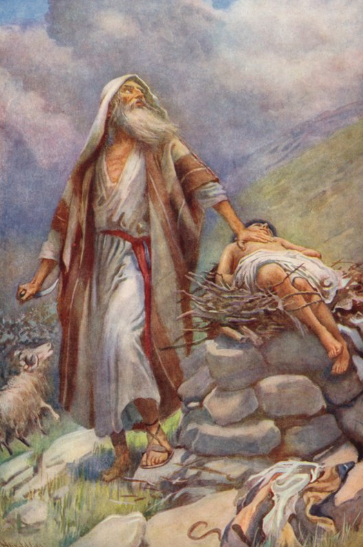
“Yahusha haMashiach carries the wood to the place of the sacrifice.”
“The father lays his son upon the wood and binds him to it.”
“Yahusha, haMashiach is laid on the wood of the cross and bound to it.”
“The father lifts up the knife of sacrifice but is stopped…”
“And so the knife, the judgment of Yahuah Alahim is lifted up…but is not stopped. Yahusha haMashiach is killed on the wood of the sacrifice.
“Do you know what word appears in this account for the first time in all of Scripture?”
“No.”
“The word love. The first love in the Bible is from this account, the love of the Father for the Son, just as the first love in existence was that of the Father for the Son. And yet the Father was willing to offer up the Son of His love to save us. And what does that reveal? If Yahuah Alahim offered up the Son of His love to save you, then He must love you with the same love with which He loved the Son. As it is written, ‘Yahuah Alahim (God) so loved the world that He gave His only begotten Son, that whoever believes in Him should not perish but have everlasting life.’ So you don’t ever have to wonder how much Yah loves you. The sign is already there on the wood of the sacrifice…As much as He loves His only begotten Son…the greatest love in all existence…that’s how much He loves you.” Genesis 22; John 3:16.
Disclaimer: “The Book of Mysteries” by Jonathan Cahn presents a series of lessons he attributes to “The Teacher” in the land of Yasharal (Israel). While we do not affirm all of Cahn’s interpretations or theological positions, we welcome the insights that harmonize with Scripture.
Abraham’s Call to Sacrifice His Son Isaac
While the account above connects several prophetic elements, there is more, and one profoundly significant thread remains to be explored. Did you know that the call of Abraham to offer his son Isaac was orchestrated to echo the shadows of Passover, and not only on a specific mountain in Israel, but on a specific and pre-determined day known only to the Eternal Father? (Genesis 22:2, 22:14). Though this sacred event occurred centuries before Moses and the Exodus, it was divinely appointed to also prefigure the exact day and location where Yahusha haMashiach, the true Lamb of Yahuah, would lay down His life as a ransom for sinners. In this singular act of obedience and faith, Abraham enacted a living prophecy, pointing forward to the redemptive plan sealed before the foundation of the world.
The Question
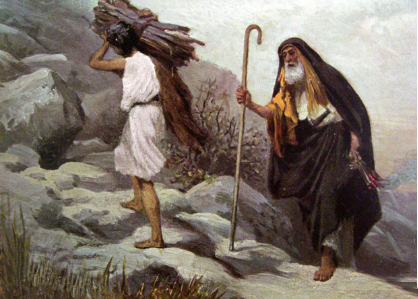
“And Isaac spake unto Abraham his father, and said, My father: and he said, Here am I, my son. And he said, Behold the fire and the wood: but where is the lamb (שׁה – sha – H7716) for a burnt offering?” Genesis 22:7
In this poignant exchange, the innocence of the son meets the hidden knowledge of the father, foreshadowing a moment when the Lamb of Yahuah would silently bear the wood upon His shoulders toward the base of the appointed mountain.
The Answer
“And Abraham said, My son, Alahim (God) will provide Himself a lamb (שׁה – sha – H7716) for a burnt offering: so they went both of them together.” Genesis 22:8
Abraham’s words, spoken in faith, echoed beyond the bounds of that day at the mountain. He was not only speaking to Isaac but prophesying of a greater Lamb (שׁה – sha – H7716), YAHU-SHA, the LAMB of YAH, the Messiah, yet to be revealed. This little-known evidence reveals the actual name of the Messiah 2,000 years before His birth.
The Arranging of the Timbers on the Altar
“And they came to the place which Alahim had told him of; and Abraham built an altar there, and [He arranged in order] the [aleph and tav] [timbers or sticks (plural)], and bound Isaac his [aleph and tav] son, and laid him on the altar upon the [timbers or sticks (plural)].” Genesis 22:9
Every ordinary campfire or altar sacrifice required fuel, and the most accessible and practical fuel in ancient times was wood. As anyone who has tended a fire knows, it is nearly impossible to sustain a lasting, effective blaze with only a single piece of wood. A thriving fire demands a collection of materials: thick timbers for longevity, medium-sized sticks for structure, and smaller twigs to ignite the flame. In the case of a burnt offering, this principle would certainly apply. The fire must be strong enough to consume the entire sacrifice, indicating the use of multiple pieces of wood. Remarkably, the Hebrew text in Genesis 22 explicitly uses the plural form of the word for wood (etzim), affirming that more than one timber was carried and used.
This detail is more than a logistical note; it prophetically foreshadows the crucifixion of our Messiah. Could this plurality of wood point forward 2,000 years to Yahusha haMashiach, who was likewise placed upon “timbers” rather than a singular pole? While tradition most often depicts a two-beam structure, some declare it was a single upright beam. Yet, here we find that Scripture suggests a parallel composed of more than one wooden piece, fitting the pattern first seen in Abraham’s offering. Thus, even in the small yet deliberate mention of etzim in the plural, we glimpse another layer of prophetic continuity pointing to the redemptive work of YAHU-SHA, the Lamb, upon the wood of the sacrifice.
The Aleph and Tav Sign
 Of particular significance in the Genesis 22 narrative are the two distinct uses of the Hebrew terms aleph and tav. These are the first and last letters of the Hebrew alphabet, often regarded as a symbol of divine completeness or the signature of the Eternal. But of particular importance here, they symbolize the first and last sacrifice.
The aleph represented the first lamb sacrifice that took place in the Garden of Eden (pictured on the right), the very day Adam and Eve sinned. It carried the profound promise of the coming Messiah, who would stay the curse of death. This promise is symbolized by a lamb slain lying on its side, the first sacrifice for sin. The tav (pictured on the left) was to represent the anointed Messiah’s final sacrifice, the fulfillment of the promise of a savior, the last “Lamb” sacrifice to bear the sins of all. This final sacrifice was divinely appointed to prophetically foreshadow the cross. Together, these two symbols, the aleph and the tav, point beyond the surface story of Abraham and Isaac and into the realm of prophecy.
The second instance is associated with the arrangement of the wood (etzim) upon the altar. The Hebrew text uses the aleph and tav, underscoring the intentionality and divine design of the sacrificial structure. This is no casual placement of wood, but a deliberate configuration overseen by Abraham and infused with prophetic meaning. Might it have been arranged as a cross? In both cases, the aleph and tav son and the aleph and tav wood, we see a foreshadowing of the greater Sacrifice to come: Yahusha haMashiach, the true Aleph and Tav, who would carry the wood of His execution stake, be laid upon it, and fulfill the Tav sacrifice, prefigured by Isaac. These subtle but profound linguistic markers serve as divine fingerprints, testifying that the entire Abrahamic event at Mount Moriah was orchestrated to proclaim the eternal plan of redemption through the Lamb slain from the foundation of the world. Revelation 1:8; 22:13 support this as YAHU-SHA, the Messiah declares of Himself, “I AM THE ALEPH AND TAV, THE FIRST AND THE LAST!” (Perhaps you know this as the Greek version of Alpha and Omega. While this is the translated version of the Aleph and Tav, it has lost context to the first and last sacrifice, noted throughout the Hebrew Old Testament Scriptures.)
Abraham Passed the Test of Faithfulness
After constructing the altar and placing Isaac upon the wood, Abraham lifted the knife in faithful obedience, yet at that critical moment, Yahuah intervened from heaven, declaring:
“Lay not your hand upon the lad… for now I know that you fear Alahim, seeing you have not withheld your son, your only son, from Me.” Genesis 22:12
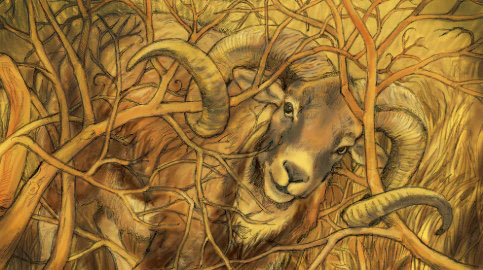
A ram, caught in a thicket nearby, was offered in Isaac’s place. Both the ram and Isaac served as prophetic types, each directing our gaze toward the singular fulfillment, when the only begotten Son of Yahuah would willingly offer Himself as the true Passover Lamb, with no substitute to take His place.
Unveiling a Deeper Layer of the Hebrew Text
Genesis 22:14 reveals the most profound, yet long-hidden prophetic declaration when read closely in the original Hebrew. Check it out here for yourself.

“And Abraham proclaimed the name of that place, which is this: “YAHUAH YA-RA-AH!” (‘YAHUAH SHALL BE REVEALED!) For it shall be said OF THIS DAY [the 14th of Abib], BY THIS MOUNTAIN [Mt. Moriah], YAHUAH SHALL BE REVEALED.'” Genesis 22:14 [The Creator’s Calendar Restored Text as illustrated in the Hebrew Word Study above.]
This phrase carries more than memorial value; it holds prophetic precision. The Hebrew wording reveals three key elements:
- “OF THIS DAY” – marking a specific date of the 14th of Abib of the sacred lunar calendar.
- “BY THIS MOUNTAIN” – identifying the physical location at the base of Mount Moriah, later known as Mount Zion, or Golgotha in Jerusalem.
- “YAHUAH SHALL BE REVEALED!” – foretelling the pragmatic and redemptive sacrifice event to be accomplished by YAHU-SHA the authentic Messiah as foreshadowed by Abraham, Isaac, and the ram sacrifice.
Thus, Genesis 22:14 transcends its immediate context. It becomes a declaration of the exact date and place where the Messiah would fulfill His redemptive work. Abraham, by faith, declared a prophetic appointment that would not be realized until nearly two millennia later. Yet, he spoke with unwavering conviction, because Yahuah had revealed to him the end from the beginning.
As a result, we can confidently identify this date as the fourteenth day of the first lunar month of Abib, a day that would later be named Passover (Pesach) at the time of Moses and the exodus, commemorating the Israelites’ deliverance from Egyptian bondage. But greater still, this moment in time was ordained to serve as the fulfillment of a threefold prophecy. It was divinely orchestrated and fixed to the precise lunar date of Passover, the fourteenth day, the geographical setting of Mount Moriah, and it illustrated the appointed epic event of the crucifixion of Yahusha haMashiach (the Messiah).
It pointed forward nearly 2,000 years in advance to the exact time and place where Yahusha, our Messiah, would submit His life as the ultimate sacrifice for sin. The fulfillment of this long-promised redemptive act was not arbitrary. Still, it meticulously aligned with the Creator’s sacred lunar calendar and its lunar appointed Feast Days, affirming His sovereignty and the reliability of His prophetic Word. HalleluYAH!
Are the Lunar Appointed Feast Days Still Binding Today?
Based on the deeply prophetic narrative of Abraham’s call to sacrifice Isaac as presented above, here are seven compelling reasons why the lunar-appointed Feast Days remain binding for believers today:
- The Date of Passover was Established Hundreds of Years Before the Exodus
The prophetic shadow of Passover as embedded in the story of Abraham and Isaac (Genesis 22), predates the Passover of the Exodus and the giving of the Torah at Mount Sinai. This means the timing of Passover was already in the Eternal’s plan, demonstrating that these appointed times are not merely “Jewish traditions,” but were meant for all people of all nations. The date of Passover was fixed in time in the Garden of Eden with the first lamb sacrifice. However, here again, Abraham’s sacrifice followed the eternal markers rooted in creation and the Bridal Covenant. For evidence of even earlier 14th of Abib prophetic sacrifice events, refer to Passover’s Blood-stained Trail of Promise.
- The Appointed Day Was Preset on the Lunar Calendar
In Genesis 22:14, Abraham explicitly points to “this day,” a specific and identifiable date on the sacred lunar appointed Feast Day calendar, namely, the 14th of Abib, counted from the New Moon. This very day would later be called Passover (Pasch). The prophetic precision of Abraham’s declaration reveals that the Creator had already established His redemptive timeline in accordance with the lunar cycle. This confirms that lunar reckoning was divinely ordained and remains relevant for identifying His Feast Days. Refer to He Ordained the Moon for Specific Lunar Appointed Dates.
- The Messiah’s Sacrifice Aligned with the Lunar Passover
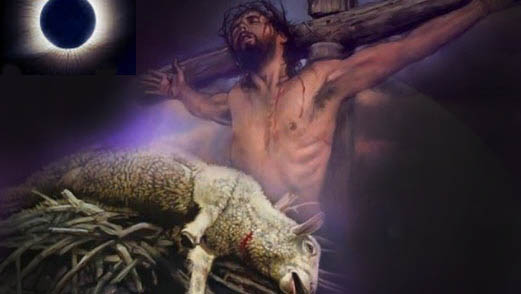
Yahusha haMashiach laid down His life as the spotless Lamb of Yahuah according to a divinely appointed date, not arbitrarily chosen, but prophetically ordained. While Genesis 22 does not explicitly name the date, the prophecy is tied to the Messiah’s great sacrifice that occurred on that date. Thus, the evidence aligns Abraham’s sacrifice with the 14th day of the first lunar month, Abib, the same day as the Passover in Egypt and the crucifixion of the Messiah in Jerusalem. These three monumental sacrifice events, spanning nearly two millennia, are prophetically pinned to the same sacred date of the year, on Yahuah’s original timekeeping model, the lunar calendar. This stands as a testament to the unchanging character of the Eternal and His sovereign control over time. Here, the unbroken thread of redemption is woven through the lunar calendar’s 14th of Abib, revealing that Abraham’s offering, the Exodus deliverance, and the Messiah’s crucifixion are not disconnected events, but divinely synchronized appointments upon the Creator’s celestial clock. Refer to All Things Passover.
In light of this sacred harmony, we find unmistakable evidence that the lunar-appointed Feast Days remain binding today, forever sealed by the blood of the Lamb and affirmed by the heavenly lights ordained at creation. The Messiah did not break with this rhythm; He fulfilled it. If He, as the Bridegroom, upheld this calendar in covenant faithfulness, then it reveals that His faithful followers must also walk in step with its cadence. To deviate from this divine rhythm is to risk separating from the very blueprint that proclaims and enacts our redemption. Thus, the appointed times, governed by the moon and written in the heavens (Genesis 1:14; Psalm 89:37), remain as enduring signposts, calling the faithful to remember, to rejoice, and to prepare for the soon return of our King. Refer to All Things Passover.
- The Redemptive Pattern Begun in Eden is Unchanging
The pattern seen in Genesis 22, the date, the mountain, and the sacrifice, is actually the echo founded upon the first lamb sacrifice in Eden on the very day, the 14th of Abib, the fourteenth day counted from Rosh Hashanah in the spring, when Adam and Eve sinned only a week after they were created ir jordan 3 whataburger custom (Genesis 3:21). It is then echoed years later at the great exodus, and fulfilled in the Gospels with the Messiah’s final sacrifice. This consistent pattern through time affirms that Yahuah’s lunar appointed times are ongoing prophetic rehearsals, some of which are yet to be fulfilled (Hebrew: miqra – Leviticus 23:2). All of them remain spiritually binding because they continue to proclaim and commemorate the divine acts of redemption and restoration by a changeless creator. Refer to Passover’s Blood-stained Trail of Promise.
- The Lunar Appointed Times Reveal Yahuah’s Sovereignty
The Creator’s alignment of major redemptive events (such as Isaac’s near-sacrifice and Yahusha’s crucifixion) with consistent lunar calendar dates demonstrates His absolute and unchanging control over time. The lunar calendar is not incidental; it is His chosen method to reveal “the end from the beginning” (Isaiah 46:10). The Messiah declares, “ I am the aleph and tav (alpha and omega), the beginning and the end, the first and the last, which is, which was, and which is to come, the Almighty.” Revelation 1:8. Ignoring this obscures the deeper prophetic framework Yahuah ordained in the beginning. Refer to Scriptures You Must Ignore to Reject the Lunar Sabbath.
- The Feast Days Are Rooted in Love and Covenant
The first mention of “love” in Scripture is found in this same Genesis 22 account, describing the love of the father for his son. This reflects the love of the Eternal Father for His only begotten Son and, by extension, for us. The Feast Days are covenantal love appointments that reveal and celebrate this divine love, binding not as a burden Nike Brings Back the Legendary 1996 Nigeria Football Jersey , Nike Air Max 90 Custom , RokytniceShops°, but as a blessing. Refer to Restored Prophetic Feast Days of Yahusha the Messiah.
- The Messiah Did Not Abolish the Lunar Appointed Times
Rather than abolishing the Torah or its ordained lunar appointed Feast Days, Yahusha fulfills each one in its appointed order from first to last (Matthew 5:17), bringing them to completion in perfect harmony with His original and authentic lunar calendar. If Yahusha’s life, death, resurrection, and ultimate End Time Return are all intrinsically tied to His lunar-appointed times, then those who truly seek Him would do well to recognize the part they play in the Plan of Salvation. These are divinely measured in lunar years, lunar months, four weeks each lunar month, 29-30 days with their own unique lunar phase, along with His annual lunar-appointed Feast Days. In doing so, we both remember and commemorate the spring Feasts already fulfilled, while we continue in hopeful anticipation of His fulfillment of the Fall Feasts. Is it any wonder that the Messiah’s soon return is likewise prophesied by a lunar fall feast day, ordained from the beginning?
“Think not that I am come to destroy the Torah Law,
or the prophets:
I am not come to destroy, but to fulfil.”
Matthew 5:17
Conclusion
In the light of the profound prophecies associated with Abraham’s Sacrifice and Covenant, we stand in awe of the divine orchestration that spans millennia, unveiling the depths of Yahuah’s love and the eternal consistency of His lunar appointed times. Abraham’s test was more than a personal trial; it was a prophetic shadow that underpins the very heart of the Plan of Salvation. It revealed not only the pattern of redemptive love but also the specific day, mountain, and sacrifice that would one day culminate in the day YAHU-SHA (lamb – שׁה – sha – H7716) haMashiach (the Messiah) laid down His life as the Lamb of Yahuah, the atonement on behalf of all mankind. The account’s prophetic precision, correlating with the 14th of Abib by the lunar calendar, confirms beyond doubt that the Creator’s timekeeping system is woven into the very fabric of redemption.
This moment was not an isolated event but illustrated an unbroken timeline governed by the moon and aligned with the covenant promises. Therefore, to dismiss the lunar-appointed Feast Days is to ignore the framework through which Yahuah has revealed His greatest act of love. The sacred lunar appointed Feast Days were never meant to be relics of an ancient past, but living testimonies of covenant fidelity and divine love. Each Feast Day is a prophetic rehearsal, a love-appointed encounter with the Most High and His Son, pointing backward to His mighty acts and forward to the promises yet to be fulfilled. As we honor these sacred lunar markers, we align ourselves with the rhythm of heaven, walk in the footsteps of the Messiah, and proclaim the message of this most transformative sacrifice of love from Genesis to Revelation.
May our love and obedience to YAHU-SHA, our Messiah, be as Abraham’s, trusting, unwavering, and prophetic, until faith becomes sight and we behold the Lamb in His glory. HalleluYAH!

Father Yahuah, my heart stands in awe of the mystery You unveiled
on Mount Moriah, the place where love, obedience,
and sacrifice came together in
perfect harmony.
You asked Abraham to surrender his beloved son, and in doing so,
You foreshadowed the unfathomable gift of Your own Son,
Yahusha, who would carry the wood upon His
back and lay down His life at the
appointed time and place.
Thank You for the clarity and precision with which You declared
the end from the beginning, that we might see
the depth of Your covenant love and trust
in the surety of Your promises.
Let me never forget that the first mention of love in Your Word
was a father’s love for his son, a love You shared
with the world when You gave your only
Son, Yahusha, as our Lamb.
May I live each day in humble gratitude, knowing that I am loved
with the same eternal love You
have for Your Son.
Strengthen me to offer my own life as a living sacrifice,
holy and pleasing in response to the great
price of redemption paid on
the wood of the altar.
Barak hashem Yahusha haMashiach!
(Bless the name of Yahusha the Messiah!)
Kerrie French
www.TheCreatorsCalendar.com
TheCreatorsCalendar29.5@gmail.com