Feast of Trumpets
Feast of Trumpets
(Yom Teruah)
What Does Yom Teruah Represent?
The most literal biblical meaning of Yom Teruah (יוֹם תְּרוּעָה) is “Day of Teruah,” often rendered “Day of Trumpet Blasts,” “Day of Shouting,” or “Day of Acclamation.” Teruah does not exclusively mean a trumpet. It can describe a loud blast, alarm, shout, or joyful acclamation.
In Leviticus 23:23-25, Yahuah appoints the first day of the seventh month as a set-apart day of rest, a memorial associated with teruah, and a sacred assembly. Numbers 29:1 likewise calls it a day of teruah. Scripture itself gives surprisingly few additional instructions for this particular Feast.
What does it most realistically signify?
Within the biblical pattern, I would describe its central theme as a divinely appointed call to attention and assembly before Yahuah. The teruah announces something important. Depending upon its biblical setting, such a sound can summon the people, accompany rejoicing and worship, announce kingship, or sound an alarm.
That makes Yom Teruah particularly striking in the seventh-month sequence. It comes before the Day of Atonement on the tenth and the Feast of Tabernacles beginning on the fifteenth. Thus, without assigning symbolism that the Torah itself does not explicitly state, the sequence naturally presents:
Teruah: the call → Atonement: cleansing and reconciliation → Tabernacles: dwelling and rejoicing with Yahuah.
For your own Feast Day study, there is another important feature. In the traditional Leviticus 23 arrangement you have been examining, Yom Teruah occurs on the first day of the seventh month. Under the calendar framework you are presenting in your articles, that means it falls directly upon the full New Moon Day. So the seventh month begins simultaneously with a New Moon observance and a teruah. That connection deserves attention in your article.
How does Scripture tell us to celebrate it?
If we stay very close to the explicit biblical instructions, the celebration is actually quite simple:
- Observe it as a set-apart day of rest, refraining from ordinary servile work (Leviticus 23:24-25; Numbers 29:1).
- Gather in sacred assembly with other believers when possible.
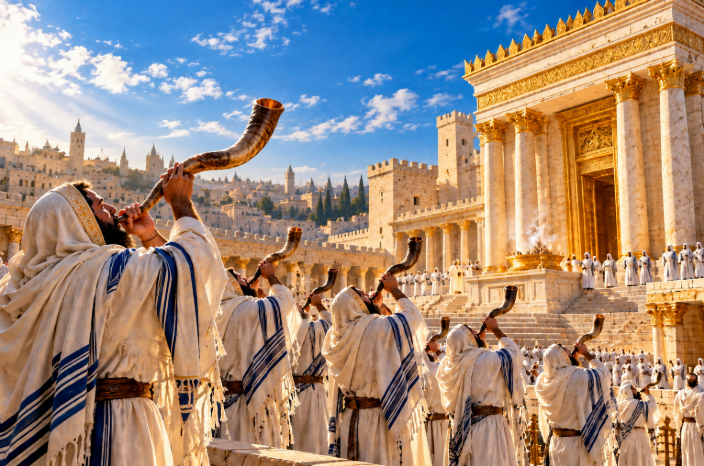
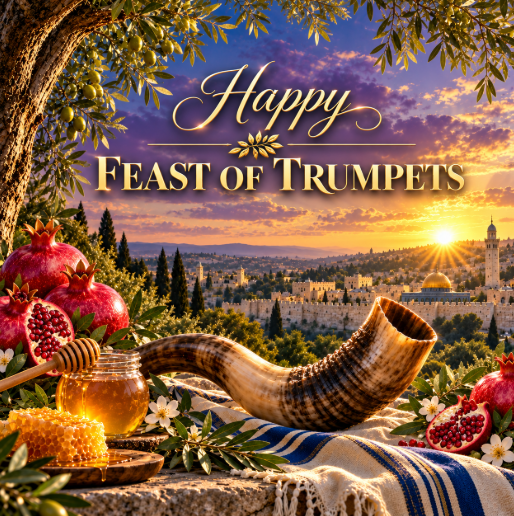
- Make the teruah. A shofar is a very appropriate biblical instrument for doing this, although teruah itself refers to the sound or acclamation rather than specifying only one instrument.
- Remember Yahuah and worship Him. Leviticus calls the day a zikkaron, a memorial or remembrance associated with the teruah.
- Rejoice before Yahuah. Prayer, Scripture reading, praise, singing, a shared meal, and shofar blasts are appropriate ways of setting the day apart, while distinguishing these practices from explicit Torah commands.
One caution is important: the Torah does not call this day “Rosh Hashanah.” The biblical text calls it Yom Teruah and places it in the seventh month, not the first. Calling it the Jewish New Year reflects a later Jewish tradition rather than the terminology of Leviticus 23.
For the article you are presently developing on the Prophetic Feast Days of Yahusha haMashiach, I think Yom Teruah becomes especially interesting when you ask: What does the teruah prophetically announce? That is where we could examine the shofar/trumpet passages associated with Yahusha’s return, resurrection, gathering, kingship, and judgment, while carefully separating what Scripture explicitly connects from what is prophetic interpretation.