From Sabbath to Saturday: How Roman Emperors Altered Sacred Time
From Sabbath to Saturday:
How Roman Emperors
Altered Sacred Time
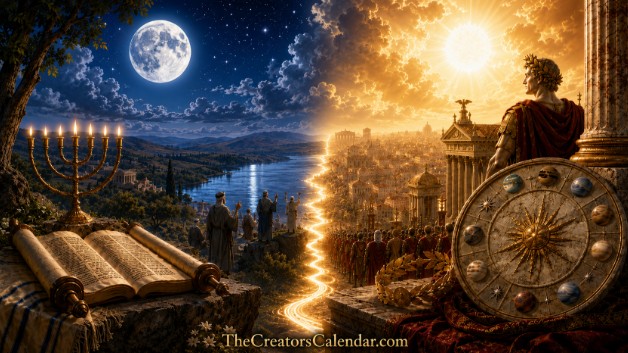 Constantine, Canon 29, Daniel 7:25, and the Planetary
Week that Replaced the Original Sabbath
Introduction
In 1977, after completing extensive doctoral research at the Pontifical Gregorian University in Rome, Samuele Bacchiocchi published his new book, From Sabbath to Sunday: A Historical Investigation of the Rise of Sunday Observance in Early Christianity, a work that challenged long-held assumptions about the origin of Sunday sacredness. His research was groundbreaking for both Saturday and Sunday keepers, because it provided hard evidence that Sunday sacredness did not originate with the Messiah, the apostles, or the Jerusalem believers, but arose later through the influence of Rome, anti-Jewish sentiment, and the growing authority of the Roman Church.1
Yet Bacchiocchi’s entire investigation still rested upon one inherited assumption: that “Sabbath” and “Saturday” were synonymous terms, both referring to the same day as set forth at creation. As a result, his work kept the calendar controversy confined to the familiar Saturday vs. Sunday framework, while never asking the deeper question of whether the Roman Saturday was Sunday’s twin sister or whether the entire planetary week cycle was ever in alignment with the biblical week of Creation in the first place. In this way, Bacchiocchi challenged Rome’s authority over Sunday while leaving Rome’s claim over Saturday and the entire planetary weekly cycle itself largely untouched.
If the real issue is not merely which day within Rome’s week should be honored, but whether the Roman weekly cycle itself displaced the Creator’s appointed order of time, then the investigation must go deeper than the familiar Saturday-versus-Sunday debate. Scripture itself points us toward that deeper inquiry. Daniel warned that a prophetic power would arise and “think to change times and laws” (Daniel 7:25). What, then, were the times established by the Creator, and were they ever changed?
Before identifying either Saturday or Sunday as the biblical Sabbath, intellectual honesty requires us to examine the calendar upon which both days depend. The question is no longer simply which Roman weekday is the seventh day. The more fundamental question is this: By whose calendar are we identifying the sacred Sabbath of the Bible? This study invites the reader to follow the biblical and historical evidence wherever it leads, beginning not with inherited tradition, but with the timekeeping principles established in Scripture itself.
1. A Civil Power Would Change Times and Laws
“And he shall speak great words against the Most High, and shall wear out the saints of the Most High, and think to change times and laws…”2 Daniel 7:25
Could one man, empowered by ego, ambition, and empire, truly alter the divinely ordained fabric of time?
The prophet Daniel foretold the rise of a power that would “think to change times and laws.” This prophecy does not imply that any earthly ruler could alter the movements of the sun, moon, and stars, for the heavens remain obedient to the Creator’s command. Rather, it points to an attempted change in mankind’s understanding and reckoning of sacred time, a counterfeit system by which the appointed worship rhythm of the Most High would be obscured, replaced, and eventually accepted by much of the world.3
It is important to notice that Daniel’s wording is plural. The prophecy does not speak merely of one isolated “time” or one single “law,” but of “times” and “laws.” This invites the careful student of Scripture to look beyond a single disputed day and ask whether the entire framework of sacred time may be in view: New Moons, Sabbaths, appointed Feasts, years, worship rhythms, and the Torah instructions by which they were originally governed, including the current Ten Commandments. The question, then, is not simply whether one sacred day was altered, but whether the calendar structure by which all sacred appointments are measured was replaced by another system.4
2. Julius Caesar Removed the Moon from Roman Time
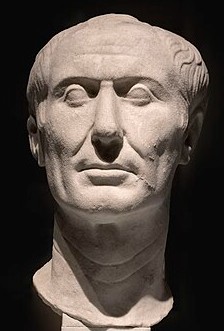 Nearly four centuries before Constantine, Roman time-measuring had already begun to detach itself from the lunar cycles that had defined sacred time since Creation, and civil time for all nations that no longer worshiped the Creator. This shift was advanced under Julius Caesar, whose calendar reform removed the moon as the governing measure in his Roman empire for years, months, weeks, and days, replacing the Creator’s luni-solar rhythm with a solar-based system.5
“In the mid-1st century B.C., Julius Cæsar [Roman Emperor] invited Sosigenes, an Alexandrian [Egypt] astronomer, to advise him about the reform of the calendar, and Sosigenes decided that the only practical step was to abandon the lunar calendar altogether. Months must be arranged on a seasonal basis, and a tropical [solar] year used, as in the Egyptian calendar.”6 Encyclopedia Britannica, The Julian Calendar, Paragraph 1. https://www.britannica.com/science/calendar/The-Western-calendar-and-calendar-reforms
Along with Rome’s departure from lunar-based reckoning, Julius Caesar’s reform prepared the way for a radically different weekly model. Instead of a seven-day week, cycling four times within each lunar month, he designed an eight-day market week that cycled continuously, without any interruption from the New Moon Day. This created a week entirely detached from the lunar phases. It allowed Roman time to move forward in an unbroken cycle rather than according to the Creator’s appointed celestial rhythm. This calendar remained in use for approximately three centuries and was enforced upon the captive Jews since A.D. 70, who were no longer able to utilize their lunar-based Sabbath.7
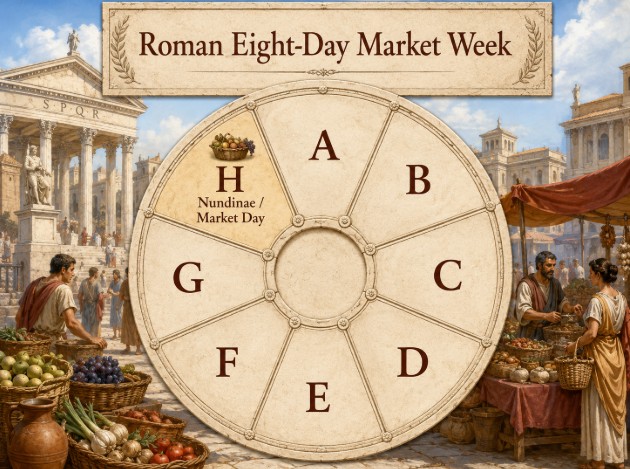
“The decline of the [Roman Julian] eight-day week coincided with the expansion of Rome… The astrological and Christian [pagan planetary Sunday – Saturday] seven-day weeks that had just been introduced into Rome were also becoming increasingly popular. There is evidence indicating that the Roman eight-day week and… seven-day cycles were used simultaneously for some time. However, the coexistence of two weekly rhythms that were entirely out of phase with one another obviously could not be sustained for long. One of them clearly had to give way. As we all know, it was the eight-day week that soon disappeared from the pages of history forever [along with the original lunar seven-day week].”8 Eviatar Zerubavel, The Seven-day Circle, p. 46.
3. From the Eight-Day Roman Cycle to the Seven-Day Planetary Week
Rome’s departure from the Creator’s lunar time-measuring system did not arrive in one single step. It unfolded in stages. Julius Caesar’s reform first severed Roman civil time from the moon by removing the lunar phases as the governing measure for years, months, weeks, and days. But Rome’s weekly structure would continue to develop until it finally settled into the seven-day planetary cycle inherited by the modern world.
This new week was no longer governed by the New Moon, nor by the lunar phases that had marked the Scriptural rhythm of sacred time for thousands of years. In contrast to the Creator’s weeks, which were counted within the lunar month from one New Moon to the next, Rome’s civil cycle advanced independently, without interruption by New Moon Day.
This distinction is important. According to Scripture, the New Moon is the starting point for counting the days of the month.9 The weeks are therefore anchored to the lunar month and divided by the moon’s four quarter phases.10 Rome’s developing calendar system, however, detached the count of time from that heavenly witness. Once the moon was removed from the calendar’s governing structure, the way was prepared for a week that could cycle continuously according to any human whim and irrespective of the lunar phases and the Old Testament Torah.
4. Constantine Legislated the Modern Planetary Week
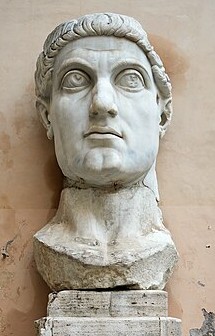 Fast-forward nearly four centuries. By the time Constantine the Great rose to imperial power, Rome already possessed a solar calendar detached from the lunar phases. What remained was to settle and enforce a weekly rhythm that would not return to the New Moon, nor to the lunar phases that had once governed the Scriptural count of weeks. Instead, Constantine’s reform elevated a seven-day planetary cycle, one that moved continuously and independently from the Creator’s lunar calendar.11
Over time, Rome’s older eight-day rhythm cycle gave way to the seven-day planetary week cycle. Yet this new seven-day cycle was not a return to the Scriptural week. It was seven in number only, not seven according to the Torah’s method of reckoning. It was ordered by the planetary sequence of Rome, not from one New Moon to the next, as established at Creation.
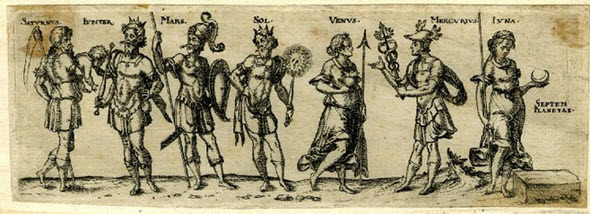
The planetary week passed through more than one stage before becoming the familiar order that the world at large later inherited from Roman Christianity. In earlier arrangements, Saturday, dies Saturni, held the first-day position as shown below, while Monday was the seventh day. Only later, as the Romanized seven-day week was reordered and established, did Sunday, dies Solis, become day number one, causing Saturday, dies Saturni, to occupy the seventh-day position.
Here is an image of the Roman Planetary Parapegma Stone,12 illustrating that before the Roman week began with Sunday, dies Solis, as the first day, it had operated for a time beginning with Saturday, dies Saturni, as the first day of the week, with Friday, as the seventh day.
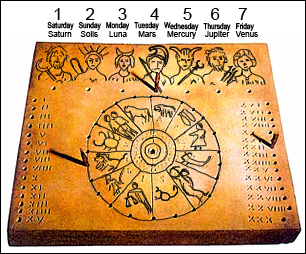
This is a critical point in the history of the Sabbath question. “Saturday” did not appear as the seventh day because Scripture identified it as such, for the very reason that neither Saturday nor Sunday can be found by name or rhythm in the Bible. It came to appear as the seventh day only after Rome’s planetary week was reordered with Sunday as the first day. From that point forward, Saturday carried the number seven within Rome’s week, but not because it had been preserved from Creation.13 It was the seventh day of a Roman planetary cycle, not the seventh day counted according to the Creator’s lunar calendar.
Thus, before Constantine gave the planetary week imperial force, the foundation had already been laid. The moon had been removed from Roman reckoning. The older eight-day cycle had given way to a seven-day planetary arrangement. And the days themselves were no longer identified by the moon, but by the names of Rome’s planetary deities: Sun, Moon, Mars, Mercury, Jupiter, Venus, and Saturn.
A Christian funerary inscription from A.D. 269 provides a tangible witness to the coexistence of these distinct methods of reckoning time. The inscription identifies the same date according to the Roman civil calendar, the planetary weekday, and the numbered day of the lunar month:
“In the consulship of Claudius and Paternus, on the Nones of [the 5th of] November, on the day of Venus [Friday], and on the 24th day of the lunar month…”14 Inscriptions Christianae Urbis Romae, E. Diehl, Vol. 1, Part 1, p. 18, No. 11; Robert L. Odom, Sunday in Roman Paganism, p. 122.
The importance of this inscription lies in its use of three separate time designations for the same event. “The day of Venus” identified the planetary weekday, while “the twenty-fourth day of the lunar month” identified its location within a separate lunar count. The two expressions were therefore not interchangeable names for the same calendar identity, but distinct forms of reckoning that could be recorded side by side.
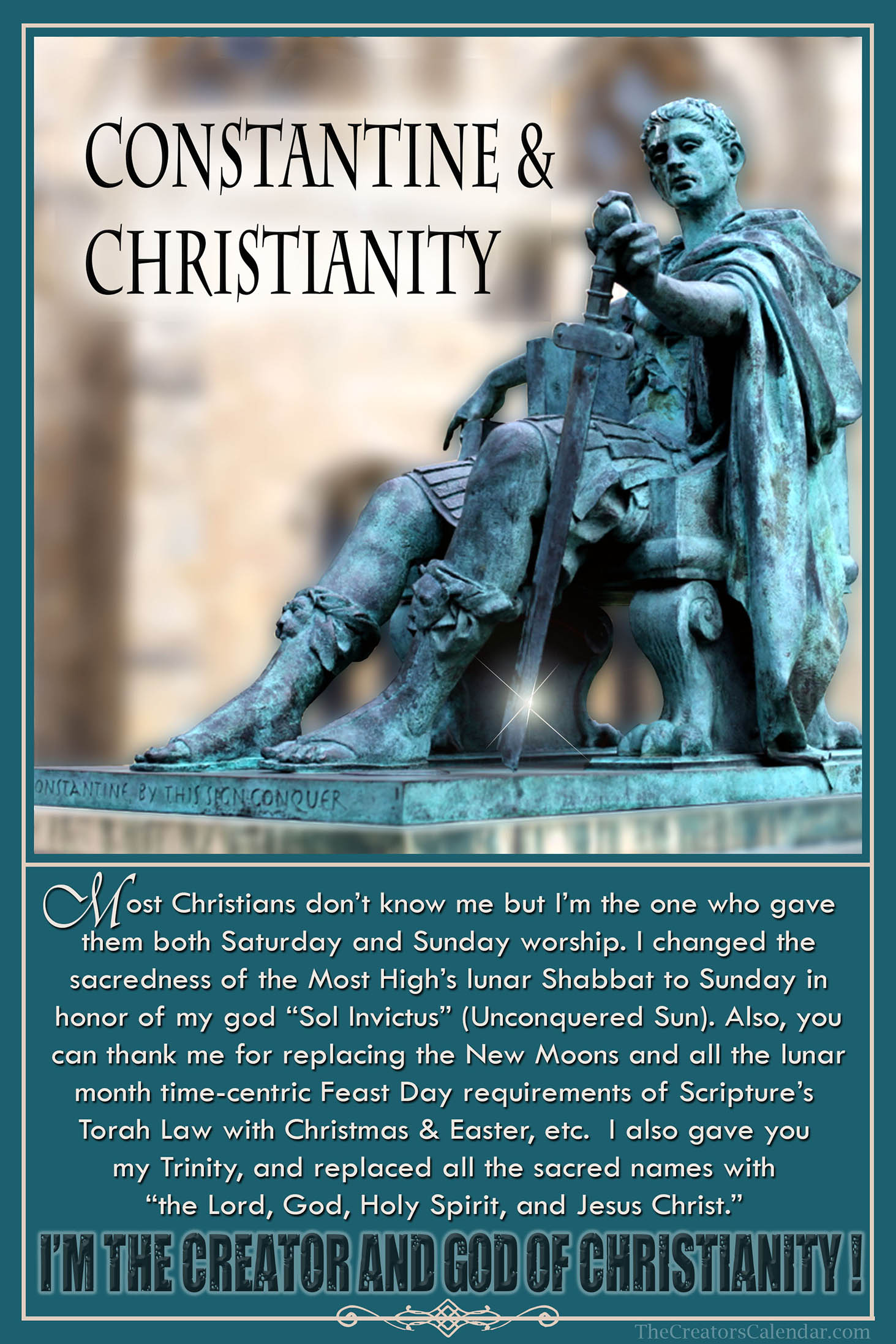
By the time Constantine entered the stage of history, Rome’s replacement system was already prepared. The moon had been removed from civil reckoning, the older eight-day cycle had yielded to the planetary seven-day week cycle, and the days themselves were identified by the names of Rome’s pagan celestial deities. What remained was for imperial authority to attach religious obligation to that rhythm. Constantine did this by elevating dies Solis, the day of the Sun, as the weekly rest day of the empire, giving Rome’s moonless planetary week the force of law.
When the new calendar was finalized, Constantine issued his famous Sunday legislation,15 honoring “the venerable day of the Sun” as the first day of the week and as the weekly rest day of his empire. This was not a minor civil adjustment. It gave official recognition to a weekly rhythm that was disconnected from the New Moons, lunar Sabbaths, and appointed times established in the Old Testament Torah’s ordained calendar.
In 321 A.D., Constantine, emperor of Rome…by civil enactments made “the venerable day of the Sun,” which day was then “notable for its veneration,” the weekly rest day of the empire…The enforcement of the weekly observance of Sunday gave official recognition to the [NEW] week of seven days and resulted in the introduction of it into the official civil calendar of Rome. The Romans passed that calendar down to us, and in it we have still the ancient planetary titles of the days of the week.16 Odom, op. cit., p. 243-244, emphasis supplied.
Thus, Constantine did not restore the biblical week. He legislated a Roman planetary week within a calendar system already divorced from the moon. Its rhythm was not counted from one New Moon to another, nor was it governed by the quarter phases of the lunar month. This new week cycled independently, without interruption, without lunar correction, and without regard to the Creator’s appointed lights.
This was a crucial turning point. Julius Caesar had removed the moon from Roman calendar reckoning. Constantine then advanced a seven-day planetary week that carried the appearance of biblical numbering while remaining severed from the biblical method of counting. Together, these reforms helped establish a time-measuring system that stood in direct contrast to the Scriptural model of sacred time.17
Most Bible believers today assume that the modern Roman seven-day week cycle is in perfect alignment with the week established at Creation, or they do not recognize why the distinction would matter. But the evidence points in another direction. Rome’s week may have carried the number seven, but it did not return to the Creator’s method of counting weeks from one New Moon to the next. It preserved the appearance of biblical order while replacing the lunar foundation upon which that order originally rested. In other words, it retained the outward form of sacred time while severing that form from creation’s heavenly system that gave it divine meaning.
5. Nicaea and the Separation from Passover
A few years later, in A.D. 325, the Council of Nicaea further advanced Rome’s separation from the Torah-based calendar.18 Here, the timing of the Messiah’s resurrection celebration was formally distanced from the Old Testament Torah placement of Passover. This was not merely a disagreement over dates. It represented a growing determination to sever Roman Christianity from the lunar-appointed sacred days of the Hebrew Scriptures.
The biblical Passover was date-stamped on the 14th day of the first lunar month in the spring, counted from the New Moon. The Wave Sheaf Offering, connected to the resurrection pattern, belonged to the Torah’s appointed sequence on the 16th. But Rome’s Easter system moved the focus away from the Creator’s lunar calendar count and toward their new religious structure altogether, shaped by imperial and ecclesiastical authority.
“There was a considerable discussion raised about this time, in consequence of a difference of opinion respecting the observance of the paschal season. The churches of all Asia, guided by a remoter tradition, supposed that they ought to keep the fourteenth day of the moon for the festival of the Savior’s Passover, in which day the Jews were commanded to kill the paschal lamb; and it was incumbent on them, at all times, to make an end of the fast on this day, on whatever day of the week it should happen to fall.”19 Eusebius Pamphilus, The Ecclesiastical History, Book V, Chapter 23.
What had once been anchored in the lunar-appointed times of the Most High was increasingly redefined through the calendar and theological framework of Rome. Ultimately, Easter was placed on the first Sunday, following the first full moon after the Vernal Equinox.20 This plan ensured that Easter Sunday would never occur on the actual biblical Passover or Wave Sheaf Offering, the Messiah’s true resurrection day.
6. The Constantinian Creed and the Rejection of Hebrew Time
The Constantinian era marked a decisive turning point in the fourth century A.D., as imperial and ecclesiastical authorities increasingly separated the emerging Christian religion from the Torah, the Hebrew calendar, and practices identified as Jewish. In place of the Scriptural timekeeping system governed by the coordinated witness of the sun, moon, and stars, Rome advanced a calendar structure centered primarily upon the solar year and the continuous planetary week. This new framework created the setting in which an alternative weekly day of rest could be elevated independently of the New Moon and the lunar phases that had long regulated biblical months, Sabbaths, and appointed times. What began as an imperial and ecclesiastical realignment within the Roman Empire was later carried throughout much of the world by the Roman Catholic Church and, in turn, inherited by the Protestant traditions that emerged from her.
Creed of Constantinople Church
“I renounce all customs, rites, legalisms, unleavened breads and sacrifices of lambs of the Hebrews, and all the other feasts of the Hebrews, sacrifices, prayers, aspirations, purifications, sanctifications, and propitiations, and fasts and New Moons, and Sabbaths, and superstitions, and hymns and chants, and observances, and synagogues…Absolutely everything Jewish, every [Torah] Law, rite and custom and if afterwards I shall wish to deny and return to Jewish superstition, or shall be found eating with Jews, or feasting with them, or secretly conversing and condemning the Christian religion instead of openly confuting them and condemning their vain faith, then let the trembling of Cain and the leprosy of Gehazi cleave to me, as well as the legal punishments to which I acknowledge myself liable. And may I be an anathema in the world to come, and may my soul be set down with Satan and the devils.”21 Stefano Assemani, Acta Sanctorium Martyrum Orientalium at Occidentalium, Vol. 1, Rome 1748, page 105.
The Constantinian Creed overtly identifies that the foundation of Rome’s new Christian religion was proactively designed to have NO CONNECTION to anything taught in the Torah Law or the entire Old Testament Scriptures. This creed is evidence that Roman Emperors never designed Saturday nor Sunday to accurately align with the original calendar model of the first week of Creation or anything after that, as presented in Scripture. Instead, with the creation of their new sacred EASTER HOLIDAY, they combined it with their newly ordered Sunday, causing it to appear that Rome’s continuous weekly cycle meets the Scriptural standard, with Sunday as the first day and Saturday as the seventh.
So the question is, was the sacredness of the authentic and original seventh-day Sabbath, as ordained by our Creator, ever changed from Saturday to Sunday? The answer is no. The evidence points to something far more serious: “Saturday” was never the Sabbath of Scripture, but only the seventh day of Rome’s reconstructed planetary week.
In this way, Rome’s “witty invention” becomes visible in stages. Julius Caesar removed the moon from Roman civil time. Constantine gave force to the continuous planetary week and exalted Dies Solis, the day of the Sun. Nicaea further separated the resurrection celebration from the Torah-based Passover rhythm. The Constantinian Creed then openly rejected the New Moons, Sabbaths, Feasts, and Hebrew foundations of worship.22
Roman emperors were powerless to alter the heavens. They could only train the nations to follow imperial authority rather than the visible witness placed above them. The sun, moon, and stars continued in their appointed courses, while mankind was gradually taught to disregard them and reckon sacred time by imperial decree, ecclesiastical authority, and inherited tradition. The next historical witness, Canon 29 of Laodicea, reveals how deeply this realignment affected the Sabbath question itself.
7. Council of Laodicea, Forty Years Later
Forty years later, in A.D. 363-364, during the turbulent years following Constantine’s dynasty, the Council of Laodicea convened.23 Canon 29 was then written and legislated throughout the empire.
Here is Canon 29 in Greek:
“Οὐ δεῖ Χριστιανοὺς Ἰουδαΐζειν καὶ σαββατίζειν [Sabbath], ἀλλ᾽ ἐργάζεσθαι τῇ σαββάτῳ [Sabbath]· τὴν δὲ κυριακὴν προτιμῶντες, εἴπερ δύνανται, ἐν αὐτῇ μηδὲν ἐργάζεσθαι· εἰ δὲ Ἰουδαΐζοντες εὑρεθῶσιν, ἀνάθεμα ἔστωσαν τῷ Χριστῷ.”24 Council of Laodicea, Canon 29, Greek version.
These are two slightly different Latin versions of Canon 29:
“Quod non oportet Christianos Judaizere et otiare in Sabbato [Sabbath], sed operari in eodem die. Preferentes autem in veneratione Dominicum Diem [Sunday] si vacre voluerint, ut Christiani hoc faciat; quod si reperti fuerint Judaizere Anathema sint a Christo.” Council of Laodicea, Canon 29, Latin version.
“Christiani non oportet judaizare et otiare in Sabbato [Sabbath], sed operari in eodem die; Dominicum [Sunday] autem honorare, et, si possunt, in eo otiare, ut Christiani. Quod si reperti fuerint judaizantes, anathema sint a Christo.”25 Council of Laodicea, Canon 29, Latin version.
This is the original and authentic English translation of the original Greek and Latin.
“Christians shall not Judaize and be idle on Sabbath, but shall work on that day; but the Lord’s Day [Sunday] they shall especially honor, and, as being Christians, shall, if possible, do no work on that day. If however, they are found Judaizing, they shall be shut out from Christ.”26 Council of Laodicea, Canon 29
What all three language translations have in common is unmistakable: the Greek and both Latin witnesses identify Rome’s forbidden practice as “Sabbath-keeping,” not “Saturday-keeping.”27 The Greek uses σαββατίζειν and σαββάτῳ, while both Latin versions preserve the phrase in Sabbato, meaning “on the Sabbath.” Each version then contrasts this forbidden Sabbath rest with the preferred honoring of the Lord’s Day, Sunday. Thus, Canon 29 was not merely making a casual reference to a Roman weekday; it was addressing the Sabbath rest of creation itself and commanding Christians to work on that day, while redirecting honor and possible rest to Sunday, the newly reordered first day of the week.
8. The Shift from Sabbath to Saturday
This evidence may come as a shock not only to many sincere Seventh-day Adventists who have trusted their denomination’s prophet, theologians, and teachers, but also to thoughtful Sunday-keepers who have accepted the familiar claim that Canon 29 documents a direct transfer of sacredness from Saturday to Sunday. For generations, this canon has often been presented as though it proves that the early Roman Church replaced one fixed weekday with another. Yet a closer examination of the Greek and Latin wording raises a far more serious question for both groups: Was Canon 29 truly addressing “Saturday,” or was that term supplied later by translators who assumed that the Sabbath of Scripture and the Roman day of Saturn were one and the same?
Karl J. von Hefele, in his History of the Councils of the Church from the Original Documents, was first published in German in 1855 and the English version in 1871.28 He stated that the wording of Canon 29 does not contain the Roman planetary term “Saturday,” or dies Saturni, in either the Greek or Latin text.29 Instead, the Latin uses Sabbato only, and the Greek uses Sabbath terminology that means the same thing. This distinction is significant because Sabbato refers to the Sabbath, while dies Saturni refers to Saturn’s day, the name of a pagan entity within the more recent Roman planetary week. These were never one and the same term; they did not exist together from the beginning of time, nor did they arise from the same calendar system. The original was from a lunar calendar model formed by the trinity of lights, and the other from a solar model crafted by emperors.
9. How the “Saturday” Reading Entered Adventist Teaching
Yet, in the last 100 years, across the major Seventh-day Adventist Church presentations on this subject, Canon 29 of the Council of Laodicea has been quoted with the word “Saturday” inserted in place of the original term “Sabbath” as shown below.
“Christians shall not Judaize and be idle on Saturday, but shall work on that day; but the Lord’s Day [Sunday] they shall especially honor, and, as being Christians, shall, if possible, do no work on that day. If however, they are found Judaizing, they shall be shut out from Christ.”30 Council of Laodicea, Canon 29
The “Saturday” wording appears in S.D.A. teaching at least as early as 1890, through J. H. Waggoner’s pamphlet, and it was then publicly repeated in the Advent Review and Sabbath Herald by Loyd J. Caldwell.31 The April 15, 1890, Review and Herald article says it is quoting from Elder J. H. Waggoner’s recent pamphlet, The Origin and Growth of Sunday Observance, and then gives Canon 29 as: “Christians shall not Judaize, and be idle on Saturday…”
But there is an important twist: Waggoner himself, in the pamphlet, did not appear to hide the Latin. He gave the Latin text using “in Sabbato,” and then translated it as “rest in the Sabbath,” not “Saturday.” So the earliest SDA source stream I found begins with Waggoner’s argument, but the public S.D.A. retelling in 1890 already shows the “Saturday” rendering being used in print.32
Then A. T. Jones carried the same wording forward, but with a revealing bracketed correction. In The Great Nations of Today, Jones quoted Canon 29 as “idle on Saturday,” but immediately added in brackets: [Sabbath], in both Greek and Latin. That means Jones knew the underlying word was not “Saturday,” even while continuing to use the English rendering that framed it as Saturday.33
The teaching was clearly passed to the people through official S.D.A. educational material by 1917. A Sabbath School Lesson Quarterly for December 1, 1917, taught: “Christians shall not Judaize, and be idle on Saturday…” and cited Hefele’s History of the Church Councils.34 By that point, this was no longer merely an author’s historical argument; it had entered denominational instruction.
10. Ellen White and the Saturday-Sabbath Assumption
 At this point, a sincere question must be asked: Why have Seventh-day Adventists felt so confident replacing the word “Sabbath” with “Saturday” when quoting Canon 29? The answer does not rest upon the Greek or Latin wording of the canon, as we have discovered, for neither text says dies Saturni (Saturn’s day). Rather, the confidence appears to come from a deeper denominational assumption, one rooted in the prophetic authority they have given to Ellen G. White.
For generations, Seventh-day Adventists have been taught to view the final week of Yahusha’s earthly ministry through the familiar Friday-Saturday-Sunday pattern. “Ellen White presented the crucifixion as completed on Friday, the Sabbath rest as immediately following, and the resurrection as occurring on the first day of the week, which Adventists have consistently understood as Sunday morning.” In doing so, she placed the most sacred events in the Plan of Salvation directly onto the modern Roman planetary week. This naturally led Adventists to assume that the weekly cycle illustrates Friday, Saturday, and Sunday was the same weekly cycle that existed at Creation and continued unchanged through the time of the Messiah.
This is why the substitution in Canon 29 may not have troubled Adventist teachers. If Saturday was already accepted as the seventh-day Sabbath by Ellen White’s prophetic confirmation, then translating Sabbato as “Saturday” would appear harmless, even obvious. But that is precisely where the deeper problem emerges. The translation did not prove that Sabbath meant Saturday; it merely reflected an assumption Sunday keepers had long believed, and Adventism only assumed had already inherited and then reinforced through the perceived authority of Ellen White.
This does not need to be stated with harshness, but it does need to be faced honestly. If Ellen White placed the sacred order of the crucifixion, Sabbath rest, and resurrection within the modern Roman week, and if Scripture’s appointed time system was instead lunar from Creation, then her framework unintentionally confirmed the very calendar structure that this study is calling into question. The issue, then, is not merely a mistranslated word in Canon 29. It is whether Adventism’s confidence in Saturday as the Sabbath rests upon Scripture alone, or upon a presumed prophetic interpretation that mistakenly assumed the Roman week to be identical with the Creator’s original calendar.
The quote below is one example illustrating that Ellen White directly connected the Creation Sabbath with the Messiah’s tomb rest, stating that His work was to be “completed on a Friday,” and that the next day, “on the Sabbath He should rest in the tomb.” In this statement, Friday and Sabbath are treated as the accepted Passion-week sequence, and the Sabbath rest of the Messiah is compared to the Creation rest of Genesis 2:1-3.35 This reveals why Seventh-day Adventists felt free to assume that the Sabbath of Creation and the modern Saturday Sabbath framework were one and the same.
“…completed on a Friday, and that on the Sabbath He should rest in the tomb…”36 Ellen G. White, Manuscript Releases, vol. 3, p. 426; Manuscript 25, 1898, “The Man of Sorrows.”
This is a painful realization for many sincere Adventists, because they have loved the Sabbath and desired to honor the Creator. And they have loved their prophet, not realizing she was fallible after all. Yet truth must be permitted to test every inherited assumption. If the original text says “Sabbath,” and not “Saturday,” then no assumed prophet, church, translator, or tradition has the authority to overwrite the evidence. The question must return to Scripture: What calendar did the Creator appoint in the beginning, and by what lights did He command His people to reckon His Sabbaths and appointed times?
“And Alahim (God) said, Let there be lights in the expanse of the heavens to divide between the day and the night. And let them be for signs, and for
seasons[H4150 – mo’edim – lunar appointed], and for days and years.“37 Genesis 1:14
Stunningly, Saturday has no relation to any of the lights in the heavens.
11. Did Jewish Continuity Preserve the Original Sabbath?
Another sincere question must be addressed: Why are modern Jews not generally troubled by Canon 29, and why do they continue to identify Saturday as Shabbat? For many Christians, this has seemed to settle the matter. If the Jewish people have preserved Sabbath observance for centuries, then surely, Saturday must be the original seventh-day Sabbath of Scripture. This assumption has carried enormous influence, not only among Jews, but also among both Saturday- and Sunday-keeping Christians, and the world at large.
Yet Scripture itself shows that Israel’s original possession of the oracles of truth did not prevent periods of compromise, unfaithfulness, outright disobedience, captivity, and, years later, ultimately restoration. Each time Israel went into captivity, they lost the sacred truths entrusted to them. Israel was brought into bondage in Egypt. Judah was later carried captive to Babylon. Still later, the people came under the dominion of Rome. In each case, the issue was not whether Yahuah had failed to preserve His truth, but whether His people had remained faithful to it. The prophets repeatedly testify that covenant unfaithfulness brought exile, confusion, and the loss of sacred truths.38
This means Jewish continuity alone cannot be used as final proof that the present Saturday Sabbath is identical to the Sabbath appointed at Creation. The question must be tested by Scripture, the appointed lights in the heavens, the Torah’s lunar calendar, and the historical record. If the biblical calendar was lunar in its reckoning of months, appointed times, and Sabbaths, then the later identification of Shabbat with the Roman Saturday requires explanation rather than assumption.
Here is where the Roman period becomes especially significant. After the destruction of Jerusalem, the dispersion of the Jewish people, and the increasing pressure of Roman power, Jewish life was forced to survive under foreign rule. For three hundred years, they lived under the heavy weight of an eight-day cycling week designed by Julius Caesar. In time, the Sabbath came to be identified within the upgraded seven-day continuous planetary week legislated by Emperor Constantine. This did not require Jews to accept Sunday sacredness, but it did place their new weekly seventh-day Sabbath observance inside Rome’s pagan week structure. Thus, while Judaism resisted the Christian elevation of Sunday, it nevertheless came to preserve Shabbat as Saturday within the Roman planetary week system. This gave the Roman framework the appearance of historical legitimacy, making it seem as though Saturday had always been the Sabbath of Scripture.39
Modern Judaism has little reason to view Canon 29 as a challenge to its own Sabbath practice, because the canon was not directed at Jews.40 Canon 29 was a Christian ecclesiastical decree aimed at Christians who were resting on the Sabbath. It did not ask Jews for permission, nor did it define Jewish practice. But the larger historical issue remains: if both Saturday and Sunday belong to the same Roman planetary week, then Jewish Saturday observance cannot by itself prove that Saturday is the Sabbath of Creation or the same Sabbath observed by our Messiah.
This is not a condemnation of the Jewish people, many of whom have sought with great devotion to preserve the commandments as they understood them. Rather, it is a call to distinguish between sincere preservation and the restoration of the ancient paths. The question is not whether Jews have loved the Sabbath. Many clearly have. The question is whether the Sabbath they inherited after long centuries of captivity, dispersion, and Roman domination remained anchored to the Creator’s lunar calendar, or whether it had become fixed to the planetary week of their Roman captors.
If the latter is true, then the continued Jewish identification of Shabbat with Saturday becomes evidence not of unbroken calendar purity, but of a historical captivity that has to this day never fully been reversed in the realm of sacred time. Egypt, Babylon, and Rome each left their mark upon the once chosen people of the Most High. But Rome’s time signature has been the most enduring, because it now appears so ordinary, so universal, and so ancient that few think to question it, including the Jews.
“Sabbath and New Moon (Rosh Chodesh), both periodically recur in the course of the year. The New Moon is still, and the Sabbath originally was, dependent upon the lunar cycle… Originally the New Moon was celebrated in the same way as the Sabbath.”41 Universal Jewish Encyclopedia, “Holidays,” Vol 5., p. 410.
12. A Karaite Admission: Saturday Cannot Be Proven from Creation
A striking admission comes from a Karaite Jewish source, and it deserves careful attention. The Karaites are significant because their name is associated with adherence to the written Scriptures rather than the later authority of the Talmud, rabbinic oral tradition, or Kabbalah. They have often been regarded as a “Bible-only” Jewish movement, much as Protestants have historically claimed to stand upon Scripture over Roman Catholic Church tradition.
This is especially relevant to Seventh-day Adventists because the Millerite movement, and the later Adventist interpretation of October 22, 1844, were historically tied to Karaite lunar calendar reckoning for the Day of Atonement that year. The Karaite calculation began the biblical month from the first visible crescent moon, and it was this crescent-based method that ultimately placed the tenth day of the seventh lunar month on October 22. Thus, the prophetic significance later attached to that date rests not merely upon a lunar calendar, but upon a particular assumption concerning which lunar phase constitutes the authentic New Moon. Yet even from within a Karaite setting, where the written Scriptures are held above rabbinic tradition, the following candid statement appears:
“Through all the trials and tribulations that humanity has experienced over the past 5,000 years, we have no proof whatsoever that our current Saturday is the actual seven-day ‘anniversary’ of the original Shabbath of Creation.”42 Karaite Insights, “Shabbat,” https://www. karaiteinsights.com/article/shabbat.html.
This is no small admission. If a Karaite source, representing a tradition known for rejecting rabbinic oral authority in favor of Scripture, can acknowledge that there is “no proof whatsoever” that the current Saturday is the actual seventh-day anniversary of the original Sabbath of Creation, then every sincere Bible believer should pause and take notice. This statement does not by itself prove the lunar Sabbath, but it does expose the weakness of one of the most common assumptions in the Sabbath debate: that Saturday’s identity as the Creation Sabbath is historically beyond question.43
Here again, the larger pattern comes into view. Just as Protestantism protested Rome but did not fully recover all that had been buried beneath Roman tradition, so also the Karaites protested rabbinic authority. Still, they have not recovered every lost truth concerning the Creator’s calendar. Their honesty on this point is valuable because it admits what many have been unwilling to face: the modern Saturday Sabbath cannot be proven merely by inherited continuity. The question must return to the beginning, to Scripture, to the heavenly lights, to the New Moon, and to the appointed times ordained by Yahuah, the Most High from Creation.
13. The Larger Calendar Question Hidden by the Translation Swap
Yet this substitution is not neutral. “Sabbath” is the biblical and theological term for the lunar seven-day week count from one New Moon to the next (Isaiah 66:23), established from the first week of Creation (Genesis 2:2-3). “Saturday,” by contrast, is not even 2,000 years old and belongs to the Roman planetary week on a solar calendar. By inserting “Saturday” in place of “Sabbath,” the entire controversy is confined to a misleading Saturday vs. Sunday framework, while the original biblical lunar Sabbath is hidden from view altogether.
As a result, the larger issue is concealed: whether the original Sabbath of Creation was ever governed by an unbroken, continuous weekly cycle, or whether it belonged from the beginning to the Most High’s lunar time-measuring system, making its identification with any fixed weekday on the modern Roman planetary calendar a theological impossibility.
Canon 29 does not suggest that the Most High changed His Sabbath of Creation. It reveals instead that ecclesiastical authority opposed the biblical lunar Sabbath rest and redirected Christian honor and rest away from the Creator’s appointed time system and into the Roman planetary-week model. In that framework, it mattered little whether allegiance was given to Saturday or Sunday, because both days belonged to the same Roman calendar structure. Either choice preserved loyalty to Rome’s replacement system while concealing the original Sabbath appointed by the Most High from Creation.
14. Sabbato Is Not Dies Saturni
The heart of the matter rests upon a simple but far-reaching distinction: Sabbato is not dies Saturni.44 One belongs to the language of the Sabbath; the other belongs to the Roman planetary week. To translate Sabbato as “Saturday” is not merely to choose a modern English equivalent. It is to import a Roman calendar assumption into a text that never used the planetary name.
The Oxford English Dictionary was begun in 1857 for the purpose of tracing the origins, meanings, and spellings of words in the English language. Here is a quote, followed by the photo taken of the passage in the Oxford English Dictionary describing “Sabbath” and the etymological difference between it and the word “Saturday.”
“1. a. In the original use: The seventh day of the week (Saturday) considered as the day of religious rest enjoined on the Israelites by the fourth (or in medieval reckoning the third) commandment of the Decalogue. Phrases, to keep break the Sabbath. The word was never in England, as in some continental countries, a vernacular synonym for Saturday, though English writers of med. Latin used dies Sabbati as frequently as dies Saturni.”45 Richard Chenevix Trench, and James A. H. Murray, Oxford English Dictionary, 1971 Edition.
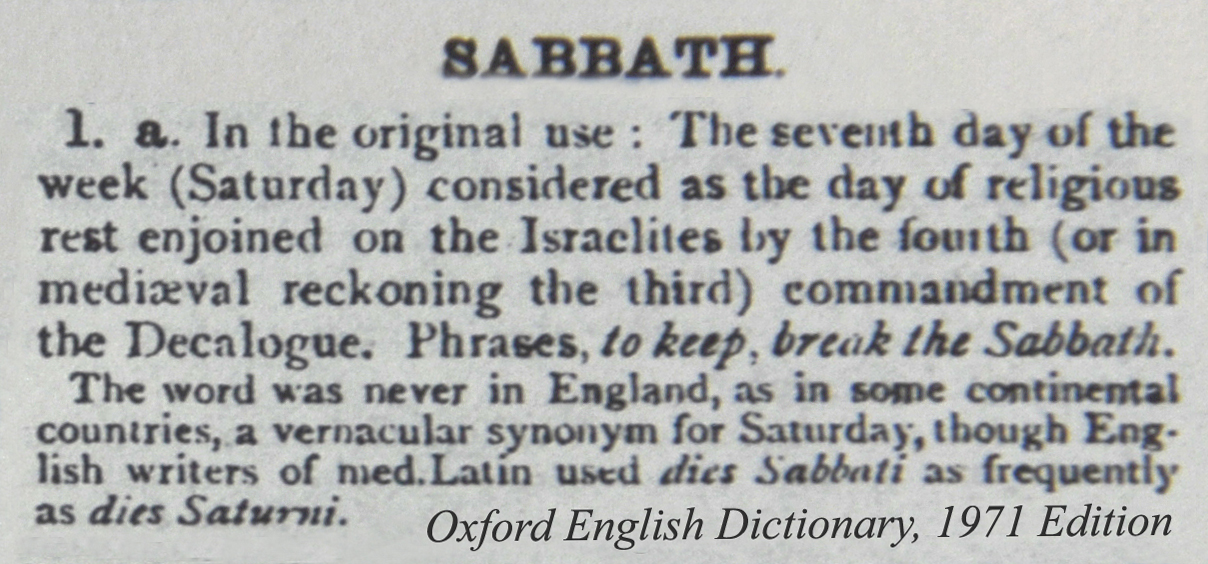
Canon 29 does not say dies Saturni, “Saturn’s day.” It says Sabbato, “Sabbath.” Replacing “Sabbath” with “Saturday” quietly leads the reader to assume that the day being condemned was already the Roman planetary day of Saturn. Yet that conclusion is supplied by the translation rather than stated by the original wording.
This distinction opens a larger historical question. Was the canon merely directing believers from one Roman weekday to another, from Saturday to Sunday, or was it opposing a Sabbath rhythm that remained rooted in the older Hebrew system of reckoning time? If the latter is true, Canon 29 reflects more than a transfer of sacredness within Rome’s week. It reveals a conflict between two different calendar systems.
Hutton Webster describes the later association that developed between Saturn and the Sabbath:
“These . . . eventually led Jewish rabbis to call Saturn ‘Shabbti,’ ‘the star of the Sabbath.’ It was not until the first century of our era, when the planetary week had become an established institution, that the Jewish Sabbath seems always to have corresponded to Saturn’s Day [Saturday].”46 Rest Days, Hutton Webster, p. 244.
Webster’s observation is significant because it indicates that the identification of the Sabbath with Saturn’s day was a historical development rather than an original biblical definition. The Torah never calls the Sabbath “Saturn’s day,” nor do the prophets or the Messiah identify it by the terminology of Rome’s planetary week.
The question raised by Canon 29, therefore, is not merely why Rome favored Sunday over Saturday. It is why the original word Sabbato has been interpreted through the later assumption that Sabbath and Saturday were always one and the same. Once that assumption is removed, the canon may be seen as evidence of a deeper transition: the movement away from the Creator’s appointed Sabbath rhythm and into the continuously cycling planetary week of Rome.
15. The Planetary Week and the Saturday Illusion
For centuries, historians, theologians, translators, and religious institutions repeated the assumption that Saturday had always been the biblical Sabbath. It was easier to follow the accepted interpretation than to question the Roman planetary week and disturb the religious framework built upon it. Thus, generation after generation inherited the same conclusion without examining whether Saturday’s claim had ever been established by Scripture.
Yet a number of historians and researchers have preserved evidence that challenges this familiar narrative. Hutton Webster and Robert Leo Odom wrote directly concerning the planetary week and its relationship to Sabbath and Sunday observance. Additional historical testimony concerning ancient lunar reckoning, Roman calendar reforms, Jewish timekeeping, and the development of the continuous weekly cycle can also be found in the Encyclopædia Britannica, the Oxford English Dictionary, the Jewish Encyclopedia, the Universal Jewish Encyclopedia, and in the works of James C. VanderKam, Clark K. Nelson, Heinrich Graetz, Stephen Herbert Langdon, Eviatar Zerubavel, Frances Rolleston, Philip Schaff, J. Westbury-Jones, Theodore Gilman, Elaine Vornholt, and Laura Lee Vornholt-Jones. Taken together, these records reveal a history far more complex than the common assumption that Saturday has continued unchanged as the seventh-day Sabbath from Creation.47
Theodore Gilman described the transition in unmistakable terms:
“The Sabbath which came down to the Jews from pre-historic times was the seventh day of the lunar week… The division of the month into four weeks of seven days … and the weekly division began again at the time of the next new moon. The change from the lunar week to the seven-day week running continuously through the year, while a momentous change, was unrecorded.”48 Theodore Gilman, Sunday the World’s Rest Day, p. 479.
Gilman’s observation exposes the very assumption upon which the Saturday claim depends: the later continuous week was eventually projected backward into history as though it had always governed the Sabbath.
Robert Odom identified the planetary week as paganism’s counterfeit of the biblical week:
“This planetary week was paganism’s counterfeit of the true biblical week instituted by the Creator in the beginning of earth’s history. In the counterfeit week employed in ancient paganism ‘the venerable day of the Sun’ was esteemed by the heathen above the other six days because it was regarded as sacred to the Sun, the chief of the planetary deities . . . Just as the true Sabbath is inseparably linked with the biblical week, so the false Sabbath of pagan origin needed a weekly cycle. Thus we have found that the planetary week of paganism is Sunday’s twin sister, and that the two counterfeit institutions were linked together…”49 Robert Leo Odom, Sunday in Roman Paganism, pp. 243–244.
The authors of Calendar Fraud describe the corresponding effect upon Saturday:
“The long-term effect was that ‘Easter Sunday’ entered [and established] the Christian paradigm as ‘The Day of Christ’s Resurrection.’ The corollary to this realignment of time calculation was that the day preceding Easter Sunday, Saturday, became forever after the [perceived] ‘True [seventh-day] Bible Sabbath.’ This is the true significance of Constantine’s ‘Sunday law,’ and it laid the foundation for the modern assumption that a continuous weekly cycle has always existed.”50 Elaine Vornholt and Laura Lee Vornholt-Jones, Calendar Fraud, “Biblical Calendar Outlawed.”
Roman Catholic publications have also spoken candidly regarding the ecclesiastical origin of Sunday sacredness:
“The Sunday . . . is purely a creation of the Catholic Church.”51 American Catholic Quarterly Review, January 1883.
A later Catholic publication declared:
“They [the Protestants] deem it their duty to keep the Sunday holy. Why? Because the Catholic Church tells them to do so. They have no other reason. . . The observance of Sunday thus comes to be an ecclesiastical law entirely distinct from the divine law of Sabbath observance…The author of the Sunday law . . . is the Catholic Church.”52 The Ecclesiastical Review, February 1914.
These statements address Sunday sacredness, but their implications reach beyond Sunday itself. By Christianizing Sunday within Rome’s continuous planetary week, ecclesiastical authority also strengthened the framework that made the preceding Saturday appear biblical by position.
Rome borrowed the planetary week but set it in its current order. In this way, they authorized and transmitted it throughout the religious world. Sunday gained sacred status through association with the resurrection, while Saturday appeared to inherit biblical legitimacy simply because it occupied the seventh place in the same cycle.
Over time, repetition hardened assumption into certainty. Textbooks, sermons, commentaries, and religious authorities reinforced the accepted narrative, while those who questioned it often faced ridicule or rejection. Conformity felt safer than disturbing a belief sustained by generations of religious and social authority.
Yet widespread acceptance cannot give divine authority to a system whose planetary names and perpetual weekly cycle are not established in Scripture. The Torah never calls the Sabbath Saturn’s day, and a day occupying the seventh position in Rome’s week is not thereby proven to be the seventh day of the Creator’s calendar.
This question is not merely academic, for sacred time is bound to worship, covenant, prophecy, and the Plan of Salvation.
16. Rome Could Only “Think” to Change Times
Daniel’s prophecy is precise. It does not say a power would successfully change the Creator’s times and laws in the heavens. It says he would “think to change times and laws.”53 This distinction is vital. No earthly ruler, no emperor, no council, and no religious institution has the power to alter the courses of the sun, moon, and stars appointed by the Most High at Creation.
The heavens did not submit to Julius Caesar, Constantine, or Ellen White. The moon did not cease its phases because Rome abandoned it. The New Moon did not stop announcing the beginning of the month because imperial calendars ignored it.54 The Sabbaths and appointed Feast Days did not vanish from the Creator’s order because Constantine legislated the venerable day of the Sun. Nor was Saturday validated as an empirical truth because Ellen White declared it the Sabbath. Yet, the Creator’s timepiece remained exactly where He placed it, written in the heavens for all who would look up and discern.
What Rome changed was not the divine order itself, but mankind’s allegiance to that order. By replacing the Creator’s lunar-appointed rhythm with a solar calendar, a continuous planetary week, and a Sunday-centered resurrection festival, Rome trained the nations to reckon sacred time by imperial authority rather than by the lights in the heavens set forth by the Creator. This is how the change became effective, not in the throne room of the Most High, but in the minds and habitual rhythms of men.
This is the essence of the deception. The counterfeit does not need to move the moon from its course. It only needs to persuade the world that the moon no longer matters. There is no need to erase the Full Moon from the sky. The counterfeit only needs to erase the Full Moon from worship. It does not need to destroy the Creator’s Sabbath; it only needs to replace the method by which people count to it.
Seen in this light, the Roman calendar system becomes a masterful illusion. It appears orderly. It appears ancient. And it appears universally accepted. Yet its authority rests upon inherited tradition, imperial legislation, religious enforcement, and centuries of unexamined assumption, not upon the Torah, the Sanctuary, or the heavenly lights ordained in Genesis 1:14. Its strength has not been in divine command, but in the success with which human authority has disguised itself as sacred time.
Therefore, the call of Daniel 7:25 is not merely to identify a power that attempted to change time. It is to awaken us from the exposed assumption that man-made time has been given divine authority. Rome may have “thought to change times and laws” (Daniel 7:25), but the Most High’s appointed order remains unchanged. The question is whether His people will continue following the man-made calendar that obscured Yahuah’s divine time signature, or return to the celestial worship rhythm He established from the beginning.
17. The Sanctuary Reveals Which Calendar Governed Worship
When the evidence is allowed to stand in its proper order, the question is no longer simply whether Saturday or Sunday should be honored. The Torah directs us instead to a far more concrete witness: the worship schedule established by Yahuah fourteen days and one night before the Exodus, later embodied in the services of the Wilderness Sanctuary and continued in the Temples. This was not the invention of a new rhythm of worship, but the restoration and formal reaffirmation of the sacred pattern first revealed at Creation and known to Adam and Eve, Noah, Abraham, Isaac, and Jacob.
That restoration was anything but incidental. Before Israel could identify Passover, depart from bondage, or enter into the sanctuary pattern of worship, the people first had to be reoriented to the Creator’s sacred order of time. The calendar was therefore not a secondary detail added after deliverance, but a foundational element of it, establishing the appointed framework by which Israel would recognize Passover, order its worship, and ultimately move forward in harmony with Yahuah’s covenant design. The reorienting of the calendar was their first test of faithfulness, and a requirement for entering the Promised Land.
“And declared Yahuah (H#3068 – the existing One) unto Moses and unto Aaron, while in the land of Egypt, saying:”
‘This
month(H#2320 – New Moon ), shall be the beginning (H#7218 – rosh) of themonths(H#2320 – lunar months); it shall be the firstmonth(H#2320 – lunar month) of the year (H#8141 – shanah – year) for you.You shall keep and teach this to all the congregation of Israel, saying, “In the tenth day of this
month(H#2320 – lunar month) they shall take to them every man a lamb according to the house of their fathers, a lamb for a house.’ ” Exodus (Shemot) 12:1-3 (Expanded rendering based upon the Hebrew word study)27 Refer to the article Restoring the Creator’s Calendar.
The Sanctuary was not merely a place where sacrifices were offered. It was a divinely ordered system of worship operating according to sacred time. Its services unfolded daily, weekly, monthly, and annually according to the Creator’s carefully appointed rhythm. This means that one calendar was utilized, providing each day with its own unique lunar phase. As long as the prescribed sacrifices continued, the structure of the calendar could not easily be lost, because every offering had to be presented at its specific lunar appointed place in time.
Numbers 28 and 29 set forth this schedule with remarkable precision.55 Two lambs were offered every day, one in the morning and one in the evening. Additional unique offerings were commanded on each Sabbath. Still greater offerings distinguished New Moon Day, while the annual Feasts were assigned to specific numbered dates within the lunar months. The entire system functioned as a living calendar.56
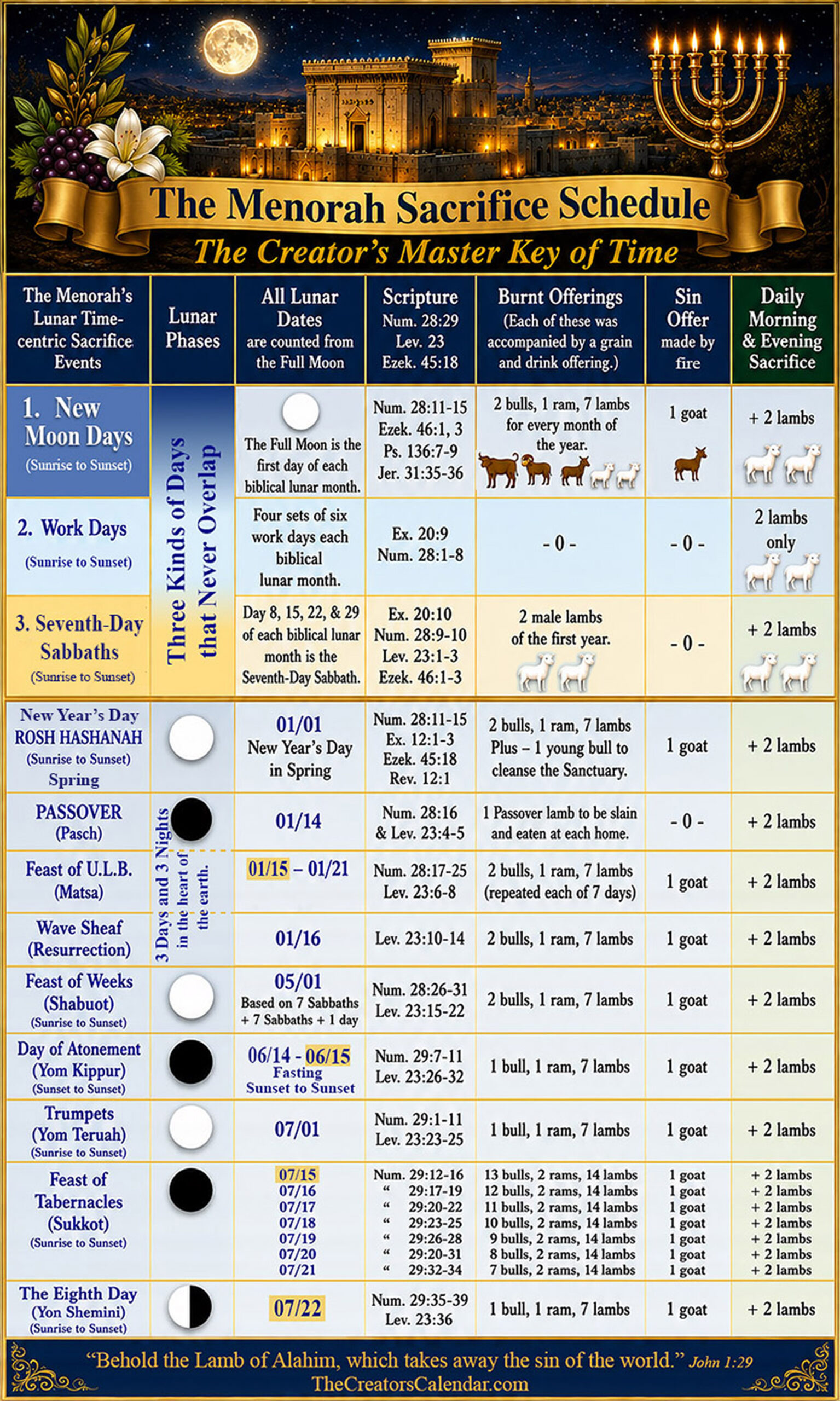
This schedule reveals that the Sanctuary/Temple was a lunar time-centered system. The daily sacrifice identified each ordinary day. The Sabbath offerings distinguished the weekly rhythm and seven-day count from one New Moon to the next. The New Moon offerings announced the beginning of each month. The Feast-day sacrifices marked the annual prophetic sequence. None of these appointments stood alone; each depended upon the others and upon the correct calendar count, without any overlapping of days.
This is especially significant because the New Moon sacrifice was not merely another offering added to an ordinary weekday. It identified the beginning of a new lunar month and established the point from which the numbered days, Sabbaths, and annual appointments were reckoned.57 From New Moon Day, the month advanced through its appointed sequence, with both the Sabbaths and the Feast Days occurring on their designated lunar month dates.
The Sanctuary moves the calendar question beyond the narrow debate over whether Saturday or Sunday should be identified as the Sabbath. Its sacrificial schedule provides a functioning model of sacred time in which New Moon Days, seventh-day Sabbaths, ordinary workdays, and appointed Feast Days were all coordinated within one ordered system. That structure cannot simply be transferred onto an unrelated perpetual weekly cycle without disrupting the relationships established among those sacred appointments.
The deeper question, then, is not whether sacredness was transferred from Saturday to Sunday, but whether either planetary day can reproduce the timekeeping structure embedded in the Sanctuary service. The Sanctuary presents a worship rhythm governed by the appointed lights of heaven and made visible through its sacrifices: the New Moon initiated the monthly count, Sabbath offerings marked the weekly cadence, and the annual Feasts unfolded on their appointed dates within that same framework.
The earthly Sanctuary and later Temples were patterned after a heavenly model.58 Their ceremonies illustrated the redemptive ministry of Yahusha haMashiach, while their sacrificial schedule placed that ministry within appointed time. Passover, Unleavened Bread, the Wave Sheaf Offering, Shabuot, Atonement, Trumpets, Tabernacles, and the Last Great Day (the Eighth Day) were not floating observances. Each was located within the Creator’s calendar and revealed an aspect of the Plan of Salvation.
This makes the calendar question inseparable from the Sanctuary question. If the Sanctuary services were governed by New Moons, Sabbaths, and numbered lunar appointed Feast dates, then the calendar was not a secondary detail. It was the framework that held the entire system together. To alter the calendar was to obscure the order of worship and the prophetic sequence illustrated by the sacrifices.
Rome’s achievement was therefore not merely the exaltation of Sunday. It was the replacement of the calendar framework through which the Sanctuary, the Feasts, and especially the Plan of Salvation were understood and made known. Once the continuous planetary week was accepted as though it had existed from Creation, Saturday appeared to be the ancient seventh day, and Sunday appeared to be its Christian replacement. Yet neither conclusion arose from the Sanctuary pattern; both were products of Roman calendar reform, imperial authority, and later ecclesiastical enforcement.
The faithful seeker must therefore ask a more searching question: Which system of time can support the worship schedule commanded by Yahuah Alahim, the Most High Creator? Is it a perpetual Roman week that continues without reference to the New Moon, or the celestial calendar in which daily, weekly, monthly, and annual appointments operate together?
The calendar used for worship is not merely a tool for numbering days. It reveals whose authority governs sacred time. Genesis 1:14 declares that the lights in the heavens were appointed for signs, mo’edim (#4150 – lunar appointed), days, and years.59 The Sanctuary then placed those appointed times into living practice through its daily sacrifices, Sabbath offerings, New Moon offerings, and annual Feast services.
Neither Saturday nor Sunday, nor the perpetual cycle in which they rotate, is named or demonstrated in the Sanctuary schedule. It cannot fit, no matter how much pressure is applied by imperial law. It is like forcing a square block into a round hole. The system revealed in the Sanctuary’s sacrificial schedule is celestial, lunar-appointed, and inseparably connected to the unfolding Plan of Salvation.
The question is therefore no longer simply, “Which Roman weekday should be honored?” The more consequential question is: Which calendar can sustain the worship rhythm established in the Sanctuary, preserve the lunar-appointed Feasts, and reveal Yahuah’s divine time signature?
To return to the Creator’s calendar is to return not merely to a different method of counting days, but to the sacred order through which the Sanctuary, prophecy, worship, and the redemptive work of Yahusha haMashiach testify together.
18. The Inherited Assumption
19. The Real Antidote to Receiving the Mark of the Beast
Seventh-day Adventists have long taught that Saturday is the true Sabbath of Scripture and that faithful Sunday keeping will constitute the Mark of the Beast as described in Revelation. Yet the evidence examined in this study carries the issue to another level. Saturday and Sunday are not opposing calendar systems. They are twin sisters within the same Roman planetary week, two hands governed by the same authority and operating within the same continuous cycle.
One hand cannot truly oppose the other when the same head directs both. In the same way, Saturday cannot serve as the divine antidote to Sunday’s Mark of the Beast when both days derive their identity and weekly position from the same Roman calendar-replacement structure. Ironically, if Sunday keeping is the Mark of the Beast, then so is Saturday keeping. The controversy has been reduced to a choice between the first and seventh days of Rome’s planetary week, when the deeper issue is that the entire replacement calendar, including both Saturday and Sunday, forms the counterfeit system associated with the Mark of the Beast.
The Roman planetary cycle was instrumental in distancing Christianity from the Torah, the Full New Moons, the appointed Feasts, and the worship rhythm displayed and confirmed in the Wilderness Sanctuary. Yahusha nevertheless declared that Jerusalem would remain under Gentile dominion only “until the times of the Gentiles be fulfilled” (Luke 21:24).62 As these long-hidden truths are restored, sincere seekers must decide whether to remain within the familiar worship rhythm of inherited tradition or, like the wise virgins, awaken to the preordained calendar established by Yahuah Alahim, Creator and Most High, before it is too late.
If Saturday is also the Mark of the Beast and not the biblical safeguard against Sunday keeping, then what is?
20. Beyond Saturday and Sunday: The Covenant Pathway
The safeguard against receiving the Mark of the Beast is not found in choosing one planetary weekday over a rival sibling, but in the blood of Yahusha haMashiach, received through the covenant pathway revealed in the lunar-appointed Passover.63 From the first sacrifice in Eden, through Israel’s deliverance from Egypt, and ultimately to the death of the Messiah, the Passover pattern has borne one enduring testimony: redemption comes only through the blood of the Lamb.64
Passover was appointed on the fourteenth day counted from the first Full Moon of the year in spring. Every lamb pointed forward to the promise of Yahusha haMashiach (the anointed Messiah), and every faithful observance on that date, where TIME & EVENT converge, testified that deliverance does not come through allegiance to a human calendar or religious institution. Only the blood of Messiah provides forgiveness, protection, and entrance into the presence of Yahuah Alahim, the Most High. Not surprisingly, this too was replaced by the Roman holiday of Easter Sunday.
“Having therefore, brethren, boldness to enter into the holiest by the blood of Yahusha, by a new and living way, which He hath consecrated for us, through the veil, that is to say, His flesh.”65 Hebrews 10:19–20
“Neither by the blood of goats and calves, but by His own blood He entered in once into the holy place, having obtained eternal redemption for us.”66 Hebrews 9:11–12
The real antidote to the Mark of the Beast is therefore not found in choosing to worship on Saturday rather than Sunday within Rome’s planetary week. One system directs worship according to the planetary week of men; the other restores the covenant pathway centered upon the Lamb, His blood, and the specific lunar appointed times that reveal His redemptive work. It is found in receiving the blood of Yahusha, walking in covenant faithfulness, and returning to the sacred lunar order established by Yahuah Alahim from the beginning.
Scripture instead presents an integrated pattern in which Full New Moons, lunar Sabbaths, and lunar appointed Feast Days operate in perfect harmony within the Creator’s time-measuring system, as reflected in Isaiah 66:23, Ezekiel 46:1–3, and Amos 8:5.67
This vital subject deserves careful and prayerful examination and is developed more fully in the following studies:
The Mark of the Beast or the Seal of Yahuah Alahim?
Weighed in the Balances and Found Wanting
21. Returning to the Ancient Paths
Samuele Bacchiocchi’s work opened an important door by showing that Sunday’s sacredness was neither established by the Creator nor recorded in Scripture, but arose from later historical forces tied to Roman Emperors. Yet that door has now been opened wider. The question before us is not only whether Rome transferred sacredness from Sabbath to Sunday, but whether the Sabbath of Creation was ever located within Rome’s continuous planetary weekly cycle at all. If Bacchiocchi helped expose the rise of Sunday sacredness, this study takes the inquiry one step further by examining Saturday first, and then the weekly framework that made these twin sisters appear as biblical candidates in the first place.68
If the history of Rome’s calendar reforms reveals anything, it is that the Creator’s time was never destroyed or altered in the heavens, but rather was displaced in the minds of men. The sun, moon, and stars continue unmoved to this day as faithful witnesses. The Full Moon, as the original New Moon, continues to mark the beginning of each lunar month. The moon continues to mark each passing day with its own distinct lunar phase. The Sabbaths and lunar-appointed Feast Days of Yahuah, the Most High, remain in their ordained places, even while the nations were trained to follow another master.69
The Wilderness Sanctuary provides one of the clearest and most practical witnesses to the original worship rhythm. Its sacrificial schedule was not arranged according to an abstract theory of time, but according to a functioning lunar calendar of daily, weekly, monthly, and yearly lunar-based appointments. The continual morning and evening sacrifices marked the passing of each day, preserving a clear distinction between ordinary workdays, Sabbaths, and New Moon Days. Additional offerings set the Sabbaths apart, while still greater offerings announced each New Moon. Within this same sacred framework, every appointed Feast Day unfolded on its divinely assigned date and lunar phase.70
The Sanctuary therefore did more than illustrate the Plan of Salvation through its sacrifices, priesthood, furnishings, and services. It also revealed the calendar upon which that entire redemptive pattern depended. Every sacrifice had to be offered at its appointed time. Every Feast required the correct month, date, and lunar phase. Every Sabbath offering depended upon the faithful reckoning of Yahuah Alahim’s weekly count, just as every monthly sequence began beneath the radiant witness of the Full Moon. In this way, the sacrificial system stood as a living revelation of the Creator’s love for humanity, bearing His divine signature through the majestic order of the heavens.
This unified schedule could not be transferred intact onto an unrelated continuous planetary week without disrupting the relationship between the Full Moons, Sabbaths, and Feast Days. The Sanctuary rhythm was celestial and coordinated. The daily offerings, weekly Sabbaths, monthly Full Moons, and annual appointments did not operate as separate systems. They formed one harmonious order governed entirely by the trinity of lights ordained in the heavens at creation and still operating with precision to this very day.
This is why the call to return is not a call to novelty. It is not the invention of a new doctrine, nor the pursuit of something strange for its own sake. It is a return to the ancient paths, to the time-measuring system established at Creation, confirmed in the Old Testament Torah, visibly practiced through the Wilderness Sanctuary and later Temple services, honored by the prophets, facilitated by the Levitical priesthood, and fulfilled in the redemptive work of Yahusha the anointed Messiah.
The Most High has never asked His people to worship according to confusion. He placed witnesses in the heavens, instructions in His Torah, and a complete sacrificial schedule within the Sanctuary and, later, the Temples to show how sacred time was to be measured. The heavens declared the appointed times, the Torah named them, and the Sanctuary put them into practice. Together, these three witnesses reveal a worship rhythm far removed from Rome’s continuous planetary cycle, wholly divorced from the sun, moon, and stars.
If the world has followed after the beast through a counterfeit system of time, then the call to come out of Babylon, Egypt, and Rome must include more than rejecting a particular day of worship or religious organization. It must also include a return to the calendar framework upon which the Sanctuary, the Feasts, the Sabbaths, and the Plan of Salvation were originally arranged.
This return requires humility. It calls us to lay down inherited assumptions and allow Scripture, history, the heavenly lights, and the Sanctuary pattern to testify together. It asks whether sacred time has been measured by the decrees of Roman emperors or by the calendar of the Creator, the Most High. And it presses the deeper question: Is the day that calls us to worship truly appointed within the celestial and Sanctuary rhythm of Yahuah Alahim, the Most High, or is it merely counted within an ever-cycling planetary week severed from the moon?
“Thus says Yahuah, Stand ye in the ways, and see, and ask for the old paths, where is the righteous way, and walk therein, and ye shall find rest for your souls.” Jeremiah 6:16
Yet this return is not burdensome when the heart recognizes the voice of the Shepherd. The appointed times of the Most High are not arbitrary commands. They are sacred invitations. Passover points to the blood of the Lamb. Unleavened Bread calls His people away from corruption. The Wave Sheaf Offering testifies of resurrection. Shabuot, Atonement, and Tabernacles reveal the later stages in the unfolding Plan of Salvation. To return to His calendar is therefore to return not only to His order and rhythm, but to the redemptive pathway revealed through the Sanctuary itself.
Therefore, let every sincere seeker prayerfully examine the evidence. Let the words Sabbato and dies Saturni be weighed honestly. Let Canon 29 be read as it was written, not as later assumptions have framed it. Let Daniel 7:25 be understood in the light of history. Let Numbers 28 and 29 be recognized as more than a list of sacrifices, but as a working model of sacred time. And let our restored senses once again discern that the heavens continue to declare the glory of Yahuah Alahim, the Most High, Creator of heaven and earth. May His divine time signature become the standard for all who seek to worship Him in spirit, in truth, and according to the order He established from the beginning.
Rome may have legislated a replacement rhythm, but it could neither silence the heavens nor erase the Sanctuary pattern preserved in the Old Testament Torah. The Most High’s timepiece still shines above us, and His sacrificial schedule still bears witness within His Word. The question is whether we will continue to follow the calendar handed down through the Roman Empire, or return to the ancient paths marked by the Creator Himself, which alone leads to Salvation.71 The choice we make today determines who we serve. Who we serve determines our final destination.
Take a moment to listen to this original song: While You Were Sleeping
The 50 Most Important Key Points
- Samuele Bacchiocchi demonstrated historically that Sunday sacredness did not originate with Yahusha, the apostles, or the Jerusalem believers.
- Bacchiocchi nevertheless retained the inherited assumption that “Sabbath” and “Saturday” were synonymous.
- The central question is not merely whether Sunday replaced Saturday, but whether either Roman planetary day belongs to the biblical week.
- Daniel 7:25 foretold that a civil-religious power would “think to change times and laws.”
- The plural words “times and laws” point beyond one disputed day to an entire framework of sacred time.
- Scripture presents sacred time as an integrated order involving the heavenly lights, New Moons, Sabbaths, Feast Days, months, and years.
- Julius Caesar’s calendar reform detached Roman civil reckoning from the moon and established a predominantly solar calendar.
- Rome originally employed an eight-day market cycle known as the nundinal cycle.
- The Roman eight-day cycle and the seven-day planetary week coexisted for a period before the planetary week prevailed.
- The planetary week was not governed by the New Moon or by the lunar phases.
- Rome’s continuous weekly cycle differed fundamentally from weeks counted within lunar months.
- The planetary days were named after the Sun, Moon, Mars, Mercury, Jupiter, Venus, and Saturn.
- In an early planetary arrangement, Saturn’s day did not occupy the seventh position.
- Saturday acquired its apparent seventh-day position only after Sunday was placed first within Rome’s reordered week.
- Saturday therefore became “day seven” by Roman placement, not by an explicit Scriptural identification.
- Constantine’s legislation of A.D. 321 gave civil force to the day of the Sun as an imperial rest day.
- Constantine did not restore the biblical week; he authorized a planetary cycle already detached from lunar reckoning.
- The Council of Nicaea further separated Roman Christianity from the Torah-based timing of Passover.
- Rome attached the resurrection celebration to Sunday rather than preserving the Scriptural Passover and Wave Sheaf sequence.
- The Constantinian-era creed explicitly rejected Hebrew Feasts, New Moons, Sabbaths, and Torah practices.
- Roman authorities could not alter the movements of the heavens; they could only alter human allegiance and calendar practice.
- Canon 29 of Laodicea commanded Christians not to rest on the Sabbath and directed honor toward the Lord’s Day.
- The Greek text of Canon 29 uses Sabbath terminology, not the planetary term for Saturday.
- The Latin versions use Sabbato, not dies Saturni.
- Translating Sabbato as “Saturday” imports a Roman calendar assumption into the canon.
- The original wording presents a conflict involving Sabbath observance, not merely a transfer between two Roman weekdays.
- Seventh-day Adventist publications eventually inserted “Saturday” where the underlying Greek and Latin texts say “Sabbath.”
- J. H. Waggoner preserved in Sabbato in Latin and translated it as Sabbath, but later Adventist retellings used Saturday.
- A. T. Jones used “Saturday” while acknowledging in brackets that the original term was “Sabbath.”
- By 1917, the Saturday rendering had entered official Adventist Sabbath School instruction.
- Ellen White’s Friday-Sabbath-Sunday Passion-week framework reinforced the Adventist assumption that the Roman week extended unchanged from Creation.
- Jewish continuity alone cannot prove that modern Saturday is the original Sabbath of Creation.
- Israel’s history includes captivity, compromise, loss, and restoration of sacred truth.
- A quoted Karaite source candidly acknowledges that modern Saturday cannot be proved to be the exact anniversary of the Creation Sabbath.
- The substitution of Saturday for Sabbath confines the controversy to a misleading Saturday-versus-Sunday framework.
- Sabbato belongs to Sabbath language, while dies Saturni belongs to the Roman planetary system.
- Hutton Webster documented the later association of Saturn with the Jewish Sabbath.
- Historians and religious institutions often repeated the Saturday assumption until repetition acquired the appearance of certainty.
- Roman Catholic sources have openly described obligatory Sunday sacredness as an ecclesiastical creation.
- By Christianizing Sunday within the planetary week, Roman ecclesiastical authority also strengthened Saturday’s apparent biblical position.
- Widespread acceptance cannot give divine authority to planetary names, cadence, or calendar reckoning not established in Scripture.
- Rome only “thought” to change sacred time; Yahuah’s celestial order remained unchanged.
- The deception succeeded by removing the New Moon from worship rather than removing it from the heavens.
- The Wilderness Sanctuary provides a practical, functioning model of the calendar governing Israelite worship.
- Numbers 28 and 29 organize sacrifices according to daily, Sabbath, New Moon, and annual Feast appointments.
- The Sanctuary schedule operated as a living calendar in which every offering had an appointed time.
- The New Moon initiated the monthly count, the Sabbaths marked the weekly cadence, and the Feasts unfolded on assigned lunar dates.
- The Sanctuary schedule, its sacrifices, and the Plan of Salvation cannot be fitted intact into an unrelated perpetual planetary cycle.
- Salvation and protection are not found in choosing Saturday over Sunday, but in the blood of Yahusha, the true Passover Lamb.
- The final appeal is to return to the ancient paths, where Scripture, the heavenly lights, the Torah, the Sanctuary pattern, and the redemptive ministry of Yahusha testify together.
The Mounting Weight of Evidence for the Lunar Sabbath
New Moon by New Moon You Shall Keep
Footnotes:
[1] Samuele Bacchiocchi was a Seventh-day Adventist scholar best known for his doctoral dissertation, later published as From Sabbath to Sunday: A Historical Investigation of the Rise of Sunday Observance in Early Christianity (Rome: Pontifical Gregorian University Press, 1977).
[2] Daniel 7:25. This prophecy is central to the article’s thesis because it identifies a power that would “think to change times and laws,” directing attention to an attempted change in authority, worship, and sacred time.
[3] Genesis 1:14-18. The trinity of heavenly lights is presented in Scripture as governing signs, lunar appointed times, days, and years, providing the foundational contrast between divine timekeeping and human calendar legislation.
[4] Daniel 7:25 speaks of “times and laws” in the plural. Compare Genesis 1:14-18; Leviticus 23; Isaiah 66:23; Ezekiel 46:1-3; and Amos 8:5. These passages show that Scripture presents sacred time as an integrated system involving appointed lights, New Moons, Sabbaths, Feasts, days, months, and years.
[5] For Julius Caesar’s calendar reform, see “The Julian Calendar,” Encyclopaedia Britannica, which describes Caesar’s consultation with Sosigenes of Alexandria and the shift toward a solar year.
[6] Encyclopaedia Britannica, “The Julian Calendar,” states that Sosigenes advised abandoning the lunar calendar and arranging months on a seasonal basis with a tropical solar year, following the Egyptian model.
[7] On the Roman nundinal or eight-day market cycle, see Eviatar Zerubavel, The Seven Day Circle: The History and Meaning of the Week (Chicago: University of Chicago Press, 1985/1989), especially his discussion of ancient weekly cycles and the transition from Rome’s eight-day rhythm to the seven-day week we experience today.
[8] Eviatar Zerubavel, The Seven Day Circle: The History and Meaning of the Week, p. 46. Zerubavel notes the coexistence of Rome’s eight-day week and seven-day cycles and the eventual disappearance of the eight-day cycle.
[9] Genesis 1:14; Exodus 12:1-3; Numbers 10:10; Numbers 28:11; Psalm 81:3; Isaiah 66:23; Ezekiel 46:1-3. These passages form the Scriptural basis for connecting months, New Moons, worship, and appointed times.
[10] Genesis 1:14; Psalm 104:19. The moon is appointed for moedim, or appointed times, while the article argues that the lunar phases provide the visible structure for the Scriptural month and weekly count.
[11] On the rise and imperial recognition of the seven-day week under Constantine, see Eviatar Zerubavel, The Seven Day Circle, and the legal text of Constantine’s Sunday decree in Codex Justinianus 3.12.2/3.
[12] On the planetary week and ancient representations of planetary-day order, consult discussions of Roman planetary hours and parapegmata in standard histories of the week, including Zerubavel, The Seven Day Circle, and Hutton Webster, Rest Days: A Study in Early Law and Morality (New York: Macmillan, 1916).
[13] The claim that Saturday’s seventh-day position depends upon the order of the later Roman planetary week should be footnoted to a source discussing the planetary order of the week. See Hutton Webster, Rest Days, pp. 220-245, and Zerubavel, The Seven Day Circle, especially the chapters on the planetary week.
[14] E. Diehl, Inscriptiones Christianae Urbis Romae, Vol. 1, Part 1, p. 18, No. 11; see also Robert Leo Odom, Sunday in Roman Paganism: A History of the Planetary Week and Its “Day of the Sun” in the Heathenism of the Roman World During the Early Centuries of the Christian Era (Washington, D.C.: Review and Herald Publishing Association, 1944), p. 122. This Christian funerary inscription, dated November 5, A.D. 269, records the Roman civil date, the planetary “day of Venus,” and the twenty-fourth day of the lunar month as three distinct designations of the same date.
[15] Constantine’s Sunday legislation is traditionally dated March 7, A.D. 321. The decree honored “the venerable day of the Sun” and required judges, city people, and craftsmen to rest, while permitting agricultural labor. See Codex Justinianus 3.12.2/3.
[16] Robert L. Odom, Sunday in Roman Paganism, pp. 243-244. Odom connects Constantine’s Sunday legislation with official recognition of the seven-day week and the preservation of planetary day names.
[17] Genesis 1:14-18; Leviticus 23; Psalm 104:19; Isaiah 66:23. These passages are used as the Scriptural counterpoint to Roman civil and ecclesiastical timekeeping.
[18] For the Council of Nicaea and the Easter controversy, see Eusebius, Life of Constantine, book 3, chapters 18-20, including Constantine’s letter concerning the observance of Easter and separation from Jewish reckoning.
[19] Eusebius Pamphilus, The Ecclesiastical History, Book V, Chapter 23, translated by Christian Frederick Cruse, 10th ed. (New York: Stanford and Swords, 1850), p. 207. Eusebius records that the assemblies of Asia observed the Savior’s Passover on the fourteenth day of the moon, regardless of the day of the planetary week upon which that lunar date occurred.
[20] The later ecclesiastical Easter rule is commonly summarized as the first Sunday after the first full moon following the vernal equinox. See standard church-history treatments of the Nicene Easter settlement and the Quartodeciman controversy.
[21] Stefano Assemani, Acta Sanctorum Martyrum Orientalium et Occidentalium, vol. 1 (Rome, 1748), p. 105. This source is commonly cited for the anti-Jewish renunciation formula attributed to the Constantinian/Byzantine church context. Verify exact wording and pagination against the edition used.
[22] Compare Colossians 2:16; Isaiah 66:23; Ezekiel 46:1-3. These texts show that New Moons, Sabbaths, and appointed times were recognized categories of sacred time in Scripture.
[23] The Council of Laodicea is commonly dated to the fourth century, often around A.D. 363-364. See Philip Schaff and Henry Wace, eds., Nicene and Post-Nicene Fathers, Second Series, vol. 14, “The Synod of Laodicea.”
[24] For the Greek text of Canon 29, see Karl J. von Hefele, A History of the Councils of the Church from the Original Documents, and Philip Schaff, ed., Nicene and Post-Nicene Fathers, Second Series, vol. 14.
[25] For the Latin forms of Canon 29 preserved in Sabbato, see Karl J. von Hefele, A History of the Councils of the Church from the Original Documents, vol. 2, English translation by William R. Clark.
[26] Philip Schaff, ed., Nicene and Post-Nicene Fathers, Second Series, vol. 14, “The Synod of Laodicea,” Canon 29: “Christians must not judaize by resting on the Sabbath, but must work on that day, rather honouring the Lord’s Day…”
[27] Canon 29’s Greek and Latin witnesses use Sabbath terminology, not the Roman planetary expression dies Saturni. This distinction is central to the article’s argument that “Saturday” is an interpretive substitution rather than a literal rendering.
[28] Karl J. von Hefele, A History of the Councils of the Church from the Original Documents, originally published in German as Conciliengeschichte beginning in 1855; English translation by William R. Clark, vol. 1 beginning in 1871.
[29] Hefele’s presentation of Canon 29 preserves Sabbath language rather than the Roman planetary term dies Saturni. This supports the distinction between Sabbato, Sabbath, and dies Saturni, Saturn’s day.
[30] The “Saturday” rendering of Canon 29 appears in Adventist literature as part of the inherited Saturday-versus-Sunday framework. It should be compared carefully with the Greek and Latin texts.
[31] Advent Review and Sabbath Herald, April 15, 1890, quoting from J. H. Waggoner’s The Origin and Growth of Sunday Observance, gives Canon 29 with the wording “idle on Saturday.”
[32] J. H. Waggoner, The Origin and Growth of Sunday Observance in the Christian Church, 1890. Waggoner includes Latin wording within Sabbato, showing that the underlying term was Sabbath, even where later English retellings used Saturday.
[33] A. T. Jones, The Great Nations of To-day. Jones quotes the canon with “Saturday” but adds the bracketed clarification “‘Sabbath,’ in both Greek and Latin,” revealing awareness that the original wording did not say Saturday.
[34] Sabbath School Lesson Quarterly, December 1, 1917. The lesson quotes Canon 29 as “Saturday [the Sabbath]” and cites Hefele’s History of the Church Councils, showing the “Saturday” reading had entered denominational instruction.
[35] Compare Ellen G. White, The Desire of Ages, chapter 80, “In Joseph’s Tomb,” where the Sabbath rest in the tomb is connected typologically with the Creation rest of Genesis 2:1-3.
[36] Ellen G. White, Manuscript Releases, vol. 3, p. 426; Manuscript 25, 1898, “The Man of Sorrows.” White writes that Christ’s work was “completed on a Friday” and that “on the Sabbath He should rest in the tomb.”
[37] The book of Psalms provides the interpretive key for understanding the word “seasons” as first used in Genesis 1:14 and throughout Scripture. Psalm 104:19 declares that Yahuah “ordained the moon for seasons,” identifying the moon as the appointed heavenly marker of the sacred worship rhythm expressed by the Hebrew term mo’edim (H#4150, מועדים). Yet this defining connection has often been overlooked in Bible dictionaries and concordances, leaving the lunar foundation of the Creator’s appointed times largely hidden from view.
[38] Romans 3:1-2 recognizes that the oracles of God were committed to Israel, but the history of Israel also records repeated seasons of disobedience, captivity, and restoration. See Exodus, 2 Kings 17; 2 Kings 24-25; Daniel 1; and Luke 21:24.
[39] For the historical context of Jewish life after the destruction of Jerusalem and under Roman rule, see Josephus, The Jewish War, books 6-7, and standard histories of post-Second Temple Judaism.
[40] Canon 29 was a Christian ecclesiastical decree directed at Christians, not a Jewish ruling. See Schaff, Nicene and Post-Nicene Fathers, Second Series, vol. 14, “The Synod of Laodicea,” Canon 29.
[41] Originally the New Moon was celebrated in the same way as the Sabbath. Universal Jewish Encyclopedia, “Holidays,” Vol 5., p. 410.
[42] Karaite Insights, “What is the Shabbath?” The article states: “Through all the trials and tribulations that humanity has experienced over the past 5,000 years, we have no proof whatsoever that our current Saturday is the actual seven-day ‘anniversary’ of the original Shabbath of Creation.”
[43] The Karaite statement does not prove the lunar Sabbath by itself, but it does challenge the common assumption that Saturday’s identity as the original Creation Sabbath is historically beyond question.
[44] Sabbato is the Latin Sabbath term used in Canon 29; dies Saturni is the Latin planetary expression for Saturn’s day. The distinction between these terms is necessary for evaluating whether “Saturday” is a translation or an interpretation.
[45] Oxford University Press, “History of the Oxford English Dictionary,” Oxford English Dictionary. The project began under the Philological Society of London in 1857, following proposals led by Richard Chenevix Trench; James A. H. Murray later became its principal founding editor, and the first installment was published in 1884.
[46] Hutton Webster, Rest Days: A Study in Early Law and Morality (New York: Macmillan, 1916), p. 244. Webster discusses the later association of Saturn with the Sabbath and the correspondence of the Jewish Sabbath with Saturn’s day after the planetary week had become established.
[47] Among the sources consulted for various aspects of ancient lunar reckoning, the Roman calendar, the planetary week, Jewish calendation, and Sabbath history are the Encyclopædia Britannica; the Oxford English Dictionary; the Jewish Encyclopedia; the Universal Jewish Encyclopedia; James C. VanderKam; Clark K. Nelson; Heinrich Graetz; Stephen Herbert Langdon; Eviatar Zerubavel; Frances Rolleston; Philip Schaff; J. Westbury-Jones; Theodore Gilman; Hutton Webster; Robert Leo Odom; eLaine Vornholt; and Laura Lee Vornholt-Jones. These writers do not necessarily reach the same theological conclusions, but their works preserve evidence relevant to the historical development examined here.
[48] Theodore Gilman, “The Sabbath, the Day Which Divine Love Established and Human Love Must Preserve,” in Sunday the World’s Rest Day (New York: Doubleday, Page and Company, 1916), p. 479. Gilman describes the ancient Sabbath as the seventh day of the lunar week, explains that the lunar month was divided into four weeks of seven days, and states that the weekly count began again with the next New Moon.
[49] Robert Leo Odom, Sunday in Roman Paganism: A History of the Planetary Week and Its “Day of the Sun” in the Heathenism of the Roman World During the Early Centuries of the Christian Era (Washington, D.C.: Review and Herald Publishing Association, 1944), 243–244.
[50] Elaine Vornholt and Laura Lee Vorholt-Jones, Calendar Fraud, “Biblical Calendar Outlawed.” This source argues that Easter Sunday and the preceding Saturday helped reshape Christian assumptions about the continuous weekly cycle.
[51] John Gilmary Shea, “The Observance of Sunday and Civil Laws for Its Enforcement,” The American Catholic Quarterly Review 8 (January 1883): 139.
[52] Whose Day of Worship Is Sunday?” The Ecclesiastical Review 50, no. 2 (February 1914), 230–236, especially 236.
[53] Daniel 7:25. The text says the beast power would “think to change times and laws,” preserving the distinction between an attempted human alteration and the Creator’s unchanged heavenly order.
[54] Compare Genesis 1:14–18; Psalm 104:19; Psalm 89:37; Isaiah 66:23; and Ezekiel 46:1–3.
[55] Numbers 28:1–31 and 29:1–40. The prescribed offerings are arranged according to daily sacrifices, Sabbath offerings, New Moon offerings, and sacrifices for the annual appointed Feasts.
[56] The continual daily offering is described in Numbers 28:3–8; Sabbath offerings in Numbers 28:9–10; New Moon offerings in Numbers 28:11–15; and the annual Feast offerings throughout Numbers 28:16–31 and Numbers 29.
[57] Compare Exodus 12:1–6; Numbers 10:10; 28:11–15; 1 Samuel 20:5, 18, 24–27; Ezekiel 46:1–3; and Isaiah 66:23.
[58] Exodus 25:8–9, 40; 26:30; Hebrews 8:1–5; 9:23–24. Moses was instructed to construct the earthly Sanctuary according to the pattern shown to him.
[59] Genesis 1:14. The Hebrew word translated “seasons” is מוֹעֲדִים (moʿadim), the plural of מוֹעֵד (moʿed), Strong’s H4150, meaning an appointed time, appointed meeting, or sacred season. Compare Leviticus 23:2–4 and Psalm 104:19.
[60] Revelation 13:3. Compare Revelation 13:7–8 and 12 concerning the worldwide reach of the beast’s authority and worship.
[61] Acts 17:30. Compare Luke 12:47–48; John 9:39–41; 15:22–24; James 4:17. These passages distinguish between ignorance and accountable rejection after light has been received.
[62] Luke 21:24. Compare Daniel 7:23–27; Romans 11:25; and Revelation 11:2. The application of this prophecy to the restoration of the Creator’s calendar is the interpretive conclusion advanced in this study.
[63] Exodus 12:1–14 presents the blood of the Passover lamb as the divinely appointed sign by which Yahuah’s faithful were protected from judgment. In the book of Revelation, the redeemed overcome the accuser “by the blood of the Lamb” (Revelation 12:11), wash their robes in the Lamb’s blood (Revelation 7:14), bear the Father’s name rather than the beast’s mark (Revelation 7:3; 14:1, 9–12; 22:4), and belong to the Lamb whose sacrifice stands at the foundation of the Plan of Salvation (Revelation 13:8). The identification of the blood of Yahusha and covenant allegiance to Him as the true safeguard against the Mark of the Beast is therefore a theological synthesis drawn from the Passover pattern and these related passages.
[64] Genesis 3:21 records that Yahuah Alahim clothed Adam and Eve with garments of skin after their sin. Scripture does not explicitly identify the animal as a lamb; the identification of this death as the first lamb sacrifice is a typological inference drawn from the later sacrificial pattern and from Yahusha as “the Lamb slain from the foundation of the world” in Revelation 13:8. Compare Genesis 4:4; John 1:29; 1 Peter 1:18–20; and Revelation 13:8.
[65] Hebrews 10:19–20. The expression “the holiest” refers to the Holy of Holies and identifies the blood of Yahusha as the basis of access.
[66] Hebrews 9:11–12. Compare Hebrews 9:22–28; 10:10–14; and Revelation 7:13–14.
[67] Isaiah 66:23; Ezekiel 46:1–3; Amos 8:5; Numbers 28–29. These passages place New Moons, Sabbaths, and appointed sacrifices within one integrated system of worship.
[68] See Samuele Bacchiocchi, From Sabbath to Sunday: A Historical Investigation of the Rise of Sunday Observance in Early Christianity (Rome: Pontifical Gregorian University Press, 1977). Bacchiocchi documented the historical development of Sunday observance but continued to identify the biblical Sabbath with Saturday in the continuous weekly cycle.
[69] Genesis 1:14–18; Psalm 19:1–6; Psalm 104:19; Psalm 89:37; Isaiah 66:23. For the identification of the full moon as the original New Moon, cite the specific lexical, Scriptural, and historical evidence developed in the author’s dedicated New Moon studies.
[70] Numbers 28–29. See also Leviticus 23 for the appointed Feast dates and their relationship to the first, fifth, and seventh months.
[71] Jeremiah 6:16; Isaiah 58:12–14; Malachi 4:4–6; Revelation 14:6–12.