The Eternal Standard, the Covenant, and the Gift of Grace
The Eternal Standard, the Covenant,
and the Gift of Grace
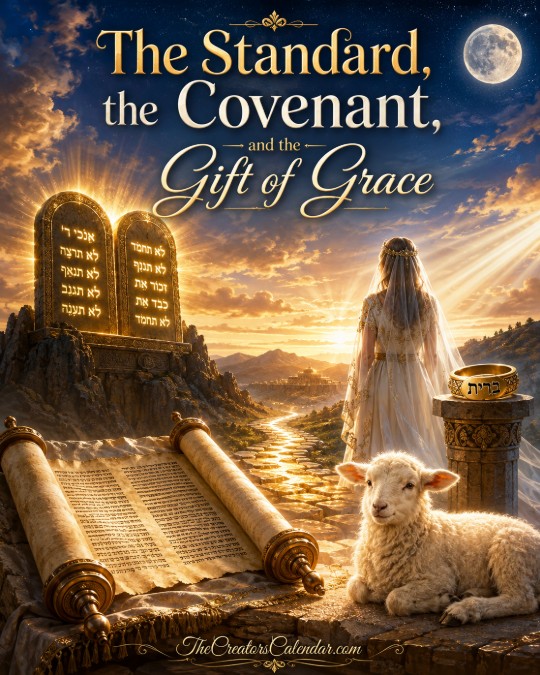
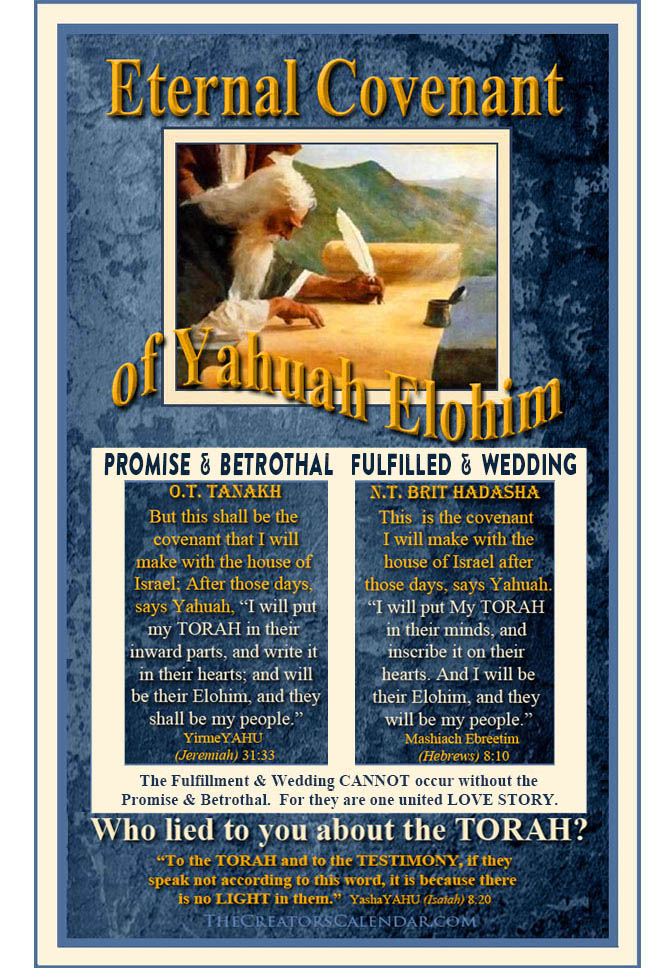
Many believers have been taught to view the Ten Commandments, the Torah Law (first five books of the Old Testament), and Grace as competing systems, with one supposedly replacing another. Yet Scripture presents them as distinct but inseparable parts of one harmonious Plan of Salvation. The Eternal Standard reveals sin, the Bridal Covenant defines faithfulness, and the Gift of Grace restores the repentant sinner through the blood of the Lamb, the long-promised Messiah. Understanding their proper relationship matters because separating Grace from the Covenant can turn salvation into mere profession, while separating obedience from Grace can turn it into human effort. Only when all three are restored to their rightful place can the Bride understand how she is forgiven, transformed, and prepared to meet her Bridegroom.
Let’s begin with this song…Law and Grace
The Ten Commandments Standard
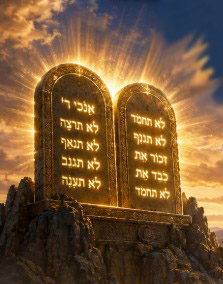 The Ten Commandments are the Eternal Standard of Righteousness established by the Most High, our Eternal Father, Yahuah Alahim. From this perfect standard, mankind has fallen. His law existed in eternity past, remains unchanged in the present, and will continue throughout eternity future. It is the enduring expression of the character of Yahuah Alahim, the Creator and Sovereign of the universe. The Ten Commandments serve as a mirror into the sacred and divine, revealing the vast difference between His glorious perfection and our own fallen condition. Yet they also point us to our need of a substitute and advocate to stand in our place before the Father as we confess our sins.
The Torah Law, the Bridal Covenant
The Torah Law, the first five books of the Old Testament, sets forth the promise, means, and pathway of salvation by which fallen humanity may be restored to the Most High Father, YHUH Alahim, and reconciled to His Eternal Standard of Righteousness. First, it reveals the depth of mankind’s departure from His perfect standard. Second, through the instructions recorded by Moses, it reveals the divinely ordained means by which the temple of the soul may be brought back into harmony with His appointed worship rhythm and with the redemptive ministry of Yahusha haMashiach. This harmony is expressed through honoring the sacred New Moon Days, lunar Sabbaths, and lunar appointed Feast Days established after the Fall and restored to Israel before entering the Promised Land, each of which prophetically reveals the Messiah’s appointed work on behalf of His people.
The Torah is also the sacred Bridal Covenant between Yahuah Alahim and His people. A covenant contains promises and responsibilities to be faithfully fulfilled by both parties. Yahusha haMashiach, as the Bridegroom, has perfectly fulfilled His part thus far: He came at the appointed time, gave His life for His Bride, ratified the Covenant with His blood, arose from the grave, and now ministers on her behalf in the heavenly sanctuary. One day He will return to receive her and take her to His Father’s house. He will recognize her as one who has remained faithful to the Covenant, clothed herself in His righteousness, and prepared to meet Him at His lunar appointed time.
The ordained times are therefore not empty ceremonies, but prophetic rehearsals and memorials of the Messiah’s time-centered ministry. By honoring them, His Covenant Bride willingly aligns herself with the divine pattern established at Creation and restored to Israel during the forty years in the wilderness. Her observance expresses a sincere desire to walk in covenant faithfulness and to be restored to the Father’s Eternal Standard of Righteousness through the blood of the Lamb.
The time-centered ceremonial laws did not come to an end, as many have taught; rather, they moved from type to antitype, from shadow to substance, and from prophetic symbol to living reality. The slain lamb pointed forward to the sacrifice of Yahusha haMashiach, while the mortal Levitical priesthood gave way to His living and eternal Melchizedek Priesthood. The former served as a promise, pattern, and tutor of instruction; the latter revealed the fulfillment of that promise, established from the foundation of the world.
These time-centric ceremonial ordinances declare that nothing within the Plan of Salvation occurs randomly, by chance. Every redemptive event unfolds with precision, purpose, and appointed timing according to the same sacred sequence established at Creation. Each lunar appointed Feast Day rehearsal marks our position within Yahuah Alahim’s ordered plan to the very day, to remedy sin once and for all, while revealing the continuing ministry of Yahusha haMashiach on behalf of His people. This is how to “follow the Lamb whithersoever He goes.” Revelation 14:4
He therefore calls His faithful Covenant Bride to remember and obey the full body of instruction heard from the beginning, not the Ten Commandments alone, but also the Torah Law of Instruction, its statutes, judgments, testimonies, and sacred appointments. Such obedience does not purchase salvation; rather, it is the visible expression of covenant love, faithfulness, and a heart prepared to meet the Bridegroom. “And this is love, that we walk after His commandments” (2 John 1:6; see also 1 John 1:1; 1 John 2:24).
The Temple’s Master Key of Time
The Temple’s sacrificial schedule provides the key of time by which the Torah’s sacred worship rhythm may be understood. The continual morning and evening sacrifices marked each day; additional sacrifices distinguished the lunar Sabbaths; still greater offerings announced each New Moon Day; and the lunar appointed Feast Days unfolded upon their ordained dates. Every sacrifice pointed to the saving ministry of Yahusha haMashiach, while its appointed time located that ministry within Yahuah Alahim’s ordered Plan of Salvation. Thus, the ceremonial system revealed not only the provision of the Lamb, but also the sacred time structure through which the Bride was instructed to recognize, rehearse, and receive the work of Grace bestowed by her Bridegroom.
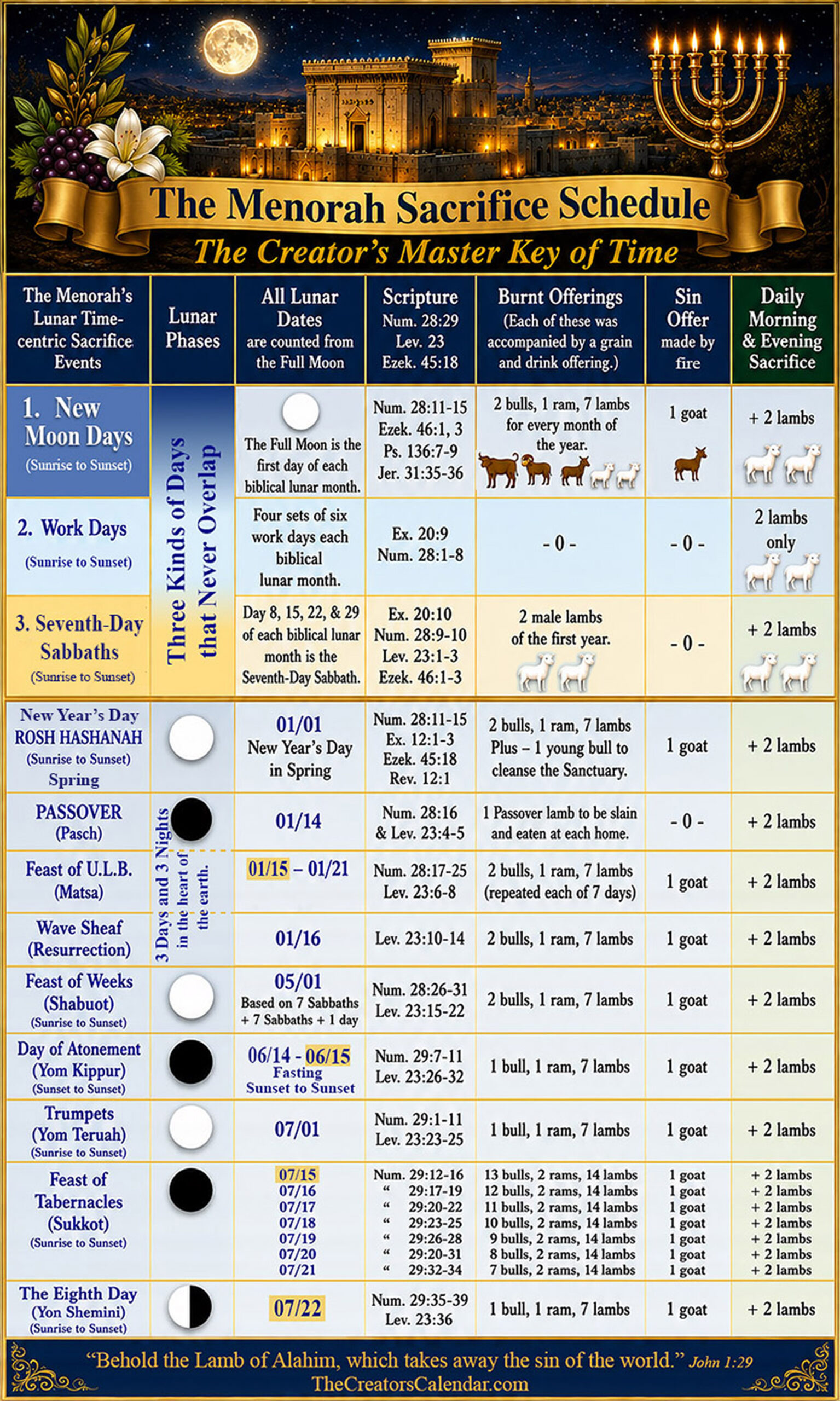
The daily offerings established the continual foundation of the Eternal Father, who “Changes Not!” The lunar Sabbaths marked the weekly rhythm. The New Moon Days opened each sacred monthly cycle. The lunar appointed Feast Days identified the ordained stages of redemption. Together, they formed one unified testimony that nothing in the Plan of Salvation occurs randomly, but according to divine order, precision, and purpose.
The Gift of Grace
Grace is the fulfillment of the Eternal Father’s promise to restore fallen humanity to His Eternal Standard of Righteousness. It comes only through the preordained provision of Yahusha haMashiach, whose shed blood alone provides forgiveness, reconciliation, and eternal life. He is the long-promised Messiah, the Lamb of Alahim, our divinely appointed Substitute, Redeemer, and Bridegroom. He bore our confessed sins and endured the penalty of the second death (Rev. 2:11; 20:6; 20:14; 21:8) in our place so that, through Him, we might receive life everlasting and be restored back to Him.
 Although the Messiah’s sacrifice is sufficient for all humanity, its saving benefits must be personally received. Grace is extended to those who recognize their sin, seek forgiveness, trust in the provision of the Lamb, and willingly return to the Bridal Covenant, the pathway revealed in the Torah Law. Obedience does not purchase grace, nor does it add merit to the Messiah’s perfect sacrifice. Rather, obedience is the Bride’s act of love, the visible response of a repentant heart that has received the Bridegroom’s provision and desires to remain faithful to His Covenant.
“But as for you, stand here by Me, and I will speak unto thee all the commandments, and the statutes, and the judgments, which thou shalt teach them, that they may do them in the land which I give them to possess it. You shall observe to do therefore as Yahuah your Alahim has commanded you: you shall not turn aside to the right hand or to the left. You shall walk in all the ways which Yahuah your Alahim has commanded you, that you may live, and that it may be well with you, and that you may prolong your days in the land which you shall possess.” Deuteronomy 5:31–33
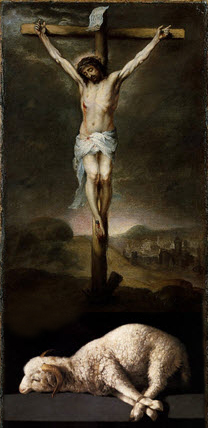 The Eternal Standard of Righteousness, expressed in the Ten Commandments, existed with Yahuah Alahim from eternity past because it reflects His unchanging character. The Torah Law and grace, however, entered the human story in their redemptive function after sin arose and the Plan of Restoration was set in motion. The Torah Law reveals the terms, promises, and pathway of the Bridal Covenant, while grace provides the forgiveness, cleansing, and transforming power necessary for the Bride to walk faithfully within it and ultimately receive Salvation.
The Torah Law and grace are therefore not opposing systems, nor are they competing means of salvation. They are complementary parts of the same Bridal Covenant. The Torah reveals the Bridegroom’s will and identifies the path of faithfulness, while grace covers the betrothed Bride and restores her when she has fallen and empowers her to walk in renewed love and obedience.
The Torah Law and Grace Work Together
The Torah ceremonies, the Law of Instruction, and grace operate in perfect harmony. Paul did not teach that either the Ten Commandments or the Torah Law had become obsolete. Rather, he showed that the Ten Commandments function as a mirror, revealing sin, while the Torah Law, as the Bridal Covenant, directs the repentant sinner along the appointed pathway of sacred worship and covenant faithfulness to the Bridegroom. In this way, the Bride is prepared to receive the life-giving grace of Yahusha haMashiach. The Ten Commandments reveal the disease of sin; the Torah Law identifies who the great physician is, as well as His method of healing; and grace through the Messiah provides the cure, the cleansing, and the spiritual power to walk in righteousness. 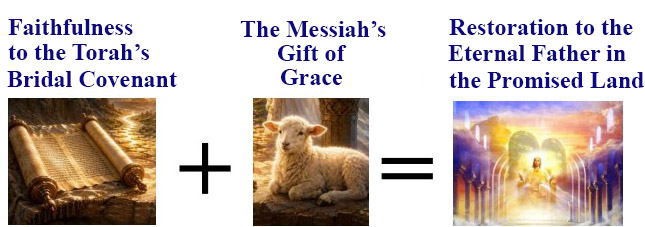
Grace, therefore, does not abolish the Torah Law or release the Bride from her covenant response. Instead, it forgives, cleanses, and restores those who repent, covering them through the blood of the Lamb and empowering them to live in loving faithfulness, prepared for the coming of the Bridegroom. Obedience is not the purchase price of salvation; it is the fruit of salvation and the language of covenant love.
“Do we then make void the law through faith? Yahuah forbid: yea, we establish the law.” Romans 3:31
“And this is love, that we walk after His commandments.” 2 John 1:6
The Torah Law and grace may therefore be understood as two inseparable parts of the same Bridal Covenant, necessary for Salvation. The Torah contains the promise, pattern, terms, and divinely appointed pathway of restoration; grace is the provision made through the blood and continuing ministry of Yahusha haMashiach. One contains and reveals the Eternal Righteous Standard and the Bride’s covenant calling, while the other supplies the forgiveness and transforming power by which she may be restored, prepared, and made ready to meet her Bridegroom.
By Kerrie L. French
Freelance Writer and Illustrator
TheCreatorsCalendar.com
Refer to the article Law vs. Grace—An Oxymoron.