Things You Never Knew About the Unborn
Things You May Never Have
Known About the Unborn
The Miracle of Life, the Creator’s Design, and the Value of Every Child
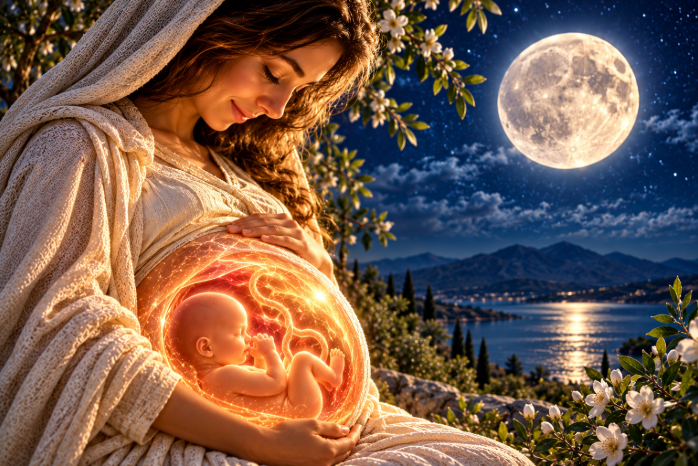
Have you ever considered how much is happening within a mother’s womb long before her child takes its first breath? Hidden from human sight, a remarkable process is unfolding. A new human life is developing, possessing its own genetic identity, following an extraordinary sequence of growth, and depending upon its mother for nourishment and protection.
Yet there is something even more wonderful to consider. Scripture reveals that our Creator knows us before we are born and that human life is precious in His sight. What does this mean for the unborn child? What responsibilities accompany the privilege of bringing new life into the world? And what can the miracle of human development teach us about the wisdom and loving purposes of Yahuah?
I invite you to consider several remarkable facts about life before birth, together with some often-overlooked passages of Scripture. You may discover that the smallest and most vulnerable members of the human family have much to teach us about the greatness of their Creator.
Can You Be a Wise and Fair Judge?
An old story, often attributed to a medical professor, presents the following narrative to his class of students, which is followed by a question:
“A father is said to have syphilis and a mother tuberculosis. Their children have experienced serious illness, disability, and death. Now the mother is expecting another child.”
The students are then asked whether they could be a wise and fair judge and recommend ending the pregnancy.
According to the story, many recommend abortion. Their professor then announces that the child they would have prevented from being born was Ludwig van Beethoven.
Although this account is widely circulated, its historical details have not been established, and it should not be presented as an authenticated account of Beethoven’s family.
Nevertheless, the story raises a question worth considering: Can we know the value of a human life by examining the difficulties surrounding its beginning?
The important consideration is not Beethoven’s extraordinary musical talent. It is his humanity.
A child need not become a famous musician, physician, teacher, missionary, or inventor to possess worth. Nor does a life lose its value because of illness, disability, poverty, or an uncertain future.
Every person enters this world with a story yet to be written.
And every life deserves to be considered with compassion.
The Miracle of Life Before Birth
There are remarkable biological facts about prenatal development that identify the unborn as unique individual persons, and all of these are present in their DNA from the moment of conception.
1. The unborn child is human.
From fertilization, a new developing organism of the human species exists. It does not begin as another kind of creature and later become human. Its development proceeds through the successive stages of embryonic and fetal life.
2. A unique genetic combination is established.
At fertilization, genetic material from the mother and father ordinarily combines to form a new human genome. In the usual case, the resulting cell contains 46 chromosomes, with 23 contributed by each parent. No portion of the unborn contains only the mother’s chromosomes. As a result, when it comes to the mother’s right to choose what happens to her own body. That choice can have nothing to do with the unborn. No matter how small, once an egg is fertilized, it is a separate individual, protected under the Declaration of Independence with its own unalienable rights of “life, liberty, and the pursuit of happiness.” Yet this is a mere echo of what the Creator determined for each living soul.
3. The child’s circulation develops within the womb.
The developing child establishes its own circulatory system. Although the mother’s and child’s circulations are closely connected through the placenta, their blood ordinarily does not circulate as one continuous supply.
4. The child will often have a different blood type from its mother.
A developing child can inherit a blood type different from that of its mother. This is one of many reminders that pregnancy involves two biologically distinct, though intimately connected, human lives.
5. Life does not begin with the first breath after birth.
The BREATH OF LIFE is provided to the unborn by its mother from conception. Oxygen reaches the developing child through the placenta and umbilical cord. This occurs simultaneously with their food and water. The unborn’s life does not begin when it takes its first breath with its own lungs. This would be no different than saying it is not human until it walks with its own legs.
The first breath marks a remarkable transition in how the child receives oxygen, but it does not mark the beginning of biological life.
6. The unborn child depends upon the mother’s care.
During pregnancy, the developing child relies upon the mother’s body for oxygen, nutrients, and a protected environment in which to grow.
This extraordinary dependence reminds us of the responsibility involved in caring for vulnerable human life.
7. Human development unfolds according to an intricate sequence.
From the earliest stages of development, cells divide, specialize, and organize into the structures of the human body. Over time, the heart, brain, limbs, organs, and other systems develop and mature.
Each stage prepares the way for the next.
8. Each unborn fetus carries its own unique signature.
The unborn have their own unique fingerprint, not apparent until later months, but nonetheless it carries their unique personhood. It is not that of either their mother or father.
So, yes, a woman has the right to decide what happens to her own body. The only problem is that her unborn child is NOT her own body. The very fact that it exists is self-evident: it has its own body.
9. Scripture speaks of the Creator’s knowledge before birth.
Yahuah, the Eternal Father, declared to Jeremiah:
“Before I formed thee in the belly I knew thee; and before thou camest forth out of the womb I sanctified thee.” Jeremiah 1:5, KJV
Although these words specifically concern Jeremiah’s prophetic calling, they also reveal the extraordinary knowledge and purpose of our Creator.
What Does All This Mean?
The biological facts describe how human life develops. Scripture invites us to consider the One who designed that development.
The question of how society should protect unborn life involves moral, legal, and personal considerations. Yet for those who believe that human life is a sacred gift from the Creator above, these discoveries provide powerful reasons to approach every pregnancy with reverence, compassion, and responsibility.
The Creator’s Valuation of the Unborn
One of the most thought-provoking passages concerning the value placed on the life of the unborn appears in Exodus 21:22–25.
Have you ever heard the saying, “An eye for an eye, and a tooth for a tooth?” Surprisingly, it is the unborn that this famous Bible verse is referring to. It may be the most potent of all statements ever recorded on this earth concerning what constitutes the value and viability of the unborn human being and living soul. This same verse identifies the paramount task of preserving the safety of this most vulnerable sacred human life.
“If men fight, and hurt a woman with child, so that she gives birth prematurely, yet no harm follows, he shall surely be punished accordingly as the woman’s husband imposes on him; and he shall pay as the judges determine. But if any harm follows, then you shall give life for life, eye for eye, tooth for tooth, hand for hand, foot for foot, burn for burn, wound for wound, stripe for stripe.” Exodus 21:22-25
No question, this compares the same value attributed to a grown man with that of the unborn. Not only that, this verse is not discriminating between an unborn male or female, or their race. Marvelously, it is the Creator who sets the value, and He has deemed the unborn child of both sexes as equal to that of an adult male, no more and no less. LIFE FOR LIFE IS AN EQUAL TRADE!

This is a 12-week-old fetus, about the time a woman discovers she is pregnant. All human identifiers are present.
For if the unborn is injured in the eye, the adult responsible must lose an eye. If, in the case that the unborn loses a foot or tooth, the judgment states that the responsible persons must lose the same. But bottom line, if the unborn child of any race and color, or sex should lose its life at the hand of any person, that person must also lose his/her life. Thus, the value of a life of all ages, sex, and color is put in its proper perspective. Under this law, all life is valued and protected. Thus, all fetuses, of all stages, babies, children, and of any sex or race, are equal to that of any grown man of any age, color, or station in life.
This is Yahuah’s judgment upon all who think to take the life of the unborn. For these tiny humans are utterly dependent upon their adult “gatekeepers” for their health and safety. Based on the evidence of this single Scripture verse in Exodus, the act of terminating the life of the unborn would be considered MURDER IN THE FIRST DEGREE.
Here, the law addresses a situation in which men are fighting and a pregnant woman is injured, resulting in premature delivery or pregnancy loss, depending upon how the passage is translated.
The text then establishes consequences according to the harm that follows.
This passage makes something unmistakably clear: Harming a pregnant woman and endangering the life developing within her was a matter of serious concern under the Torah laws given to Yasharal. It also extends equal protection to the unborn child; it provides an especially meaningful testimony to the value of life before birth.
From the evidence above, there is no relation whatever between the right to life of the unborn and a woman’s right to choose to keep it or terminate it through any form of abortion. From this evidence, the unborn is a separate life altogether that was placed under its mother’s protective care.
Does it appear that abortionists will have a thriving future in the hereafter? Not likely. However, be assured that love, forgiveness, and full restoration are extended to all who ask.
The Creator’s Mercy Is Greater Than Our Past
Perhaps you are reading these words with sorrow because of a decision made many years ago. Perhaps you have experienced an abortion, participated in such a decision, or endured circumstances that still bring painful memories.
Please do not turn away from the message of this article believing that you are beyond the reach of Yahuah’s love. His mercy is not reserved for those who have never made mistakes.
His invitation extends to the brokenhearted, the repentant, and all who desire to return to Him. Scripture gives us this wonderful promise:
“If we confess our sins, he is faithful and just to forgive us our sins, and to cleanse us from all unrighteousness.” 1 John 1:9, KJV
What an extraordinary promise! If you confess and repent, you are then forgiven and free from guilt.
Yahuah does not invite us to remain imprisoned by our past. He calls us to repentance, forgiveness, restoration, and a new beginning through Yahusha haMashiach.
No matter what your circumstances have been, His love remains available to you.
Every Life Is Precious
The value of human life cannot be measured by physical perfection, financial circumstances, social standing, or future accomplishments.
Nor should our compassion end with the unborn child.
The expectant mother facing an unexpected pregnancy may be frightened, abandoned, financially burdened, or struggling with circumstances others cannot fully understand. She, too, is precious in the sight of Yahuah.
If we are to defend the value of human life, our concern must extend to both mother and child.
We should be willing to offer practical assistance, encouragement, protection, and genuine compassion.
For those who believe that life begins under the creative hand of Yahuah Alahim, the unborn child represents a sacred responsibility. Yet that responsibility must be accompanied by the love and mercy that characterize our Heavenly Father.
To cherish life is also to care for those who carry it.
The Life of the Unborn is Worthy of Praise to Yahuah
Consider also the beautiful words of David:
“For thou hast possessed my reins: thou hast covered me in my mother’s womb. I will praise thee; for I am fearfully and wonderfully made.” Psalm 139:13–14, KJV
What a remarkable description!
Long before anyone held us in their arms, the hidden processes of our development were already underway.
And the Psalmist responded with praise.
Should we not do the same?
The Creator’s Life-Giving Rhythms of Time
There is another fascinating aspect of human reproduction that invites our consideration. Have you ever noticed that the average menstrual cycle is close in length to the lunar month?
The Moon completes its familiar cycle of phases in approximately 29½ days. Human menstrual cycles vary from woman to woman and from month to month, but many occur within a similar time frame.
Researchers have investigated whether these two rhythms are connected. Some studies have observed temporary relationships between menstrual cycles and lunar phases, while others have found little or no consistent synchronization.
Although the evidence does not establish that every woman’s cycle follows a particular lunar phase, the resemblance between these natural rhythms remains an intriguing subject. For those who recognize Yahuah as the Creator of both heavenly bodies and human life, it offers an opportunity to reflect upon His magnificent design.
Scripture declares:
“He appointed the moon for seasons: the sun knoweth his going down.” Psalm 104:19, KJV
The Hebrew word mo’edim, translated here as seasons, directs our attention to the Creator’s lunar appointed times. Throughout Scripture, the Moon is associated with the reckoning of sacred time. The appointed Feasts, New Moon observances, and the prophetic promise of worship from one New Moon to another reveal the importance of heavenly timekeeping within Yahuah’s divine order.
Pregnancy itself also unfolds through measurable intervals of time. Physicians generally measure gestational age in weeks, beginning with the mother’s last menstrual period. Historically, periods of approximately four weeks have sometimes been described as lunar months.
Although these medical measurements do not establish that conception or birth must occur on particular lunar phases, they remind us that human development takes place within the ordered rhythms of lunar time since creation.
What a beautiful thought: The same Creator who appointed the heavenly lights also designed the remarkable processes through which human life begins, grows, and enters the world.
And what began in the secrecy of the womb becomes a living testimony to His creative power.
From the Womb to Eternity
The miracle of life begins long before the world sees the face of a newborn child. Yet the Creator’s concern for that life does not end at birth, childhood, adulthood, or old age.
His purpose reaches beyond the limitations of our earthly existence and extends toward the promise of everlasting life. From our earliest beginnings to the hope of eternity, Yahuah calls us to recognize His love, trust His wisdom, and walk in harmony with His ways.
Every life is precious because every life matters to its Creator.
And that includes yours.
Praise Yahuah!
Kerrie L. French
TheCreatorsCalendar.com


“Abortion is the taking of human life!”
~ Mildred Jefferson
“I’ve noticed that everyone who is for abortion has already been born.”
~ Ronald Reagan
“It seems to me as clear as daylight that abortion would be a crime.”
~ Mahatma Gandhi
A MUST WATCH SHORT VIDEO: From Conception to Birth